Attic Mold: Causes, Removal & Prevention (2026)
Attic mold on plywood and sheathing: causes (roof leaks, bad ventilation, exhaust issues), black vs white mold, remediation costs, and how to prevent it.
That musty smell drifting down from your attic? Those dark patches on the underside of your roof deck? You might be dealing with attic mold, one of the most common yet overlooked mold problems in homes. Because we rarely venture into our attics, mold can spread extensively before it's discovered.
Is mold in the attic a big deal? Yes, and it's usually fixable. What decides how big is how far it has spread and what's keeping the attic damp: a roof leak, a bathroom fan venting into the attic instead of outside, or too little ventilation for the moisture the house makes. Fix that and the growth stops; skip it and any cleanup comes back. It won't go away on its own: a dry summer makes attic mold dormant, not gone, and the growth and the staining stay on the sheathing until someone removes them. Spores don't stay up there either. They reach the rooms below through the HVAC, the ceiling fixtures, and the hatch.
In This Guide
- Why Attics Get Mold: Heat dynamics and condensation
- Common Causes: Roof leaks, ventilation, exhaust fans
- Signs of Attic Mold: Visual indicators and warning signs
- Health & Structural Risks: Spore spread and wood rot
- Remediation: DIY vs professional remediation and costs
- Prevention: Ventilation fixes and ongoing maintenance
Why Attics Are Prone to Mold
Attics create a perfect storm for mold growth due to their unique position in your home. Hot air rises, carrying moisture from daily activities like cooking, showering, and even breathing. When this warm, humid air meets the cooler surfaces in your attic, condensation forms, and mold follows.
The Heat Dynamic
Your attic experiences extreme temperature swings throughout the day and seasons. In summer, attic temperatures can exceed 150°F. In winter, inadequate insulation allows warm interior air to meet cold roof surfaces. These temperature differentials create condensation on roof sheathing and rafters, the moisture mold needs to thrive.
Common Attic Mold Causes
Understanding what causes mold in an attic helps you prevent it and identify the source during remediation.
Roof Leaks
Even small roof leaks can create persistent moisture that leads to roof leak mold over time. Water enters slowly, saturates the wood, and mold colonizes before you notice. Common culprits include:
- Damaged or missing shingles
- Cracked flashing around chimneys, vents, and skylights
- Ice dam damage along roof edges
- Worn roof valleys where two slopes meet
- Compromised boot seals around plumbing vents
A single storm-damaged shingle can introduce enough moisture for mold to establish on plywood and rafters within weeks.
Poor Ventilation
Proper attic ventilation requires a balance of intake (soffit vents) and exhaust (ridge or gable vents). When this balance is off:
- Humid air gets trapped with no path to escape
- Condensation forms on cold surfaces, especially the underside of roof sheathing
- Mold colonizes roof decking, rafters, and insulation
The recommended ratio is 1 square foot of net free ventilation area per 150 square feet of attic floor space, split evenly between intake and exhaust.
Bathroom and Kitchen Exhausts
One of the most common causes of attic mold is improperly vented bathroom exhaust fans. Many older homes have fans that dump humid air directly into the attic instead of outdoors. Every shower sends warm, moist air straight into your attic space, creating concentrated moisture zones on nearby roof sheathing.
Warning: Never vent bathroom, kitchen, or dryer exhaust into your attic. These should always terminate outside your home.
Ice Dams
In cold climates, ice dams form when heat escaping through the roof melts snow, which then refreezes at the colder eaves. This creates a dam that backs water under shingles and into the attic. The resulting moisture often goes unnoticed until mold has established itself on the roof deck.
Signs of Attic Mold
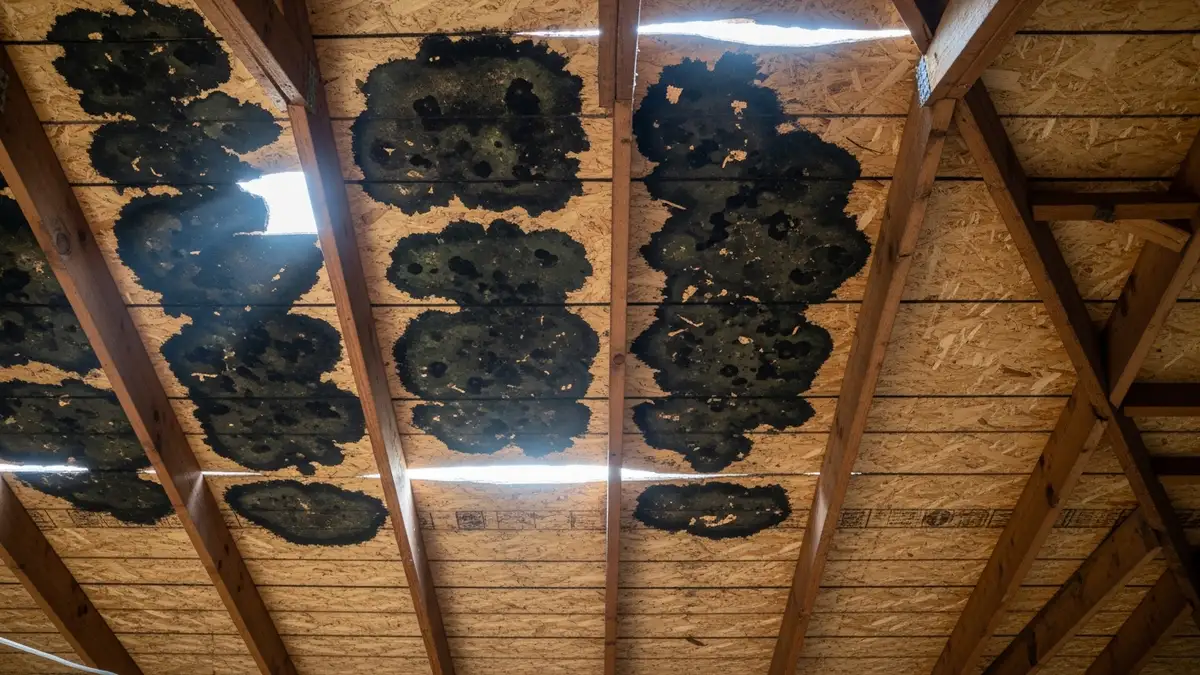
Because attics are out of sight, mold problems often grow undetected. Knowing what mold on attic plywood looks like (and what other warning signs to watch for) helps you catch problems early. Black mold on roof framing shows the same color, texture, and spreading pattern it does anywhere else, so what black mold looks like helps you tell it from the harmless lookalikes.
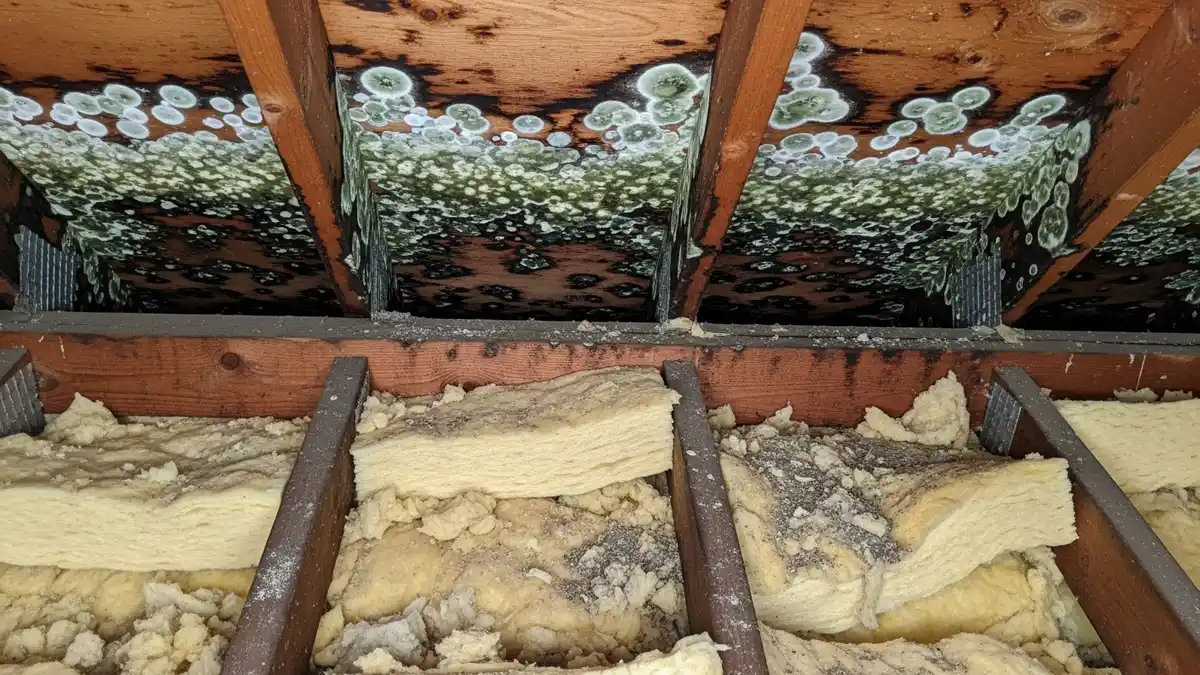
Visual indicators:
- Dark staining on the underside of roof sheathing (plywood or OSB). This is the most common sign of mold on attic plywood
- Black, dark green, or white patches on wood surfaces. Black mold in attic spaces often appears along the ridge first, while white mold in attic spaces can be mistaken for frost or efflorescence
- Discolored or wet insulation
- Water stains on attic floor or ceiling below
- Frost on the underside of roof deck in winter, a warning sign that condensation is occurring
Other signs:
- Musty odor that intensifies in warm weather
- Allergy symptoms that worsen at home
- Ceiling stains in rooms below the attic
- Peeling paint on walls or ceilings
When the moisture is bad enough to stain the drywall underneath, the problem can surface as growth in the room itself. That is a different repair from attic remediation, so it helps to understand when attic condensation shows up on the ceiling below and how to handle it.
Not sure what you're looking at? Our mold identification guide covers visual and testing methods for all common household mold types. Air quality testing can confirm whether elevated spore levels are present even when visual identification is unclear.
Health and Structural Risks
Attic mold poses both health and property risks that shouldn't be ignored, even though you don't spend time up there.
Health Concerns
Both black mold in attic spaces and less-visible white or green varieties release spores that travel into your living space through:
- HVAC systems and ductwork in the attic
- Ceiling fixtures and recessed lighting
- Attic access doors and hatches
- Gaps around pipes and wiring
Prolonged exposure can cause respiratory issues, allergic reactions, headaches, and fatigue (especially in those with sensitivities). If anyone in your household has unexplained respiratory symptoms that improve when away from home, attic mold could be a contributing factor.
Structural Damage
Left untreated, mold on attic plywood and rafters causes progressive damage:
- Rot in roof decking that compromises structural integrity
- Weakened rafters and trusses
- Damaged insulation that loses thermal effectiveness
- Staining and damage to ceilings below
- Decreased property value. Attic mold is a red flag in home inspections
DIY vs Professional Remediation
Can you remove mold in your attic yourself? Sometimes. A patch under about 10 square feet on a surface you can reach, with the moisture fixed first and proper PPE on, is within a homeowner's range. Mold on the roof sheathing, anything larger, or growth you can't trace to a source is a professional job, and attic work itself, with the heat, the cramped space, and the fall risk, is dangerous enough that the pros earn their fee on safety alone.
Deciding when to DIY vs hire a professional depends on the scope of contamination, your comfort working in attic spaces, and safety considerations.
When DIY May Be Appropriate
Small, surface-level mold (under 10 square feet) on accessible surfaces might be manageable if:
- You can work safely in the attic space
- The moisture source has been identified and fixed
- You have proper PPE (N95 respirator, goggles, gloves, Tyvek suit)
- The mold hasn't penetrated into the wood
When to Call a Professional
Contact a mold remediation professional when:
- Affected area exceeds 10 square feet: Large-scale contamination needs containment
- Mold is on roof sheathing: May require wood treatment or replacement
- Structural damage is present: Rotted rafters or decking need repair
- HVAC system is in the attic: A contaminated system can distribute spores or fragments beyond the source area
- You can't identify the moisture source: The problem will return without fixing the cause
- Health symptoms are present: Professional containment protects your family
A mold assessor can determine the full extent of contamination (including areas hidden behind insulation) before remediation begins. This separation between assessment and remediation helps ensure you're not overpaying.
Important: Attic work is inherently dangerous due to limited space, extreme temperatures, and fall risks. Professional remediation companies have the equipment and training to work safely.
Attic Mold Removal Cost
Attic mold removal cost varies significantly based on the extent of contamination:
- Small areas (under 50 sq ft): $1,500–$3,500. Surface cleaning, antimicrobial treatment
- Moderate contamination: $3,500–$7,000. Partial sheathing treatment, containment required
- Extensive growth: $7,000–$10,000+. Sheathing replacement, structural repairs, full containment
Cost factors include attic size, accessibility, mold extent, and whether roof sheathing or structural members need replacement. Getting an independent inspection before accepting remediation quotes helps you evaluate pricing fairly. See our full remediation costs guide for detailed breakdowns.
Whether the insulation comes out is a separate line on the quote, and Energy Star's rule is the one to hold a contractor to: existing insulation usually doesn't need removing unless it's wet, moldy, smelly, or contains animal waste. Insulation that stayed dry under a sheathing problem can stay, with new insulation added on top; insulation that got wet or holds growth can't.
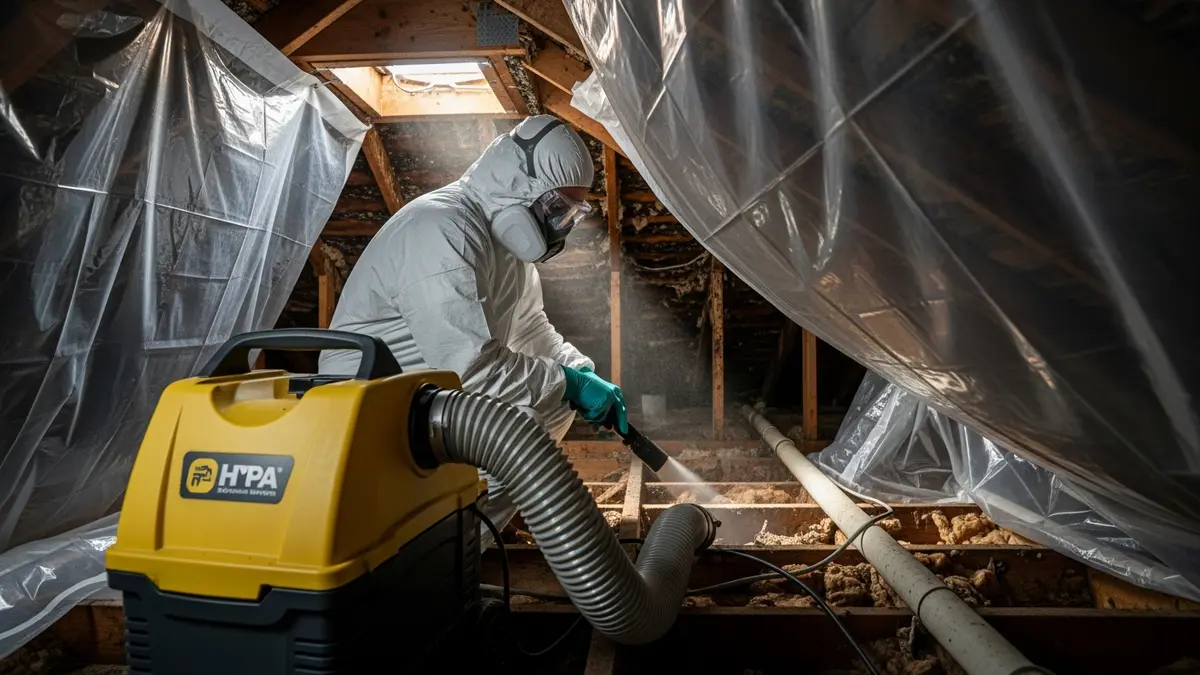
What Professional Remediation Involves
A typical attic mold remediation includes:
- Containment setup to prevent spore spread to living areas
- HEPA air filtration during work
- Removal or treatment of affected materials
- Application of antimicrobial treatments
- Repair of the moisture source
- Clearance testing to verify success
Prevention Tips
Once your attic is mold-free, keeping it that way requires addressing the conditions that allow mold growth. Attic mold prevention comes down to three things: ventilation, moisture control, and regular monitoring.
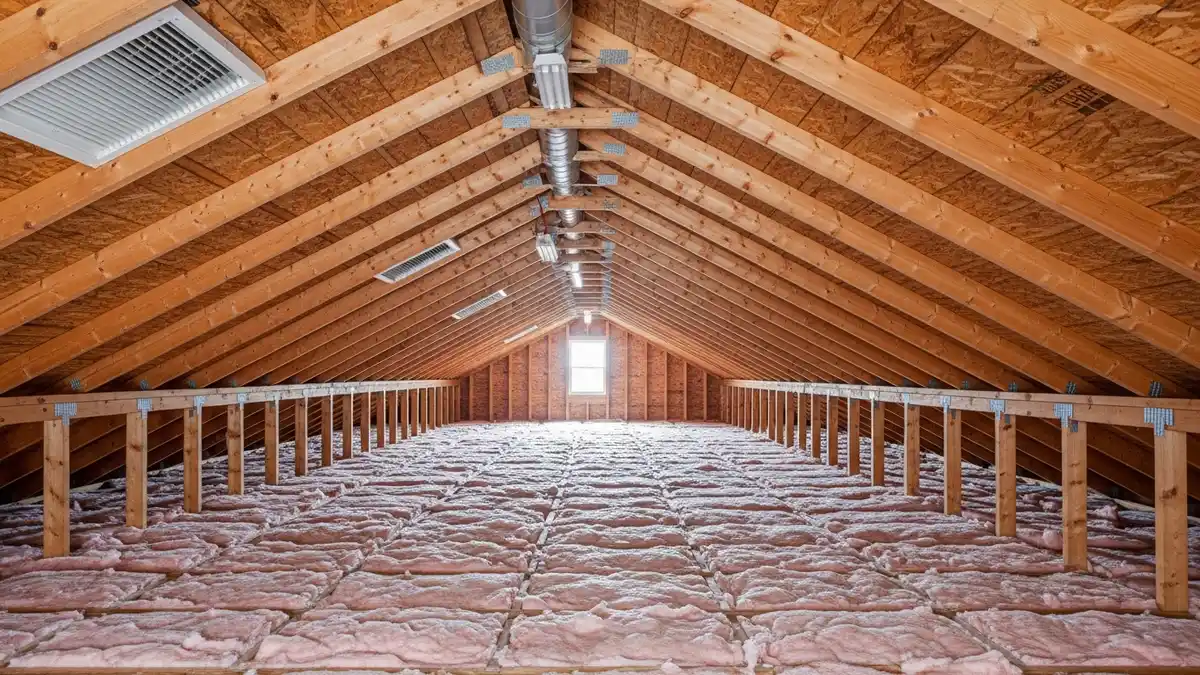
Improve Ventilation
- Ensure soffit vents aren't blocked by insulation
- Add or upgrade ridge vents. Skip powered attic fans: Energy Star warns they can pull conditioned air out of the house, and a depressurized house can backdraft a gas water heater
- Maintain a ratio of 1 square foot of ventilation per 150 square feet of attic space
- Consider adding baffles between rafters to maintain airflow channels
Control Moisture Sources
- Extend all bathroom and kitchen exhaust fans to terminate outside, never into the attic
- Seal air leaks from the living space below (around recessed lights, plumbing stacks, attic hatches)
- Insulate HVAC ducts in unconditioned attic space
- Address roof leaks immediately. Even small leaks cause roof leak mold
Regular Inspections
- Check your attic at least twice yearly, spring and fall
- Look for signs of water intrusion after major storms
- Monitor for frost on the underside of roof sheathing in winter. This indicates warm moist air is reaching the attic
- Have your roof inspected professionally every few years
- Document conditions with photos to track changes between inspections
These prevention strategies also apply to other moisture-prone areas. Basements and crawl spaces face similar humidity challenges and benefit from the same vigilance.
Next Steps
If you suspect attic mold in your home:
- Avoid disturbing it: Don't scrub or spray without proper containment
- Document what you see: Take photos from a safe distance
- Identify potential causes: Check exhaust vents, look for roof damage
- Get a professional assessment: Understand the full scope before remediation
- Fix the moisture source first: Remediation without source correction is wasted money
📚 This guide is part of our Complete Mold Remediation Guide: your comprehensive resource for understanding, preventing, and removing mold.
When attic mold spreads beyond a small DIY patch, you can find a verified mold remediation company and compare verified pros in your area.
Frequently Asked Questions
What causes mold in an attic?
Is black mold in an attic dangerous?
How much does attic mold removal cost?
Can I remove attic mold myself?
What does mold on attic plywood look like?
How do I prevent mold in my attic?
Is mold in the attic a big deal?
Will mold in the attic go away?
Can a bathroom fan cause mold in the attic?
Is attic restoration worth it?
This guide is for educational purposes only. Always consult with certified professionals for specific mold situations in your home. If you experience health symptoms, please consult a healthcare provider.