Mold Remediation Cost: $500–$30,000+ by Project Size & State (2026)
Mold remediation costs $500–$30,000+ ($10–$25/sq ft). State-by-state pricing, project-size breakdowns, insurance rules, and how to compare quotes.
Cost Insights
$500 – $30,000+
Average: ~$2,500 for a medium project (10–30 sq ft)
- Mold remediation costs an average of $2,500 per project, with most homeowners paying $1,500 to $6,500 depending on severity and state.
- Professionals typically charge $10 to $25 per square foot for mold remediation. A 100 sq ft area runs $1,000 to $2,500 at this rate.
- Costs vary significantly by state. California ($3,050), New York ($3,200), and Hawaii ($3,500) run highest. Most Midwest and Southern states average $2,000 to $2,250.
- HVAC mold remediation requires specialized cleaning and runs $3,000 to $10,000 per system. Whole-house remediation costs $10,000 to $30,000+.
- Mold assessment (separate from remediation) costs $300 to $700. Air sampling adds $150 to $400 if you need lab-verified species data for insurance or real estate transactions.
Mold Remediation Cost
Find a Verified ProNormal range for the U.S.
$1,500 – $6,500
Across our network of 19,600+ verified providers, we see homeowners picking between $1,500 and $9,000 quotes for the same kind of mold problem. The number on your contractor's clipboard depends on size, where the mold is hiding, and which state you're in. Your specific job may fall outside these patterns; however, the patterns below cover most of the variation we see in quote ranges, and most of the surprises that drive a $2,500 average up to $7,000 are predictable once you know what to look for.
This guide breaks down what mold remediation actually costs by project size, what changes the price up or down, and why a quote in Hawaii looks different from a quote in Mississippi. If you're already past the deciding-whether stage and just want to know if you're being charged fairly, the state-by-state section below is the part most cost guides don't ship.
In This Guide
- Average Costs: National pricing by project size
- Cost Factors: What moves the quote
- Assessment vs. Remediation: The two-license thing
- State-by-State Pricing: Where you live changes the number
- Can I Do It Myself?: DIY thresholds
- What Kills Mold Permanently?: Why moisture is the real problem
- Living at Home During Remediation: When to stay vs relocate
- Insurance Coverage: What's covered, what's not
- Filing a Claim: Step-by-step
- If You're Denied: Appeal options
- Getting Quotes: Comparing apples-to-apples
- Find a Pro: Verified providers near you
What does mold remediation actually cost?
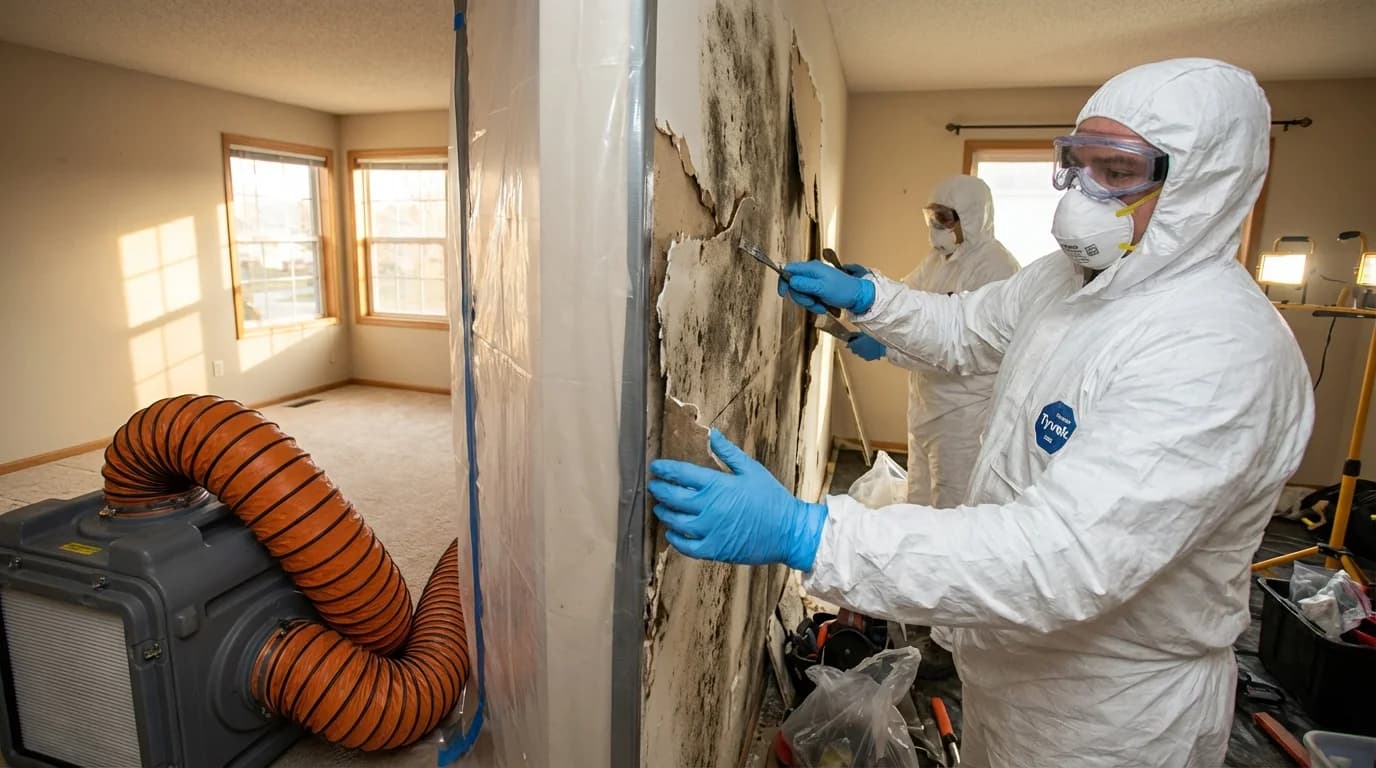
How much does mold remediation cost on average?
Mold remediation costs $500 to $30,000+, with most homeowners paying $1,500 to $6,500. Average is $2,500 for a medium project (10–30 sq ft). Small jobs under 10 sq ft run $500 to $1,500. Large jobs over 30 sq ft start at $3,500 and climb past $10,000 once structural repairs come in. Whole-house remediation lands at $10,000 to $30,000+.
Here's the national pricing grid:
| Area Affected | Cost Range | Average Cost |
|---|---|---|
| Small (under 10 sq ft) | $500 – $1,500 | $1,000 |
| Medium (10–30 sq ft) | $1,500 – $3,500 | $2,500 |
| Large (over 30 sq ft) | $3,500 – $10,000+ | $6,500 |
| Full house remediation | $10,000 – $30,000+ | $15,000 |
| Mold assessment only | $300 – $700 | $450 |
These numbers hold for professional work that includes containment, removal, cleaning, and disposal. They don't include rebuild costs (drywall, flooring, paint) which are tracked separately.
What does $10–$25 per square foot cover?
Mold remediation costs $10 to $25 per square foot in the United States. That's the most common pricing metric in the industry and the one most contractors quote when they're not giving you a flat number. A 100 sq ft area at $15/sq ft is $1,500. The same job at $25/sq ft is $2,500. The difference between those two quotes usually comes down to access difficulty, mold type, and how much rebuild the contractor expects to do.
Small jobs at the lower end of the range often carry a minimum charge of $500. Large or complex projects can exceed $25/sq ft when access is bad (think a crawl space with a 24-inch entry hatch) or when the contractor has to coordinate with a separate licensed mold assessor on FL clearance testing.
What's actually included in a remediation quote?
A real mold remediation quote includes seven things and runs $500 to $30,000+ depending on scope. Anything missing from this list is either a corner being cut or a separate line item you'll get hit with later:
- Initial assessment. Visual inspection plus moisture readings on suspect surfaces
- Containment. Sealing off the work area; this is the 6-mil polyethylene the crew tapes across your doorway with red builder's tape, plus negative-air pressure
- Air filtration. HEPA air scrubbers running for the duration; the negative-air machine the size of a small refrigerator that runs at 700 CFM is doing real work here
- Material removal. Physical removal of contaminated materials (drywall, insulation, carpet; anything porous that can't be cleaned)
- Cleaning. HEPA vacuuming and antimicrobial treatment of remaining surfaces
- Disposal. Proper bagged disposal of contaminated materials, not just dumpster-tossing
- Post-remediation verification. Clearance testing by a third-party assessor to confirm spore counts dropped to baseline
Repairs to the materials that got removed (drywall, flooring, framing) are almost always quoted separately. If a contractor is offering you a single combined number for remediation + rebuild, ask them to itemize. That's how you compare apples to apples between three bids.
What drives the price up or down?
Size of the affected area
Square footage is the single biggest cost driver in any remediation quote. A 10 sq ft bathroom job runs $500 to $1,500. A 100 sq ft basement section runs $4,500 to $8,000. The math isn't quite linear (small jobs carry minimums; large jobs unlock equipment efficiencies) however the relationship holds: more square feet means more containment material, more labor hours, more disposal capacity, more equipment runtime.
Where the mold is growing
Where the mold sits in your house changes the quote by a factor of 4 or more, even at the same square footage. A bathroom job is the cheapest scenario; HVAC and foundation work is the most expensive:
| Location | Complexity | Cost Impact |
|---|---|---|
| Bathroom surfaces | Low | Lowest cost |
| Visible wall areas | Low–Medium | Average |
| Behind drywall | Medium–High | Higher (requires demolition) |
| Crawl space | High | Higher (difficult access) |
| Attic | High | Higher (insulation removal) |
| HVAC system | Very High | Highest (system-wide treatment) |
| Foundation / structural | Very High | Highest (structural concerns) |
Behind-drywall jobs cost more because the crew has to cut, bag, and dispose of the wallboard, then put it back. Crawl spaces and attics cost more because access is bad and the crew is wearing the negative-pressure suit longer. HVAC mold runs $3,000 to $10,000 per system because every duct line has to be cleaned and the air handler treated.
The mold species in your samples
The mold species your assessor identifies on the lab report changes the cost by $500 to $2,000. Most household mold (Aspergillus, Penicillium, Cladosporium) gets the standard remediation protocol. Stachybotrys (the species commonly called black mold) requires additional containment and runs higher because crews handle it under stricter protocols. Fusarium and Chaetomium need specialized handling. The Air-O-Cell spore-trap cassette the assessor seals and ships overnight to EMSL Analytical is what tells you which one you've got.
You don't shop for remediation by mold species; however the species line on your assessment report does change the quote. If you see Stachybotrys flagged, expect the high end of the range.
Whether the moisture source is fixed
Remediation costs double when the leak's still active. Mold needs water; if the water source isn't repaired before remediation starts, the crew is just buying you 24 to 48 hours before regrowth begins. Reputable contractors will refuse to start remediation until you've fixed the underlying moisture problem. Less-reputable ones will take the job, charge you for it, and you'll be calling them back in a month.
The fix-the-source step adds plumbing, roofing, or drainage costs that get counted separately. Those run anywhere from $200 (a $30 hygrometer at the Lowe's hardware aisle plus a couple of caulk tubes) to $5,000+ (a full foundation re-grading).
Structural repair scope
If mold has eaten into the materials, the rebuild costs come on top of remediation:
- Drywall replacement: $1–$3 per square foot
- Subfloor replacement: $2–$5 per square foot
- Framing repair: $100–$300 per section
- Insulation replacement: $1–$4 per square foot
That's another reason a $2,500 medium-job quote can become a $5,000+ all-in number once the wall comes down and the studs underneath need replacing. Get an itemized quote that separates remediation from rebuild so you know which line item is which.
Assessment vs. remediation: what's the difference?
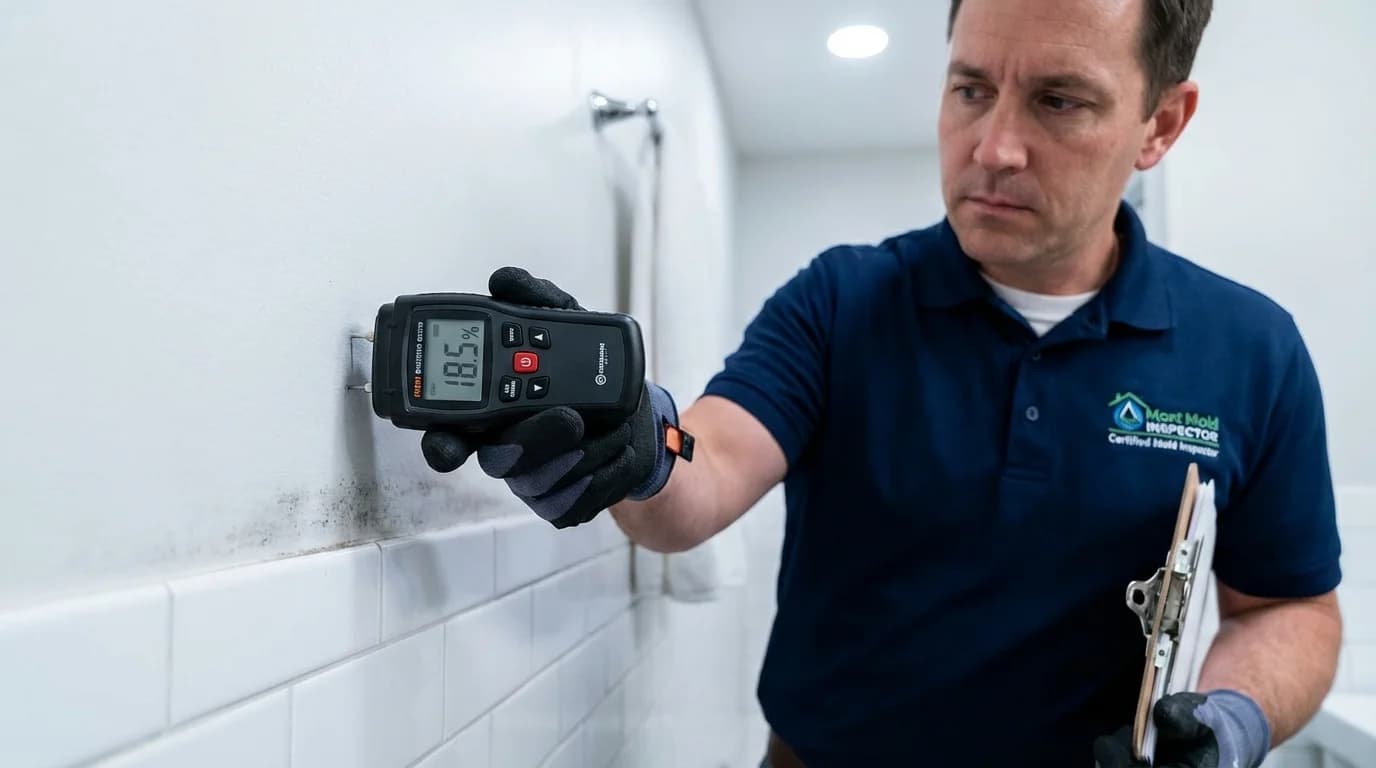
How much does a mold assessment cost?
A professional mold assessment costs $300 to $700 for a visual inspection with moisture testing and a written report. That includes the assessor walking the property, reading suspect surfaces with a moisture meter, sometimes running a thermal imaging camera, identifying moisture sources, and writing up a scope-of-contamination report you can use for insurance or for shopping remediation quotes.
This is a separate service from the remediation itself. The assessor finds the problem; the remediator fixes it. In most states they're allowed to be the same company. In Florida and Texas, they can't.
When is mold testing worth the extra $150–$400?
Mold testing (air sampling and surface sampling, separate from visual assessment) costs $150 to $400 on top of the assessment fee. Air sampling traps spores on the Air-O-Cell cassette described earlier; surface sampling uses tape lifts or swabs sent to a lab for species identification.
You need testing in three scenarios:
- Insurance claims. Adjusters want lab-verified species data to approve coverage
- Real estate transactions. Buyers and sellers want third-party documentation
- Hidden mold suspicion. When you smell it but can't see it (the borescope camera the inspector threads through a 3/8-inch hole drilled below the baseboard is what finds it)
Testing isn't always necessary. If you can see visible mold and you've already decided to remediate, the test result doesn't change what happens next. See our guide on how to test for mold for the full DIY-vs-pro breakdown, or our mold inspection cost breakdown for what an inspection costs in different scenarios.
Why two separate licenses for two separate jobs?
In Florida and Texas, state law requires mold assessors and mold remediators to hold separate licenses; the same person or company can't legally do both on the same property. The reason is consumer protection. An assessor who also profits from the remediation has a financial incentive to find more mold than is actually there. By keeping the two roles licensed separately, the state forces an arm's-length relationship: the assessor diagnoses, the remediator treats, and a different licensed assessor confirms the work passed clearance.
In other states, one company can legally do both. That doesn't mean they should. If your assessor is also the remediator, ask for a third-party clearance test from a different company at the end. It's the easiest way to know the job was done right. See our assessor-vs-remediator guide for two separate licenses for two separate jobs and what that looks like in practice.
Why does mold remediation cost more in some states?
State-level cost variability is the part most national cost guides skip. The numbers below come from our network of 19,600+ verified mold professionals across all 50 states, blended with 2026 industry data. They reflect a medium-sized project (10–30 sq ft) at typical severity. Small projects scale roughly to 60% of these numbers; large ones to 200% or more.
Ten states deserve a closer look because the cost drivers there are unusual:
California ($3,050 average)
California mold remediation runs $3,050 on average for a medium project, with normal-range jobs landing $1,500 to $5,500. Labor runs $75 to $150+ per hour, and California requires licensing plus mandatory third-party clearance testing on most jobs. Coastal humidity drives year-round demand. Average reflects a statewide blend of LA ($2,573) and SF ($2,796) Angi data weighted with complex coastal jobs.
New York ($3,200 average)
New York mold remediation runs $3,200 on average, with normal-range jobs landing $2,000 to $5,500. NYC labor is 30 to 45% above the national rate. Mold contractors must be licensed under New York State Article 32. Dense pre-war buildings with limited access drive up labor hours. The state average blends NYC's premium with lower upstate market rates.
Florida ($3,000 average)
Florida mold remediation runs $3,000 on average, with normal-range jobs landing $1,500 to $4,500. Year-round high humidity plus hurricane and flood exposure create persistent demand. FL law mandates licensed mold contractors and mandatory third-party clearance testing, which adds regulatory cost most other states don't carry.
Texas ($2,700 average)
Texas mold remediation runs $2,700 on average, with normal-range jobs landing $1,400 to $4,000. Gulf Coast humidity and hurricane surges create surge demand. Texas mandates licensed mold contractors with mandatory third-party clearance testing under state law. Labor is moderate compared to the coasts; regulatory overhead is what pushes the number above the national median.
Hawaii ($3,500 average)
Hawaii mold remediation runs $3,500 on average, with normal-range jobs landing $2,000 to $5,500. Tropical humidity drives year-round demand. Hawaii's island logistics inflate materials and equipment costs +40 to 60% above national; everything from negative-air machines to disposal containers ships in. Labor itself isn't the biggest driver here; freight is.
Alaska ($2,750 average)
Alaska mold remediation runs $2,750 on average, with normal-range jobs landing $1,800 to $5,500. Urban labor in Anchorage and Fairbanks pushes well above the national rate; however, limited contractor availability statewide and a thinner book of complex jobs keeps the median moderate. Coastal moisture and snowmelt create persistent mold conditions, especially in older crawl spaces. Travel surcharges land at the high end of the range for rural jobs more than 50 miles from the contractor's home market.
Georgia ($2,350 average)
Georgia mold remediation runs $2,350 on average, with normal-range jobs landing $1,250 to $4,500. The Atlanta metro pushes costs above the state average; humid subtropical climate with frequent storms creates ideal mold conditions in basements and crawl spaces. For the deeper Atlanta breakdown including basement specifics and intown vs. suburban pricing, see our Atlanta-specific cost factors guide. For Savannah's coastal humidity plus historic-home complexity, see our breakdown of Savannah historic-home factors.
Louisiana ($2,500 average)
Louisiana mold remediation runs $2,500 on average, with normal-range jobs landing $1,250 to $6,000. Year-round Gulf humidity plus hurricane exposure makes Louisiana one of the highest-demand states in the South. Louisiana's state mold licensing requirement adds regulatory cost. The high end of the normal range reflects post-storm surge pricing.
Massachusetts ($2,700 average)
Massachusetts mold remediation runs $2,700 on average, with normal-range jobs landing $1,500 to $5,000. Boston metro cost of living drives prices well above the national. Pre-1978 housing stock with humid summers creates persistent risk in basements and attics. Older homes also mean lead-paint and asbestos overlap, which can complicate scope.
Washington ($2,600 average)
Washington mold remediation runs $2,600 on average, with normal-range jobs landing $1,500 to $4,250. Western Washington's rainy climate creates persistent mold conditions. Seattle metro labor demand and high cost of living push prices above national; eastern Washington trends lower with the lower cost of living.
Full state-by-state reference
Below is the full 50-state plus DC breakdown for a medium-sized project (10–30 sq ft) at typical severity:
| State | Low Range | High Range | Average |
|---|---|---|---|
| Alabama (AL) | $1,100 | $4,500 | $2,150 |
| Alaska (AK) | $1,800 | $5,500 | $2,750 |
| Arizona (AZ) | $1,300 | $3,500 | $2,350 |
| Arkansas (AR) | $1,050 | $4,500 | $2,100 |
| California (CA) | $1,500 | $5,500 | $3,050 |
| Colorado (CO) | $1,500 | $3,500 | $2,400 |
| Connecticut (CT) | $1,500 | $4,900 | $2,700 |
| Delaware (DE) | $1,350 | $4,250 | $2,350 |
| District of Columbia (DC) | $1,800 | $5,500 | $3,100 |
| Florida (FL) | $1,500 | $4,500 | $3,000 |
| Georgia (GA) | $1,250 | $4,500 | $2,350 |
| Hawaii (HI) | $2,000 | $5,500 | $3,500 |
| Idaho (ID) | $1,350 | $3,500 | $2,200 |
| Illinois (IL) | $1,500 | $4,200 | $2,500 |
| Indiana (IN) | $1,050 | $3,350 | $2,150 |
| Iowa (IA) | $1,100 | $3,200 | $2,100 |
| Kansas (KS) | $1,050 | $3,150 | $2,050 |
| Kentucky (KY) | $1,100 | $4,500 | $2,200 |
| Louisiana (LA) | $1,250 | $6,000 | $2,500 |
| Maine (ME) | $1,500 | $4,500 | $2,350 |
| Maryland (MD) | $1,500 | $5,000 | $2,500 |
| Massachusetts (MA) | $1,500 | $5,000 | $2,700 |
| Michigan (MI) | $1,100 | $3,450 | $2,200 |
| Minnesota (MN) | $1,100 | $3,400 | $2,200 |
| Mississippi (MS) | $1,050 | $5,000 | $2,050 |
| Missouri (MO) | $1,100 | $3,500 | $2,250 |
| Montana (MT) | $1,250 | $3,250 | $2,100 |
| Nebraska (NE) | $1,050 | $3,150 | $2,050 |
| Nevada (NV) | $1,300 | $3,500 | $2,300 |
| New Hampshire (NH) | $1,350 | $4,250 | $2,250 |
| New Jersey (NJ) | $1,500 | $5,500 | $2,750 |
| New Mexico (NM) | $1,200 | $3,250 | $2,150 |
| New York (NY) | $2,000 | $5,500 | $3,200 |
| North Carolina (NC) | $1,250 | $4,500 | $2,400 |
| North Dakota (ND) | $1,100 | $3,300 | $2,100 |
| Ohio (OH) | $1,150 | $3,450 | $2,250 |
| Oklahoma (OK) | $1,050 | $4,500 | $2,100 |
| Oregon (OR) | $1,500 | $4,000 | $2,500 |
| Pennsylvania (PA) | $1,400 | $4,500 | $2,400 |
| Rhode Island (RI) | $1,400 | $4,500 | $2,450 |
| South Carolina (SC) | $1,250 | $5,000 | $2,350 |
| South Dakota (SD) | $1,050 | $3,200 | $2,050 |
| Tennessee (TN) | $1,150 | $5,000 | $2,250 |
| Texas (TX) | $1,400 | $4,000 | $2,700 |
| Utah (UT) | $1,350 | $3,500 | $2,300 |
| Vermont (VT) | $1,300 | $4,000 | $2,200 |
| Virginia (VA) | $1,450 | $5,000 | $2,500 |
| Washington (WA) | $1,500 | $4,250 | $2,600 |
| West Virginia (WV) | $1,050 | $4,000 | $2,100 |
| Wisconsin (WI) | $1,150 | $3,500 | $2,250 |
| Wyoming (WY) | $1,250 | $3,250 | $2,100 |
Methodology: State ranges combine 2026 industry data with verified quote ranges from our network of 19,600+ licensed mold remediation providers across all 50 states. Figures reflect a medium project (10–30 sq ft) at mid-severity. Small/large projects scale roughly ±60% from these values. Disclaimer: actual costs vary based on specific project requirements, contractor availability, and local market conditions. Always obtain multiple quotes from verified professionals for accurate pricing.
Deeper pricing data: FL, TX, GA metros
For Florida, Texas, and Georgia, our ZIP-level cost calculator applies city-level multipliers derived from our provider network rather than just state averages. Current city multipliers against a $2,500 national-medium baseline:
| Metro | State | Cost Multiplier | Medium Project Estimate |
|---|---|---|---|
| Miami | FL | ×1.30 | $3,250 |
| Fort Lauderdale | FL | ×1.25 | $3,125 |
| Austin | TX | ×1.20 | $3,000 |
| Houston | TX | ×1.15 | $2,875 |
| Atlanta | GA | ×1.15 | $2,875 |
| Orlando | FL | ×1.10 | $2,750 |
| Tampa | FL | ×1.10 | $2,750 |
| Dallas | TX | ×1.10 | $2,750 |
| Jacksonville | FL | ×1.00 | $2,500 |
| San Antonio | TX | ×1.00 | $2,500 |
| Savannah | GA | ×1.00 | $2,500 |
This is proprietary network data. Most national cost guides only publish state-level figures because they don't maintain dense metro-by-metro contractor coverage. Our 19,600+ provider listings let us price at the ZIP level for the three states where coverage is densest.
Can I remediate mold myself?
What you can clean yourself
DIY mold cleanup is safe for areas under 10 square feet on hard, non-porous surfaces. That covers bathroom tile, glass, sealed concrete, and small spots on metal fixtures. Use an N95 minimum respirator, gloves, and eye protection. A detergent solution or a commercial mold cleaner works on hard surfaces; avoid bleach on porous materials because it kills surface mold without penetrating into the substrate.
Anything bigger or hidden goes to a pro. The line is sharp on purpose; it's the line where containment failure becomes the bigger risk than the mold itself. See our DIY treatment guidance for the full safe-DIY checklist.
When you have to call a pro
Professional remediation is required for any project over 10 square feet, mold behind drywall, mold in HVAC ducts or air handlers, black mold (Stachybotrys), and any situation where you'd need to cut into walls or remove building materials. Those are the scenarios where DIY isn't just slower; it's actively worse, because disturbing mold without containment aerosolizes spores throughout your house.
The containment math no DIY video tells you
A $2,500 professional job can become a $15,000 whole-house problem when DIY removal disturbs spores without negative-air containment. The math is brutal: cutting into a moldy wall section without sealed plastic barriers and a HEPA-filtered negative-air machine sends spores throughout your HVAC system. What was a contained 50 sq ft basement problem becomes a multi-room remediation plus duct cleaning. Add $7,500 to $12,500 to the original quote. The YouTube videos don't show this part because the regret happens off-camera.
If you've already started a DIY job and you're seeing visible spread, stop, leave the area sealed, and call a professional remediator before turning your HVAC back on.
What kills mold permanently?
Why remediation alone isn't permanent
Remediation alone doesn't permanently kill mold. Mold grows back within 24 to 48 hours when the water source isn't fixed; the crew's containment plus HEPA scrubbing buys you a clean-air window only if the underlying moisture is repaired before the work starts. That's why a $2,500 remediation that doesn't address the leak is a $2,500 receipt for re-mold within a month.
The four-step permanent fix
Permanent mold elimination is a four-step process, and the order matters:
- Fix the moisture source. Repair leaks, improve drainage, seal foundation cracks, replace failing flashing
- Remediate the existing mold. Professional removal with proper containment, HEPA scrubbing, and antimicrobial treatment
- Control humidity. Keep indoor humidity below 60%, ideally 30 to 50%; a $30 hygrometer at the Lowe's hardware aisle tells you where you stand
- Improve ventilation. Bathroom fans, kitchen range hoods, basement dehumidifiers, crawl-space encapsulation if you're in the South
What no spray or DIY product can do alone
No chemical, spray, or home remedy "kills mold permanently" on its own. The industry rule everyone in remediation repeats is short and accurate: no moisture, no mold. A bleach spray does not address the leaking pipe behind the drywall. An antimicrobial fog does not repair a foundation crack. Whatever the bottle promises, the only durable answer is removing the food source (mold) and removing the water source (whatever caused the leak) at the same time.
Can you live in your home during remediation?
When you can stay
You can usually stay home for small projects under 30 sq ft contained to a single sealed room. The crew puts up the 6-mil polyethylene barrier, runs the negative-air machine to keep spores from leaking into the rest of the house, and works the area with the door sealed off. If the project takes 1 to 2 days and the work area has its own ventilation separate from the rest of the house, staying is fine. Most homeowners stay through small bathroom or single-wall jobs without issues.
When you should temporarily relocate
You should temporarily relocate for multi-room jobs, HVAC duct treatment, or whole-house remediation. Relocations typically last 1 to 5 days. The triggers are clear: any job involving the HVAC system (because spores travel through ductwork), any job in more than one room simultaneously, or any household member with asthma, allergies, or compromised immunity. Don't tough it out; the cost of a hotel for three nights is a fraction of the medical risk for someone with respiratory sensitivity.
Insurance coverage for displacement
Additional Living Expenses (ALE) coverage on most homeowner policies covers relocation costs when mold results from a covered peril. ALE typically pays for hotels, meals, and incidentals during the displacement period, capped at a percentage of your dwelling coverage. Ask your remediation company for a written timeline before the project starts so you can submit the displacement period to your adjuster as part of the claim.
Is mold covered by homeowner's insurance?
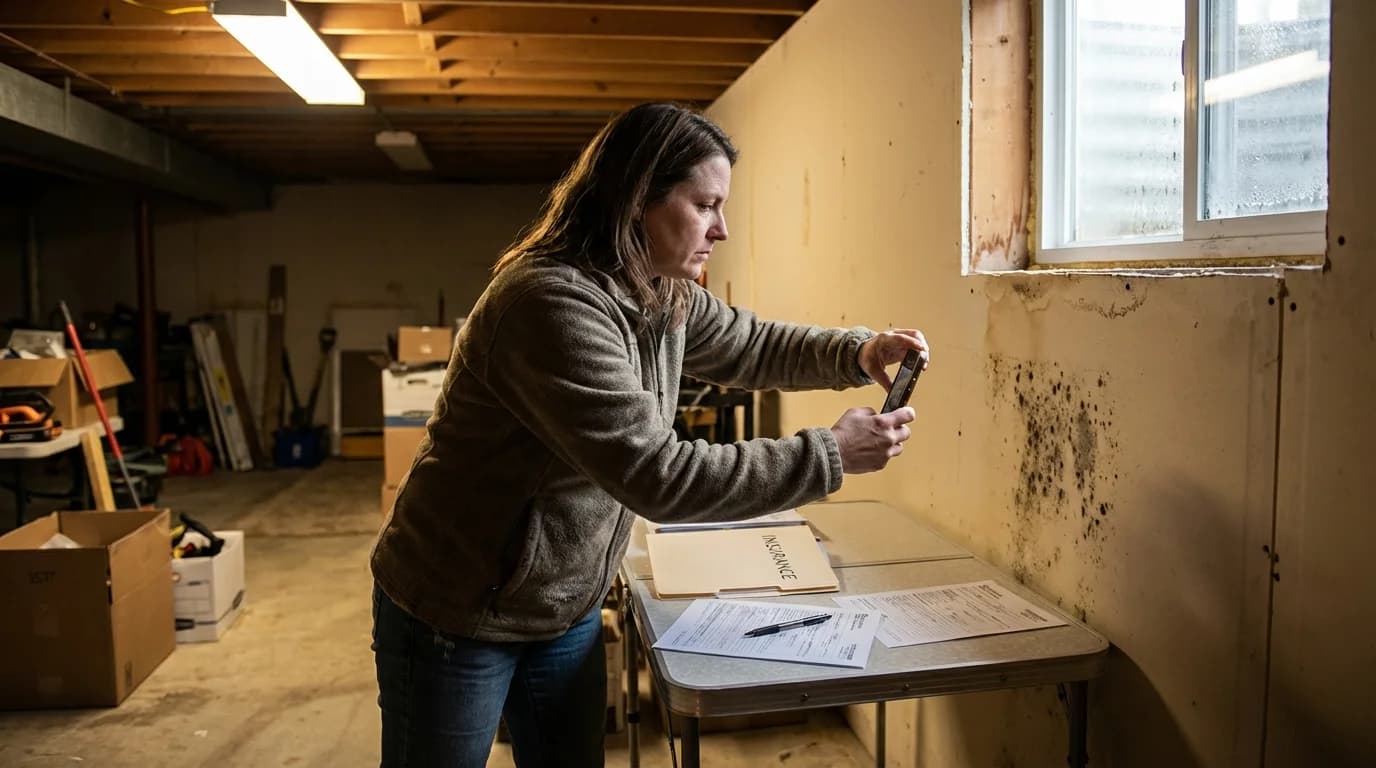
The short version: mold is covered when it results from a sudden, accidental water event, and it's not covered when it results from gradual leaks or maintenance neglect. Most policies also cap mold coverage between $5,000 and $25,000 even when the cause qualifies.
When mold is typically covered
Mold is typically covered when it results from a "covered peril"; a sudden, accidental water event your policy lists. Common covered scenarios:
- Burst pipes. Sudden plumbing failures
- Storm damage. Water intrusion from covered weather events
- Firefighting water damage. Water used to extinguish a fire
- Appliance failures. Sudden washing machine or water heater failures
- Accidental overflow. Bathtub or sink overflow if left unattended briefly
In all of these, the mold develops as a direct result of a sudden water event. That's the trigger insurers look for.
When mold is typically NOT covered
Mold is typically not covered when it results from gradual water damage, maintenance neglect, flooding, or pre-existing conditions. Specifically excluded:
- Neglected maintenance. Slow leaks you failed to address
- Gradual water damage. Long-term moisture problems
- Flooding. Requires separate flood insurance through NFIP
- High humidity. Condensation and poor ventilation
- Pre-existing mold. Mold present before the policy or at time of purchase
- Groundwater seepage. Water entering through foundation
The line between "sudden" and "gradual" is where most claim disputes happen. A pipe that burst yesterday is sudden. A pipe that's been dripping for six months is gradual, even if you only noticed yesterday.
Coverage limits to expect
Even when mold qualifies for coverage, most policies cap mold remediation between $5,000 and $25,000. Combined limits may apply if mold shares a cap with other water damage. The standard deductible applies before coverage kicks in. Some insurers offer separate mold endorsements for additional premium; these are worth considering if you live in a humid climate (FL, TX, LA, HI) and your default cap is $5,000.
Common scenarios at a glance
| Scenario | Typically Covered? |
|---|---|
| Pipe bursts behind wall, mold develops within days | Usually yes |
| Slow leak under sink for months causes mold | Usually no |
| Roof damaged in storm, mold develops from water intrusion | Usually yes |
| Bathroom ventilation is poor, mold grows on ceiling | Usually no |
| Washing machine hose fails suddenly, mold in laundry room | Usually yes |
| Basement floods from heavy rain | No (requires flood insurance) |
Tip: Review your policy's mold coverage limits before you need them. If your cap is $5,000 and you live in a hurricane state, ask your agent about a mold endorsement.
How do you file a mold damage insurance claim?
If you believe your mold damage is covered, follow these six steps. The order matters; reversing them can give your insurer an excuse to deny the claim on procedural grounds.
Step 1: Document everything
Document the damage thoroughly before any cleanup begins. Take extensive photos and videos of all visible mold, document the water source or damage that caused the mold, note the date you discovered it and any symptoms, keep records of all related expenses, and save any damaged items as evidence (if safe to do so). Photos timestamped on your phone are admissible; descriptions written down weeks later are not.
Step 2: Report promptly to your insurance company
Report the water damage event and the resulting mold to your insurance company immediately. Get a claim number, an adjuster assignment, and a written acknowledgment. Most policies have notification windows; missing the window gives the insurer a procedural denial. Report even if you're not sure the damage is covered.
Step 3: Get professional assessments
Hire a licensed mold assessor (separate from any remediator) for an independent inspection. Get a written assessment with scope and cost estimates, have moisture testing performed to identify the source, and document the chain of events from the water damage to the mold growth. Insurance adjusters give significantly more weight to third-party assessments than to remediator estimates. See our assessor-vs-remediator guide for why.
Step 4: Obtain remediation quotes
Get multiple itemized quotes from licensed remediation professionals. Each quote should include containment, removal, cleaning, and clearance testing as separate line items. Keep all quotes for insurance submission, even the ones you don't choose. Adjusters review quote ranges to assess reasonableness; having three reference points strengthens your position.
Step 5: Work with your adjuster
Your insurance adjuster will schedule a damage inspection, review your documentation and quotes, and determine coverage based on policy terms. Be present for the inspection if possible. Don't admit fault, don't sign statements about cause without reading them carefully, and don't agree to settlements before you understand what's covered and what isn't.
Step 6: Complete remediation with clearance testing
Once approved, choose a licensed verified remediation professional, make sure work meets professional standards, obtain clearance testing from a third-party assessor, and submit final receipts for reimbursement. Without third-party clearance testing, the insurer may dispute that the work was completed properly.
Warning: Never admit fault, sign statements, or agree to inadequate settlements without understanding your policy rights. If your claim is denied or underpaid, consider consulting a public adjuster or attorney specializing in insurance claims.
What if your insurance claim is denied?
Common denial reasons
Insurance companies deny mold claims for six common reasons, and most of them come down to either policy language or timing:
- Maintenance exclusion. Damage resulted from neglected upkeep
- Gradual damage. Mold developed over an extended time period, not a sudden event
- Policy exclusions. Specific mold exclusion in your policy language
- Late reporting. Damage wasn't reported promptly
- Exceeded limits. Claim exceeds your mold coverage cap
- Pre-existing condition. Mold existed before the covered event
How to appeal
If your claim is denied, request a written explanation citing specific policy language, review your policy carefully against the cited reason, gather supporting evidence (third-party assessor report, contractor opinions, photos of the sudden-event trigger), submit a formal appeal in writing, and seek professional help if the appeal is denied. A public adjuster works on contingency (typically 10 to 20% of the recovered amount) and an attorney specializing in insurance claims can pursue bad-faith denials when the insurer's reasoning doesn't hold up.
How do I get accurate quotes for my project?
Online cost guides give you a range. Quotes from a verified professional give you a number. The gap between the two is where most homeowners get burned.
What a real quote includes
A real mold remediation quote includes nine items written down on paper:
- Scope of work. Detailed description of all work to be performed
- Containment plan. How the crew will prevent spore spread
- Equipment used. HEPA filtration, negative air machines, antimicrobial agents
- Materials. Antimicrobial treatments, replacement materials
- Labor breakdown. Hours and crew size
- Disposal. How contaminated materials will be handled
- Clearance testing. Post-remediation verification by a third-party assessor
- Timeline. Estimated project duration with milestones
- Warranty. Guarantees on workmanship
If a quote is missing any of these, ask for them in writing before signing. Verbal commitments don't survive a dispute. See our questions to ask a mold company guide for the full pre-hire checklist and our common scams breakdown for what to watch out for. For end-to-end hiring guidance, see our hiring guide.
How to compare three quotes apples-to-apples
When you're comparing three quotes, hold five things constant:
- Scope. Same square footage, same affected areas, same level of demolition
- Licensing and insurance. Verify both with the state license board and the insurance carrier directly
- References and reviews. Check at least 5 recent reviews and ask for 2 references you can call
- Project experience. How many similar projects has this contractor done in the past 12 months
- Payment terms and timeline. Milestone payments, not lump-sum-up-front
If two quotes are dramatically different on the same scope, the question isn't which contractor is cheaper. It's why one quote is so much higher and what that contractor is seeing that the other isn't.
Red flags that mean walk away
Walk away from any contractor who refuses an on-site inspection, gives a price over the phone before seeing the property, won't put the scope in writing, won't show their license and insurance certificates, demands more than 30% upfront, or refuses third-party clearance testing. Each of those is a known scam pattern. The mold market has good operators and bad ones; the bad ones leave a trail of these refusals. Trust the trail.
Connect with verified mold professionals
Don't trust your home to just anyone. Find verified providers in your state who have been vetted for proper licensing, insurance, and professional reputation through state license database verification. Our verification process confirms state license status, validates insurance coverage, and checks for IICRC certifications (WRT, AMRT) on every provider in the network.
📚 This guide is part of our Complete Mold Remediation Guide. Your full resource for understanding, preventing, and treating mold.
Frequently Asked Questions
How much does mold remediation typically cost?
How expensive is it to get rid of mold in a home?
Why is mold remediation so expensive?
How long does mold remediation take?
Does homeowner's insurance cover mold remediation?
Can I remediate mold myself?
What kills mold permanently?
Can you live in a house during mold remediation?
Ready to get accurate quotes? You can find a verified mold remediation company anywhere in the country. Every contractor on Verified Remediation is identity-checked and tier-ranked, with licenses, insurance, and reviews verified where available.
This guide is for educational purposes only and provides general cost estimates based on national averages and our network of 19,600+ verified providers. Actual costs vary by location, scope, and specific circumstances. Always obtain multiple quotes from licensed professionals for accurate pricing. If you have questions about insurance coverage, consult your insurance provider or a licensed insurance professional.