Basement Mold: Causes, Removal & Prevention (2026)
Basement mold from foundation leaks, flooding, and humidity. How to tell mold from efflorescence, DIY vs professional removal, waterproofing, and prevention.
That damp, musty smell when you walk down to your basement? It's often the first sign of a mold problem. Basements are notorious mold magnets: their below-grade position, concrete construction, and tendency to collect moisture make them prime real estate for fungal growth.
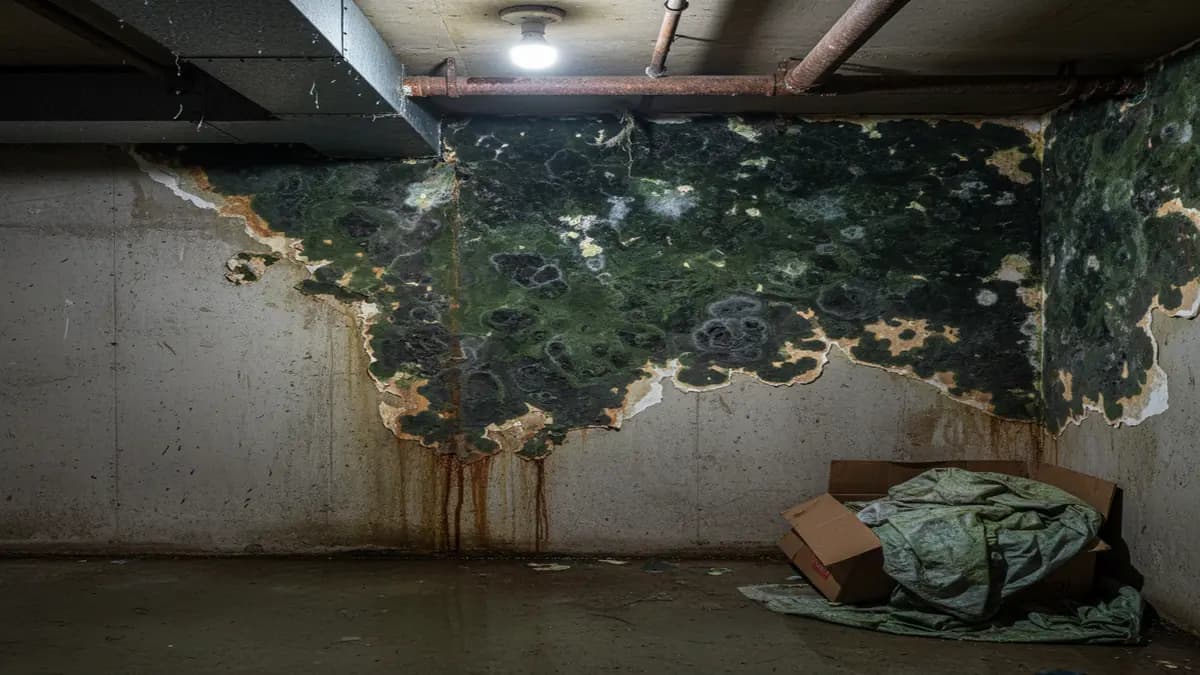
In This Guide
- Why Basements Get Mold: Below-grade moisture and ventilation
- Common Causes: Cracks, drainage, plumbing, flooding
- Mold vs Efflorescence: How to tell the difference
- Health Risks: Stack effect and symptom patterns
- Remediation: DIY vs professional removal
- Prevention: Waterproofing, ongoing maintenance, and what to put in the basement
Why Basements Are Mold Hotspots
Basements face a unique combination of factors that create ideal mold conditions. Understanding these factors helps you prevent problems and identify solutions.
Below-Grade Moisture
Your basement sits below ground level, surrounded by soil that holds moisture. This moisture constantly tries to find its way inside through:
- Hydrostatic pressure pushing water through concrete
- Capillary action wicking moisture through porous materials
- Groundwater seepage during wet seasons
- High humidity from contact with cool foundation walls
Temperature Differential
Basement walls stay cool year-round because they're in contact with the earth. When warm, humid air from upstairs meets these cool surfaces, condensation forms; this is why basement walls often feel damp even without visible leaks. This same principle causes mold on basement walls and a persistent musty basement smell. Upstairs, the same physics writes different patterns on drywall; mold on walls covers reading those.
Limited Ventilation
Many basements have few or no windows and limited air circulation. Stagnant air allows moisture to accumulate and creates pockets where mold thrives undisturbed. The combination of dampness and poor airflow is also why crawl spaces share many of the same mold risks.
Common Causes of Basement Mold
Identifying the moisture source is essential for effective remediation. Mold will return if you treat the symptoms without fixing the cause.
Foundation Cracks and Gaps
Over time, concrete foundations develop cracks due to:
- Normal settling of the structure
- Freeze-thaw cycles in cold climates
- Tree roots pressing against foundations
- Poor original construction
Even hairline cracks can admit enough moisture for mold growth, especially during heavy rains.
Hydrostatic Pressure
When the water table rises or soil becomes saturated, water pressure builds against your foundation. This pressure can force water through:
- Floor-wall joints (cove joints)
- Cracks in the floor slab
- Tie rod holes from construction
- Porous concrete itself
Poor Exterior Drainage
Water should flow away from your foundation, not toward it. Common drainage problems include:
- Gutters that overflow or discharge too close to the foundation
- Grading that slopes toward the house
- Window wells that collect water
- Clogged or broken foundation drains
Plumbing Issues
Basements often house water heaters, washing machines, and plumbing infrastructure. Leaks from these sources create chronic moisture problems:
- Slow leaks under water heaters
- Washing machine supply line failures
- Condensation on cold water pipes
- Floor drain backups during heavy rains
Flooding History
A basement that has flooded (even once) has a high likelihood of mold problems. Flood water saturates porous materials like drywall, carpet, and wood framing. Without proper drying within 24-48 hours, mold begins to grow. On bare framing, black mold often shows up as dark green-black streaks that follow the grain; what black mold looks like walks through it surface by surface.
How fast does mold grow after a basement flood? Fast enough that the clock is the enemy, not the water. Growth can start within 24 to 48 hours on anything that stays wet, which is why EPA's advice is to dry water-damaged materials and belongings inside that window. Carpet and its pad, drywall, insulation, cardboard, and upholstered furniture go first; a concrete floor or bare framing that dries within two days usually doesn't grow anything. Past 48 hours, assume growth has started where you can't see it yet, and treat porous material that's still wet as a removal job, not a drying job. Flood water that carried sewage changes the cleanup more than the timeline: that's a professional job however fast you dried it.
Identifying Basement Mold vs Efflorescence
One common mistake homeowners make is confusing mold with efflorescence (a white, crystalline deposit that forms on concrete and masonry). This is especially important when dealing with white mold in basements, which can look similar to mineral deposits at first glance.
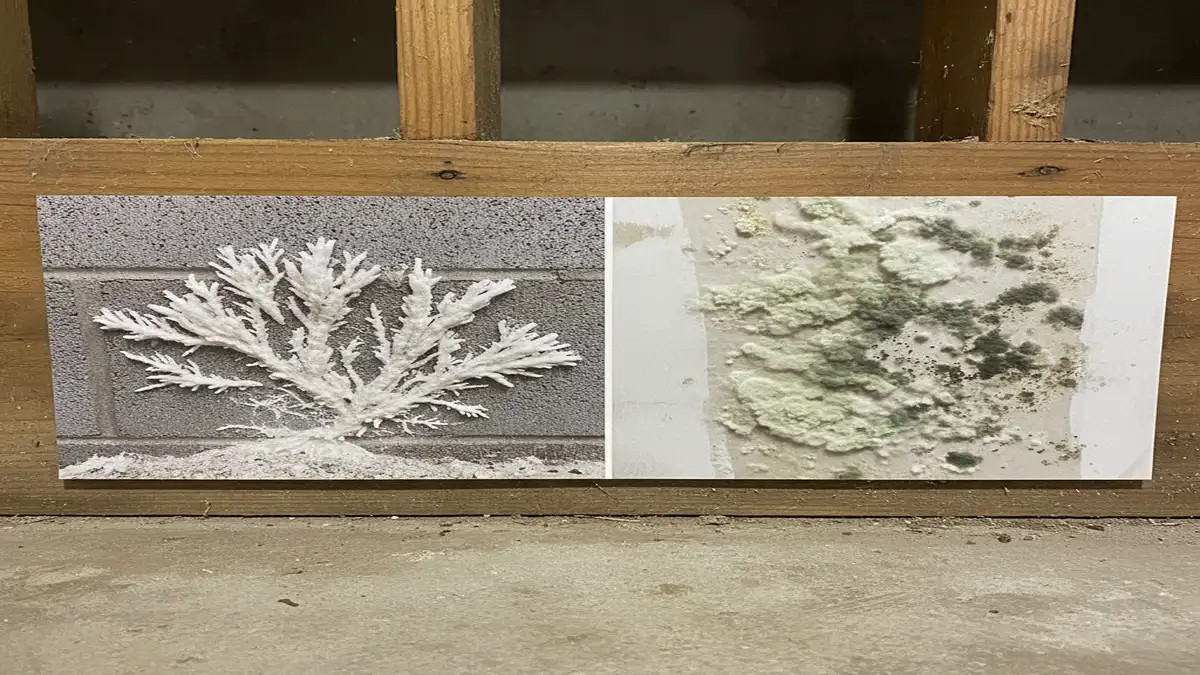
How to Tell the Difference
Efflorescence:
- White or grayish-white color
- Crystalline or powdery texture
- Forms on concrete, brick, or block surfaces
- Can be wiped away easily and dissolves in water
- No musty odor
- Indicates moisture moving through masonry
Mold:
- Can be white, gray, green, black, or other colors
- Fuzzy, slimy, or powdery texture
- Grows on organic materials (wood, drywall, carpet, fabric)
- Cannot be simply wiped away; stains surfaces
- Produces musty, earthy odor
- May cause allergic reactions when disturbed
Tip: If you're unsure, spray a small amount of water on the suspicious area. Efflorescence will dissolve; mold will not. For a more thorough evaluation, our mold identification guide covers visual and testing methods for all common household mold types.
Not sure what you're looking at? Air quality testing can confirm whether mold spores are present even when visual identification is unclear.
Health Risks of Basement Mold
Even if you rarely use your basement, what grows down there does not stay put. Spores can move into the living space above, and the less-visible white or green growths do that as readily as the dark ones.
How Mold Spreads Upstairs
Basements don't exist in isolation. Mold spores travel through:
- The stack effect (warm air rising pulls basement air up)
- HVAC systems that draw air from or through the basement
- Stairwells and open doorways
- Gaps around pipes, wires, and ducts
Studies suggest that up to 50% of the air you breathe on your first floor originated in your basement or crawl space.
Symptoms to Watch For
If your basement has mold, household members might experience:
- Chronic respiratory issues
- Worsening allergies or asthma
- Persistent headaches
- Fatigue that improves when away from home
- Sinus congestion and post-nasal drip
Remediation Approaches
Basement mold remediation varies based on the extent of contamination and the moisture source. Understanding when to DIY vs hire a professional can save you significant money on smaller problems, and protect your health on larger ones.
For Small Areas (Under 10 Square Feet)
If mold is limited to a small area on hard surfaces:
- Fix the moisture source first
- Wear proper PPE (N95 respirator, goggles, gloves)
- Clean with appropriate mold-killing solution
- Dry the area thoroughly
- Monitor for regrowth
For Larger Contamination
Professional remediation is recommended when:
- Mold covers more than 10 square feet
- Mold is on porous materials (drywall, carpet, wood)
- The basement has flooded recently
- HVAC components are affected
- Hidden mold is suspected behind walls
- Structural elements show signs of decay
A mold assessor can determine the full extent of contamination (including hidden mold) before remediation begins. This separation between assessment and remediation helps ensure you're not overpaying. For help finding a trustworthy contractor, see our hiring guide and learn to spot common scams.
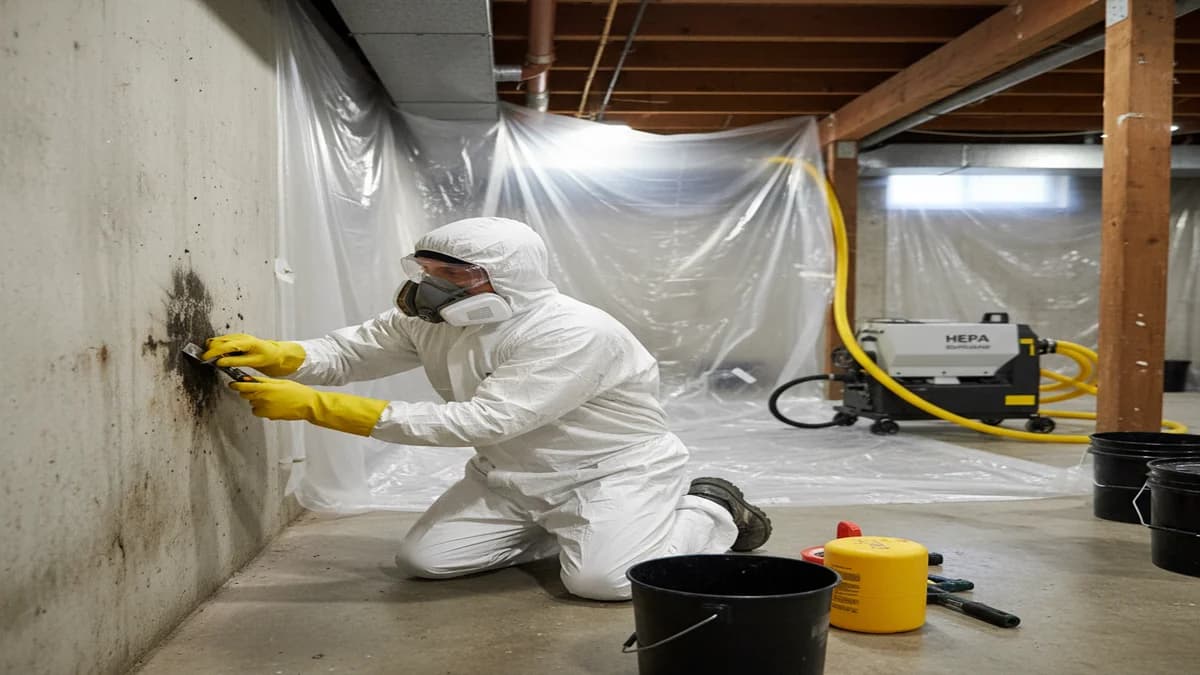
Professional Remediation Process
A thorough basement remediation typically includes:
- Assessment - Identifying all affected areas and moisture sources
- Containment - Sealing the basement to prevent spore spread
- Air filtration - Running HEPA scrubbers throughout the project
- Removal - Taking out contaminated materials that can't be cleaned
- Cleaning - HEPA vacuuming and antimicrobial treatment
- Drying - Using commercial dehumidifiers and air movers
- Reconstruction - Replacing removed materials with mold-resistant options
Typical remediation costs range from $500–$3,000 for small areas to $3,000–$10,000+ for extensive contamination. Basement mold is especially common in humid Southern cities. See our Atlanta basement mold guide for local causes, costs, and prevention, or our Atlanta remediation cost guide for general pricing. Getting an independent inspection cost guide beforehand helps you evaluate remediation quotes fairly.
Waterproofing and Dehumidification
Preventing future mold requires addressing basement moisture comprehensively.
Interior Waterproofing Options
- Sealers and coatings - Temporary solutions that don't address the source
- Interior drain systems - Channels water to a sump pump
- Sump pump installation - Removes water that enters the basement
- Vapor barriers - Prevents moisture migration through walls
Exterior Waterproofing
More extensive but more effective:
- Exterior drain tile - Intercepts water before it reaches the foundation
- Waterproof membranes - Applied to exterior foundation walls
- Grading correction - Ensures proper drainage away from the home
Dehumidification
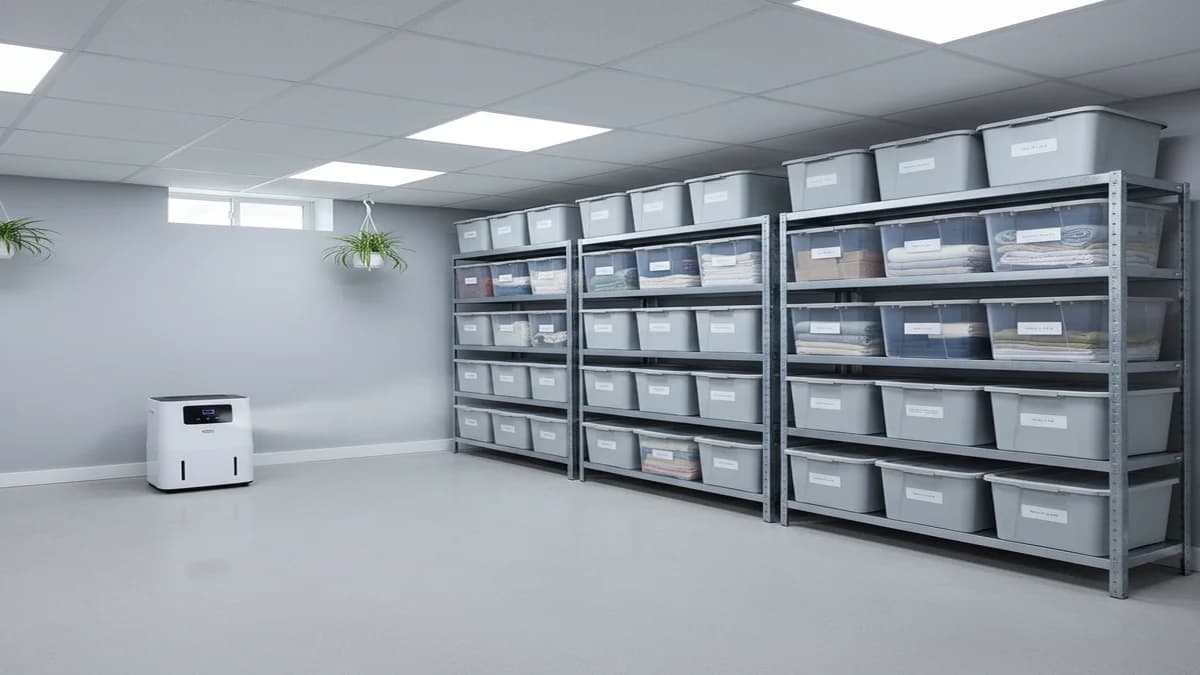
A quality dehumidifier is often essential for basement moisture control:
- Look for units rated for your basement's square footage
- Choose models with automatic drainage options
- Target 30-50% relative humidity
- Consider whole-house dehumidifiers for severe moisture issues
Important: Dehumidifiers treat symptoms, not causes. If water is actively entering your basement, address the source first.
Prevention Strategies
Keep your basement mold-free with ongoing maintenance. These strategies also apply to other moisture-prone areas like bathrooms and attics.
Regular Monitoring
- Check for water intrusion after heavy rains
- Monitor humidity levels (keep below 50%)
- Inspect sump pump operation monthly
- Look for new cracks or efflorescence
Maintenance Tasks
- Clean gutters and extend downspouts
- Maintain proper grading around the foundation
- Seal small cracks as they appear
- Service dehumidifiers and sump pumps annually
Smart Storage
- Keep belongings off the floor using shelving or pallets
- Use plastic storage containers instead of cardboard
- Avoid storing paper, fabric, or other organic materials
- Keep furniture away from walls
What to put in a basement to prevent mold
A dehumidifier first, sized to the floor area, set to 50 percent, and fitted with a drain hose so it runs without a bucket to empty. Then a digital hygrometer in the dampest corner, so you know the number instead of guessing it; a sump pump that works, with a battery backup for the storm that takes the power out; the shelving and plastic bins above; and a small fan for the dead air behind stored boxes. Moisture-absorber tubs are fine for a closet and useless for a basement, and bleach bowls, mothballs, and air fresheners do nothing about the water. The items that matter most aren't in the room at all: clean gutters, downspouts extended away from the foundation, and grading that slopes away from the house, all covered under maintenance above.
Next Steps
If you suspect basement mold:
- Don't ignore it - Basement mold rarely resolves on its own
- Document the problem - Photos help professionals assess the situation
- Identify moisture sources - Look for obvious leaks, condensation, or seepage
- Get professional guidance - An assessment reveals hidden problems
- Address both mold and moisture - Remediation without waterproofing is temporary
📚 This guide is part of our Complete Mold Remediation Guide, your comprehensive resource for understanding, preventing, and removing mold.
For basement mold that keeps returning or covers more than a small area, compare verified mold remediation companies and get quotes from verified pros.
Frequently Asked Questions
What causes mold in a basement?
Is white mold in a basement dangerous?
How do I get rid of mold in my basement?
Can basement mold affect the rest of my house?
Why does my basement smell musty?
How much does basement mold removal cost?
How fast does mold grow after a basement flood?
What can I put in my basement to prevent mold?
This guide is for educational purposes only. Always consult with certified professionals for specific mold situations in your home. If you experience health symptoms, please consult a healthcare provider.