Mold Certifications Explained: Which Ones Matter (2026)
IICRC AMRT and WRT, ACAC's Council-certified credentials, NORMI's CMA and CMR: what each means, which matter when hiring, and how to verify one in two minutes.
Some mold certifications carry real weight. Others are marketing badges; a fee and a weekend course and the certificate shows up in the mail. Knowing the difference tells you whether the letters after a contractor's name actually mean anything.
Three bodies issue the credentials worth knowing: IICRC, ACAC, and NORMI. Start there.
In This Guide
- Why Certifications Matter: Beyond the minimum bar
- The Major Certification Bodies: IICRC, ACAC, NORMI
- All Certifications at a Glance: Side-by-side comparison
- Certifications for Mold Assessors: What inspectors should hold
- Certifications for Mold Remediators: What remediation crews should hold
- Which to Look For: Practical guidance
- How to Verify: Step by step
- Certifications vs. State Licensing: Why you need both
- What Should a Mold Inspector Have?: PAA answer
- Is IICRC Certification Worth It?: PAA answer
Why Certifications Matter
State licensing is the floor, not the ceiling.
In states that regulate mold work (like Florida and Texas), a state license confirms that a professional has met the legal minimum to practice. They passed an exam, completed required training, and maintain continuing education to keep the license current.
Certifications go further. They're voluntary. No law requires them. A professional who holds certifications has decided to invest additional time and money in formal training and credentialing from a recognized industry body.
That choice signals something real: they take the work seriously.
That said, not every certification is equal. The industry has reputable, demanding credentialing programs, and it also has bodies that will send you a certificate after a weekend course and a check. Knowing the difference matters.
The Major Certification Bodies
Three organizations dominate professional mold certification in the U.S. Each has a different focus and different levels of rigor.
IICRC: Institute of Inspection, Cleaning and Restoration Certification
The IICRC is the most widely recognized certification body in water and mold restoration. Founded in 1972, it has been publishing consensus standards since 1994, when it first issued the S500 water damage standard. Its S520 standard (the Standard for Professional Mold Remediation) gets cited by contractors, insurers, and state regulators across the country. Earning one of its credentials takes coursework, a proctored exam, and documented work experience, plus continuing education to keep it current. For mold work the two that matter are the WRT (Water Restoration Technician) and the AMRT (Applied Microbial Remediation Technician). Learn more at iicrc.org, or see our glossary entry on the IICRC.
ACAC: American Council for Accredited Certification
ACAC focuses on indoor environmental quality, with credentials covering mold inspection, air quality assessment, and remediation across several levels of expertise. It's well-regarded in the environmental consulting and assessment world, and its top-tier certifications take real experience on top of the coursework and exams. ACAC names every credential "Council-certified", and runs each discipline at three levels: a senior tier needing eight or more years of verified field experience, a professional tier needing two or more, and a vocational tier where eligibility is current employment in the field. For mold work the ones to know are the Council-certified Microbial Consultant (CMC) and Council-certified Microbial Investigator (CMI) on the assessment side, the Council-certified Microbial Remediation Supervisor (CMRS) and Council-certified Microbial Remediator (CMR) on the remediation side, and the broader Council-certified Indoor Environmentalist (CIE). ACAC states that its CMI and CMC are accredited by the Council for Engineering and Scientific Specialty Boards (CESB). Learn more at acac.org.
NORMI: National Organization of Remediators and Microbial Inspectors
NORMI is smaller but growing, focused specifically on mold inspection and remediation, and it publishes a long list of credentials including several written specifically for state licensing programs in Florida, Texas, Louisiana, New York and Washington DC. The two to know for general mold work are the CMA (Certified Mold Assessor) and the CMR (Certified Mold Remediator). Note that ACAC issues a CMR of its own with a different name and different requirements, so the issuing body matters here more than anywhere else in this guide. Learn more at normi.org.
All Mold Certifications at a Glance
| Certification | Body | Role | What It Proves | Field experience required |
|---|---|---|---|---|
| AMRT (Applied Microbial Remediation Technician) | IICRC | Remediators | Microbial remediation science, containment, HEPA filtration | Coursework, proctored exam, documented experience |
| WRT (Water Restoration Technician) | IICRC | Remediators | Water damage restoration, the foundation of most mold work | Coursework and proctored exam |
| CMC (Council-certified Microbial Consultant) | ACAC | Assessors | Microbial investigation, sampling, protocol design | 8+ years verified |
| CMI (Council-certified Microbial Investigator) | ACAC | Assessors | Same discipline as the CMC, one tier down | 2+ years verified |
| CSMI (Council-certified Structural Mold Investigator) | ACAC | Assessors | Same discipline, vocational tier | Current employment in the field |
| CIE (Council-certified Indoor Environmentalist) | ACAC | Assessors | Broad indoor environmental quality | 2+ years verified |
| CMRS (Council-certified Microbial Remediation Supervisor) | ACAC | Remediators | Remediation methodology, containment, protocol design | 8+ years verified |
| CMR (Council-certified Microbial Remediator) | ACAC | Remediators | Same discipline as the CMRS, one tier down | 2+ years verified |
| CMA (Certified Mold Assessor) | NORMI | Assessors | Mold assessment | See normi.org |
| CMR (Certified Mold Remediator) | NORMI | Remediators | Mold remediation | See normi.org |
Certifications for Mold Assessors
A mold assessor's job is to diagnose the problem objectively: inspect, test, document, and create a remediation protocol. The certifications most relevant to this role demonstrate training in indoor environmental science and inspection methodology.
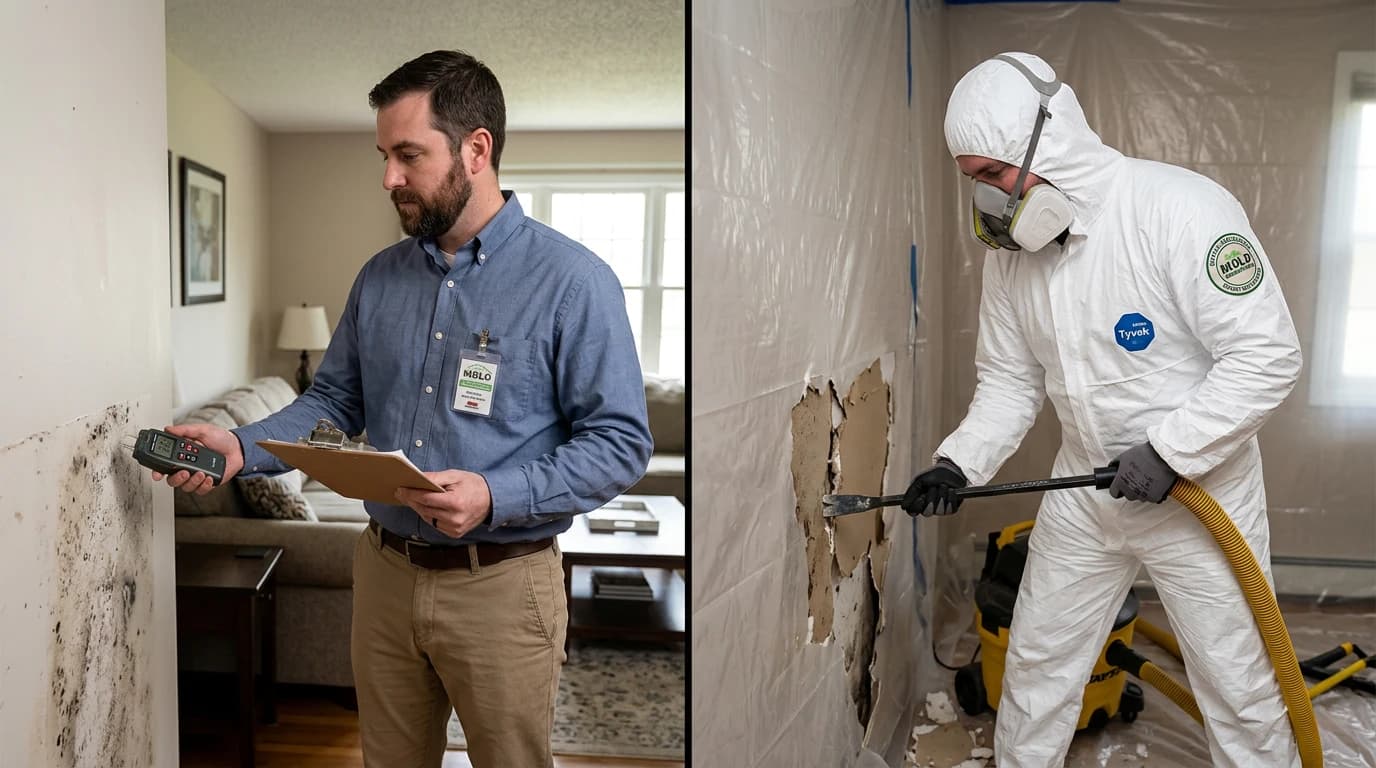
The credential that matters most here is ACAC's CMI, the Council-certified Microbial Investigator. Earning it means passing a rigorous examination covering microbial sampling and investigation, plus two or more years of verified field experience, and it's the one insurers and attorneys lean on when a report has to survive scrutiny. Above it sits the CMC (Council-certified Microbial Consultant), the same discipline at eight or more years of verified experience, worth seeking out for complex or high-stakes jobs. Below both is the CSMI (Council-certified Structural Mold Investigator), ACAC's vocational tier for the same discipline, where eligibility is current employment in the field rather than a number of documented years. The CIE (Council-certified Indoor Environmentalist) is broader than mold alone; an indoor environmentalist looks at air quality, HVAC performance, and chemical contaminants too, which helps when the problem might be more than mold. NORMI issues its own assessor credential, the CMA (Certified Mold Assessor), on a separate program.
Certifications for Mold Remediators
A mold remediator physically removes the mold: setting up containment, removing contaminated materials, cleaning surfaces, and restoring the space. Certifications in this category focus on remediation science, safety protocols, and proper technique.
The standard here is the AMRT (Applied Microbial Remediation Technician) from the IICRC, the most recognized remediator credential in the country. Its course runs through microbiology basics, health effects, containment and pressure differentials, protective equipment, HEPA filtration, remediation methods, and documentation, capped by a proctored exam. Most strong remediators pair it with the WRT (Water Restoration Technician), since water damage is the foundation of nearly every mold problem and the WRT covers how water moves through building materials and how to dry a structure properly; AMRT plus WRT is widely considered the strongest pairing a remediator can hold. ACAC's CMR (Council-certified Microbial Remediator) covers similar methodology with an indoor-environmental-quality lean, at two or more years of verified field experience; above it sits the CMRS (Council-certified Microbial Remediation Supervisor) at eight or more years. Both are less ubiquitous than the AMRT but respected, especially next to one of the IICRC creds. NORMI issues its own CMR (Certified Mold Remediator), which shares those three letters with ACAC's and is a different credential on a different program. See our glossary entry on remediation standards.
Which Certifications Should You Look For?
When you're actually hiring, this is what to prioritize.
For an assessor, you want ACAC's CMI above all; a CIE is a plus when the situation runs past mold into air quality, and a CMC marks the top tier for complex or high-stakes work. NORMI's CMA is a real credential on a separate program. For a remediator, the AMRT and WRT (both IICRC) together are the strongest pairing; ACAC's CMR or CMRS is a solid alternative, especially paired with one of the IICRC creds, and NORMI issues a CMR of its own.
Keep one thing in perspective, though. State licensing is the actual legal requirement, and certifications are voluntary on top of it. A licensed pro with ten solid years and no certificate can easily be the better hire than a freshly certified contractor with no track record. Treat certifications as one signal among several, next to licensing, insurance, reviews, and references.
How to Verify Certifications
Claiming a certification is easy. Verifying it takes two minutes and tells you whether the claim is real.
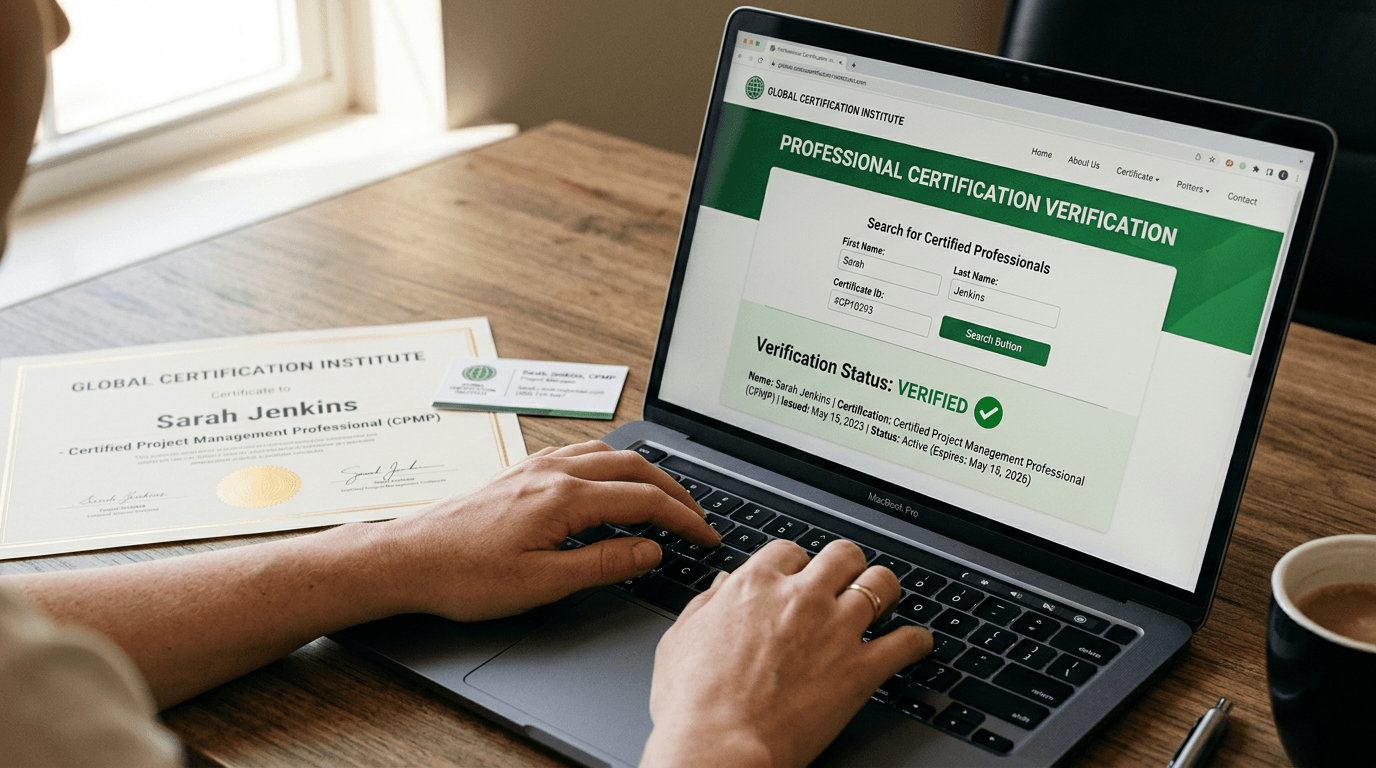
It's a four-step job, about two minutes total:
- Ask for the certification number. Anyone holding a valid credential knows theirs without hunting for it; hesitation or vagueness is a red flag.
- Look it up with the issuing body. Each one has a searchable tool: iicrc.org by name or number, ACAC's "Locate a Professional" at acac.org, and member verification at normi.org.
- Confirm it's current. Most credentials need periodic renewal, so check that it's active rather than expired. An expired cert shows the person held it once, not that they keep it up.
- Check the type matches the role, and check who issued it. An AMRT (a remediator credential) sitting on an assessor's profile, or the reverse, is worth a clarifying question. The issuing body matters on its own too: both ACAC and NORMI issue a credential abbreviated CMR, ACAC's being the Council-certified Microbial Remediator and NORMI's the Certified Mold Remediator. Same three letters, different programs, different requirements. "CMR certified" on its own does not tell you which one you are looking at.
Certifications vs. State Licensing
These are different things. They work together; they don't replace each other.
State licensing is a legal requirement in states that regulate mold work. Florida requires both mold assessors and mold remediators to hold state licenses through the DBPR. Texas regulates mold work through the TDLR. In these states, performing mold work without a license is illegal.
Certifications are voluntary industry credentials. No state requires them. They demonstrate that a professional has invested in training beyond the minimum legal requirements.
You need both.
The state license tells you the professional is legally permitted to do the work. The certification tells you they've pursued professional development and demonstrated competence to an independent industry body.
A certified professional without a state license in a licensing state is still operating illegally. A licensed professional without certifications has met the legal bar, but hasn't necessarily gone further than required.
For more on state licensing requirements and how the two roles differ, see our full guide: Mold Assessor vs. Remediator: Why You Need Both
What Certifications Should a Mold Inspector Have?
A mold inspector (also called an assessor) should hold a credential built around inspection methodology, sampling science, and protocol development. In practice that points to one credential: ACAC's CMI, the Council-certified Microbial Investigator, the one insurers, attorneys, and state regulators expect on a report that might get challenged. When the job reaches into air quality, HVAC, or multiple contaminants, a CIE brings the wider scope to match. NORMI's CMA works too, on its own program. And in a licensing state like Florida or Texas, the state license is the baseline; the certification is what shows training beyond it.
Is IICRC Certification Worth It?
Yes, with a caveat about role. The IICRC is the most recognized name in water and mold restoration, and for the people physically removing mold, its AMRT and WRT are the credentials insurance adjusters, property managers, and general contractors actually look for. For assessors it matters less; ACAC's credentials line up better with inspection work. Either way IICRC certification is voluntary and doesn't replace a state license where one's required, so read it as a signal of professional investment on top of the legal baseline, not a substitute for it.
What This Means When You're Hiring
When you're evaluating a mold professional, here's how to use this information:
- Verify the state license first. In licensing states, this is the non-negotiable baseline.
- Ask what certifications they hold and who issued them. Note both the credential name and the organization.
- Verify the certification directly through the issuing body's website.
- Consider certifications in context. Combined with licensing, insurance, reviews, and references, they give you a fuller picture.
- Don't be fooled by unfamiliar credential names. Ask what the certification covers and who issued it. If the issuing body is obscure or the requirements minimal, weight it accordingly.
For guidance on what questions to ask during the hiring process: Questions to Ask a Mold Company Before Hiring
To understand how to spot companies that may not be operating honestly: Mold Remediation Scams: How to Spot Them
Frequently Asked Questions
What is the most important mold remediation certification?
Is IICRC certification required for mold remediation?
What does AMRT certification mean?
Two contractors both say they hold a CMR. Are those the same credential?
How do I verify someone's mold certification is real?
Do certifications replace state licensing for mold work?
What certifications should a mold inspector have?
Is IICRC certification worth it?
Looking for a certified pro? You can browse certified mold remediation companies. Every contractor is identity-checked and tier-ranked, with licenses, insurance, and reviews verified where available.
This guide is for educational purposes only. Certification requirements and programs change; verify current information directly with the issuing organization. Licensing requirements vary by state; consult your state licensing board for current rules.