Cleaning Mold With Vinegar (Does It Work?)
White vinegar kills some mold species on hard surfaces and not others. Step-by-step guide, what vinegar can't do, and when to call a professional instead.
There's a dark speckle along the grout line, a jug of white vinegar under the sink, and a dozen websites telling you it kills everything. Plain 5 percent white vinegar, sprayed on straight and left for an hour, does kill or inhibit some common household molds on hard surfaces like tile, glass, and sealed countertops. It doesn't touch every species; in a 2015 controlled comparison, vinegar stopped Penicillium chrysogenum and did nothing to Aspergillus fumigatus. And it doesn't reach mold growing inside drywall, wood, or carpet, however long you leave it.
So the job splits in two. A small patch on a hard surface is a vinegar job, and the steps below take about ninety minutes, most of it waiting. Mold on porous material, a patch bigger than about 10 square feet, or growth that keeps coming back is a moisture problem before it's a cleaning problem, and no spray bottle fixes moisture.
In This Guide
- Does Vinegar Kill Mold?: What the research says
- Before You Spray: overnight, dish soap, dilution, spraying the air, and the comparisons: bleach on wood, black mold, apple cider, borax
- Step-by-Step Guide: Complete cleaning process
- Vinegar vs Bleach: Which is actually better
- What Vinegar Can't Do: Limitations to know
- Surface Guide: Safe and unsafe materials
- Prevention Tips: Keeping it from coming back
- When to Call a Pro: size, material, and what else decides it
Does Vinegar Kill Mold?
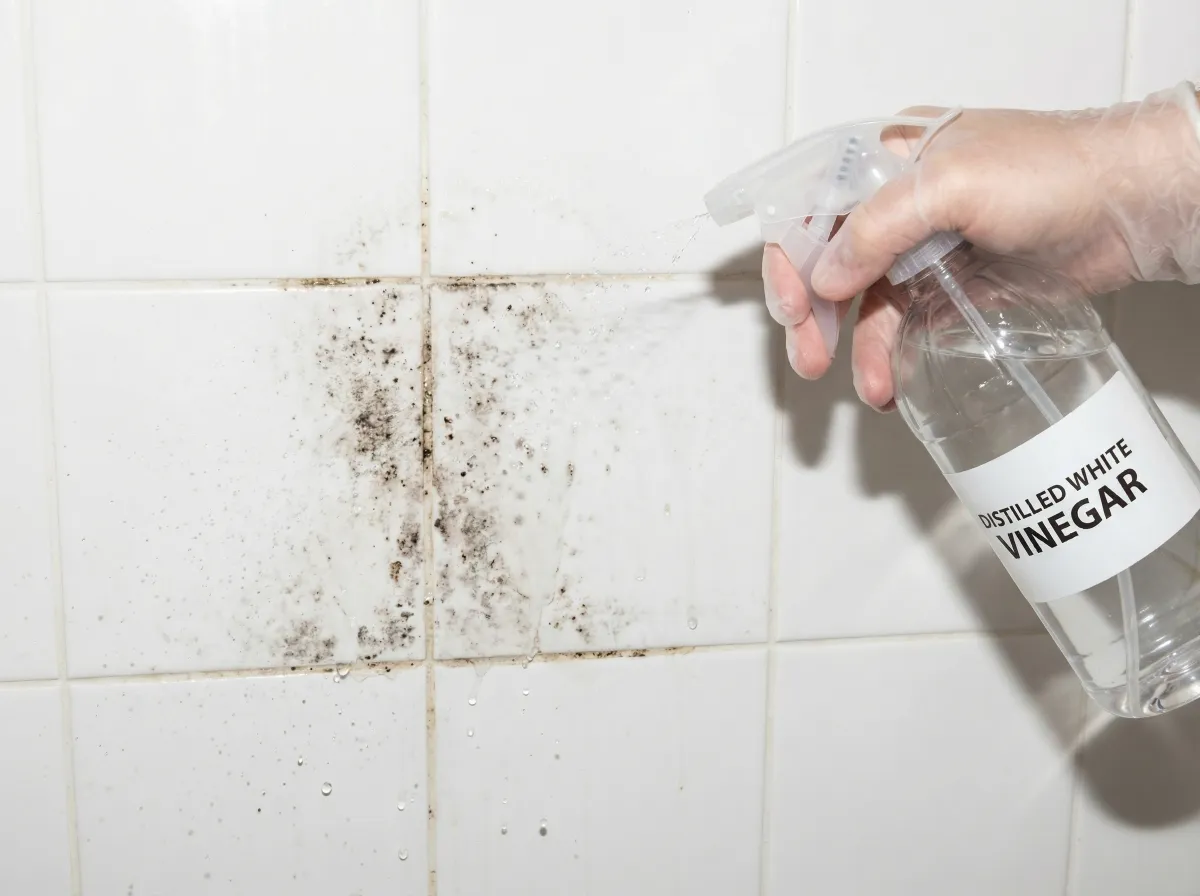
Often, yes. White distilled vinegar is a reasonable choice for small areas on hard surfaces, with the caveat that it does not work on every species.
What the research shows:
- Acetic acid at household vinegar strength inhibits some mold species and not others. In a 2015 controlled comparison of household antifungal agents, vinegar at 4 to 4.2% acetic acid inhibited Penicillium chrysogenum but not Aspergillus fumigatus. CDC names Cladosporium, Penicillium and Aspergillus as the most common indoor molds, so that is one of those genera handled and one missed
- Treat it as species-dependent rather than broad-spectrum. That same study found tea tree oil more effective than vinegar in a petri dish, which is a useful reminder that lab activity and a real wall are different problems
- It works by disrupting the mold's cell structure and pH balance
- Contact time matters: vinegar needs at least 60 minutes to work effectively
What makes vinegar work: The acetic acid in vinegar creates an environment too acidic for many molds to survive. At 5% concentration (standard grocery store white vinegar), it's strong enough to handle surface growth on a hard, non-porous surface but mild enough to use safely in your home.
Important: Vinegar is effective for small mold problems on hard surfaces. It is NOT a substitute for professional remediation of large infestations, mold on porous materials, or black mold (Stachybotrys).
The Questions People Ask Before They Spray
Most of these get asked with the spray bottle already in hand.
Can you leave vinegar on mold overnight?
You can on tile, glass, porcelain, and sealed countertops, but there's no reason to. An hour of wet contact is what the antifungal effect needs, with a second hour for thick growth; the mold isn't more dead at eight hours than at two. Overnight is a bad idea on anything acid can etch. Cement grout, unsealed concrete, and natural stone all give up a little surface to a long soak, so on those it's an hour, scrub, rinse, dry.
Does vinegar and dish soap kill mold?
The vinegar does the killing, on the species it affects, and the dish soap does the removing. Detergent lifts the growth and the film it's sitting in so it comes off the surface instead of smearing, which is why CDC lists dish detergent alongside bleach as a household option for cleaning mold. Mixing the two is safe. Mixing either with bleach is not; vinegar and bleach make chlorine gas.
What's the right ratio of vinegar to water?
None. Use it straight. Grocery-store white distilled vinegar is 5 percent acetic acid, and the 2015 comparison that found it working tested vinegar at about 4 percent, so a bottle diluted by half is below the strength that study showed doing anything. Distilled white vinegar and white vinegar are the same product. Apple cider vinegar has about the same acidity and stains light grout. Cleaning vinegar at 6 to 10 percent is fine with a window open. Thirty percent vinegar is sold as a weed killer, not a cleaner; at that strength acetic acid causes eye and skin burns, it etches surfaces, and there's no household mold reason to bring it indoors.
Does spraying vinegar in the air kill mold spores?
No. Spores in the air get dealt with by filtration and by fixing the moisture that keeps releasing them. A mist of acetic acid does neither, and breathing it irritates eyes and airways. If a room still smells musty after you've cleaned the visible growth, that's hidden mold, not spores you can spray.
How long does vinegar take to kill mold?
Give it an hour of wet contact before you scrub. Thirty minutes may handle light mildew on tile, but an hour is the reliable minimum, and thick or stubborn growth gets a second coat and a second hour. Set a timer. The wait is the step everyone skips and the one that does the work. Concrete gets the same hour, straight, then a rinse; a long soak etches an unsealed slab.
Vinegar vs hydrogen peroxide vs baking soda
On a hard surface, vinegar and 3 percent hydrogen peroxide both work and baking soda doesn't kill mold; none of the three reaches growth inside porous material, and vinegar and peroxide should never be mixed, because together they form peracetic acid, which burns skin and irritates eyes and lungs. On tile, glass, and caulk, 3 percent hydrogen peroxide is the other household option, and the remediation guide's surface table says which applies where. Baking soda scrubs and takes the smell out; the evidence for it killing mold in a house is thin, and mixed with vinegar the two cancel each other into fizz and water. Tea tree oil beat vinegar in the same 2015 lab comparison, on a petri dish, and nobody has remediated a wall with it. For the species vinegar misses, Aspergillus fumigatus among them, none of these is the answer either. That's a remove-and-dry job, not a chemistry question.
Is bleach or vinegar better to kill mold on wood?
Neither, if the wood is bare. Mold on unsealed wood grows into the grain, and both products only touch the face; bleach also wets the wood and takes the color out of it, which is part of why EPA doesn't recommend it as routine practice. What EPA does say for hard surfaces is scrub the mold off with detergent and water, then dry completely. On finished or painted wood, cabinets, trim, a sealed floor, vinegar is the one to reach for, after a test in a hidden spot, because the finish keeps the growth on the surface where an hour of contact can work. Bare framing, studs, or subfloor that has stayed wet is a different job: sanding plus an EPA-registered antimicrobial is what a remediator does there, and a spray bottle of either product doesn't get you closer.
Is bleach or vinegar better for black mold?
The species doesn't change the answer; the surface does. "Black mold" gets used for any dark growth, and a dark spot on tile, grout, or caulk is a surface-cleaning job whichever species it is: vinegar, an hour of contact, scrub, rinse, dry, with the caveat above that it misses some species. Where the choice matters is growth on a material that stays wet, and there neither product is a remediation tool. EPA doesn't recommend bleach as routine practice, vinegar stops at the surface, and dark, slimy growth on chronically wet drywall or wood is where Stachybotrys turns up. That's a removal job, and whether it's one you can do yourself depends on more than size: the black mold guide walks through EPA's roughly ten-square-foot benchmark and the conditions that matter alongside it. Vinegar for the dark spot on a hard surface; neither for the wet wall behind it.
Can apple cider vinegar help with mold?
On a hard surface, yes, the same way white vinegar does, and for the same reason: it's about the same strength, around 5 percent acetic acid. There's nothing it does that white distilled vinegar doesn't, and two things it does worse. It's brown, so it stains light grout, caulk, and unsealed surfaces, and it costs more. If the apple cider vinegar is what's under the sink, use it straight, give it the hour, and rinse well; if you're buying a bottle for the job, buy white. And if the question is about drinking it for mold exposure rather than cleaning with it, that's a different subject, and the symptoms guide covers it.
Does borax kill mold, and is it better than vinegar?
Borax has mild antifungal activity, and that's the whole claim for it: it isn't EPA-registered as an antimicrobial, and it doesn't get used on remediation jobs. On a hard surface it's a fair scrub, and of the two, vinegar is the one with a controlled comparison behind it (the 2015 study above). Don't combine them: borax is alkaline and vinegar is an acid, so mixing neutralizes both, the same mistake as vinegar and baking soda. Borax and bleach is the wrong question for a different reason: bleach isn't a routine mold cleaner in the first place. Neither borax nor vinegar reaches growth inside drywall, carpet, or bare wood, and that limit matters more than which powder or liquid you pick.
How to Clean Mold With Vinegar: Step by Step
What You'll Need
- White distilled vinegar (5% acidity, undiluted)
- Spray bottle
- Stiff-bristle brush or non-scratch scrub pad
- Clean cloths or paper towels
- Rubber gloves
- N95 mask (recommended; mold spores become airborne when disturbed)
- Eye protection
Step 1: Assess the Situation
Before you start cleaning, determine if vinegar is the right approach:
- Mold area under 10 square feet on hard surfaces? → Vinegar is appropriate
- Mold area over 10 square feet? → Call a professional. Find one near you →
- Mold on drywall, carpet, or insulation? → Vinegar does not reach contamination held below the surface. The material likely needs to be removed
- Is it on drywall or ceiling tile that has stayed wet? → Don't disturb it. Get a professional assessment
- Does anyone in the household have asthma, a mold allergy, or a weakened immune system? → They shouldn't do the cleanup; consider professional help
Step 2: Ventilate the Area
Open windows and turn on exhaust fans. Good airflow serves two purposes: it helps the vinegar smell dissipate and it reduces the concentration of airborne mold spores you'll release during cleaning.
Step 3: Protect Yourself
Put on rubber gloves, an N95 mask, and eye protection. Even small mold patches release spores when disturbed. This isn't optional; it takes 30 seconds and prevents respiratory irritation.
Step 4: Spray Undiluted Vinegar
Fill a spray bottle with plain white distilled vinegar. Do not dilute it. Spray the moldy area thoroughly until the surface is visibly wet. Make sure you cover slightly beyond the visible mold edges; mold growth often extends past what you can see.
Step 5: Wait at Least 60 Minutes
This is the step most people skip, and it's the most important. Vinegar needs sustained contact time to break down mold. Set a timer. Walk away. Let the acetic acid do its work.
For stubborn or thick mold growth, apply a second coat after the first hour and wait another 60 minutes.
Step 6: Scrub and Wipe
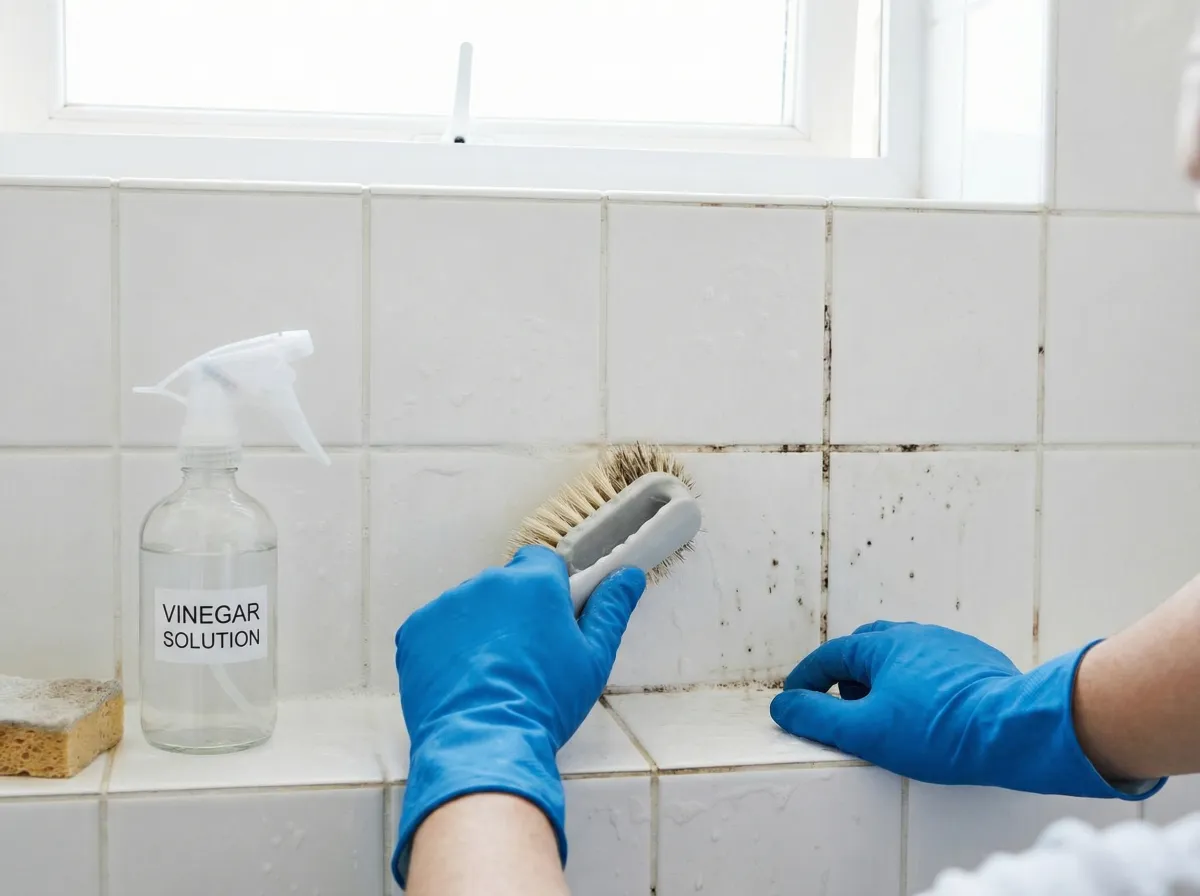
Scrub the area with a stiff brush to remove the dead mold. Wipe the surface clean with damp cloths or paper towels. Dispose of the cloths in a sealed plastic bag; don't reuse them.
Step 7: Rinse and Dry
Rinse the surface with clean water. Then dry it completely; this is critical. Mold needs moisture to grow. Use fans, open windows, or a dehumidifier so the area dries fully within 24 hours.
Step 8: Apply a Second Treatment (Optional)
For recurring mold spots, spray a light coat of vinegar on the clean, dry surface and let it air dry without rinsing. This leaves a mild acidic residue that discourages regrowth.
Vinegar vs Bleach for Mold
This is one of the most debated topics in DIY mold cleaning. Here's what actually matters:
| White Vinegar | Bleach | |
|---|---|---|
| Kills surface mold | Some species, not all | Yes (most species) |
| Reaches mold inside porous materials | No | No, and it is not a substitute for removing the material |
| On porous and semi-porous materials | Grout, with dwell time (sealed wood counts as a hard surface); not drywall; bare wood is judged case by case | Not a remediation tool; EPA does not recommend it as routine practice |
| Toxic fumes | No (just a strong smell) | Yes: irritates lungs, eyes |
| Safe around pets/kids | Yes | No: requires serious ventilation |
| Stains | No | Can discolor fabrics and wood |
| Environmental impact | Biodegradable | Produces harmful byproducts |
The bottom line: Vinegar is the better choice for most DIY mold cleaning. Bleach is only superior on non-porous surfaces where fumes and toxicity aren't a concern (like outdoor concrete). For bathroom tile and grout, vinegar is safer and equally effective. Clorox is a brand of household bleach, so the comparison is the same.
Never mix vinegar and bleach. This chemical reaction produces chlorine gas, which is extremely dangerous. If you've used bleach, rinse thoroughly and wait at least 24 hours before using vinegar on the same surface.
What Vinegar Can't Do
Vinegar is a useful tool, but it has hard limits:
It Can't Reach Mold Inside Porous Materials
Mold on drywall, carpet, insulation, and unsealed wood grows into the material as a network of filaments called hyphae. They are not roots, and nothing you wipe on the surface reaches them. Vinegar sits on the surface and may kill what's visible, but the mold underneath survives and regrows. These materials usually need to be physically removed and replaced.
It Can't Handle Large Infestations
EPA's roughly 10 square feet is a benchmark for what a homeowner can usually handle, not a point at which EPA tells you to hire a professional. What EPA does say about hiring is to check that the contractor has experience cleaning up mold, check references, and ask them to work to the EPA, ACGIH or IICRC guidelines. What makes vinegar the wrong tool at that scale is practical: disturbing a large or heavily colonized area without containment puts more into the air than a spray bottle can offset, the underlying moisture problem is usually severe by then, and the growth has often spread beyond what is visible. Learn more in our DIY vs professional guide.
It Can't Fix the Moisture Source
Every mold problem starts with a moisture problem. Vinegar cleans the symptom but doesn't address leaky pipes, poor ventilation, roof damage, or high humidity. If you clean mold with vinegar but don't fix the water source, the mold returns, usually within weeks.
It Can't Safely Address Black Mold
Black mold (Stachybotrys chartarum) produces mycotoxins that pose serious health risks. Disturbing a black mold colony without proper containment can spread spores throughout your home. If you see dark, slimy mold on chronically wet surfaces, leave it alone and call a professional.
What Surfaces Can You Clean With Vinegar?
Safe for Vinegar
- Bathroom tile and grout: the most common use case
- Glass shower doors: excellent, leaves streak-free
- Sealed countertops: quartz, laminate, sealed granite (test first)
- Porcelain sinks and tubs: effective and safe
- Plastic and rubber: shower curtains, window seals
- Sealed wood: finished cabinets, painted trim (test in hidden spot first)
- Concrete: basement floors, garage surfaces (rinse afterward; don't leave it soaking)
- Vinyl: flooring, siding, shower liners
- Clothes and washable fabric: a cup of white vinegar in a hot wash for mildew smell and light spotting; fabric with visible fuzzy growth usually isn't worth saving
- Metal: stainless steel (avoid aluminum and cast iron)
Most of these surfaces cluster in one room. For a surface-by-surface walkthrough of cleaning the tile, grout, caulk, and curtains where vinegar earns its keep, see shower mold: cleaning it surface by surface.
Do NOT Use Vinegar On
- Natural stone: marble, travertine, unsealed granite (acid etches the surface)
- Cast iron and aluminum: causes corrosion
- Waxed wood: dissolves the wax finish
- Drywall: vinegar can't reach mold inside; the moisture may make things worse
- Carpet: won't reach mold at the pad level; may cause odor issues
For these surfaces, use hydrogen peroxide (3%) or a pH-neutral commercial mold cleaner.
Preventing Mold After Cleaning
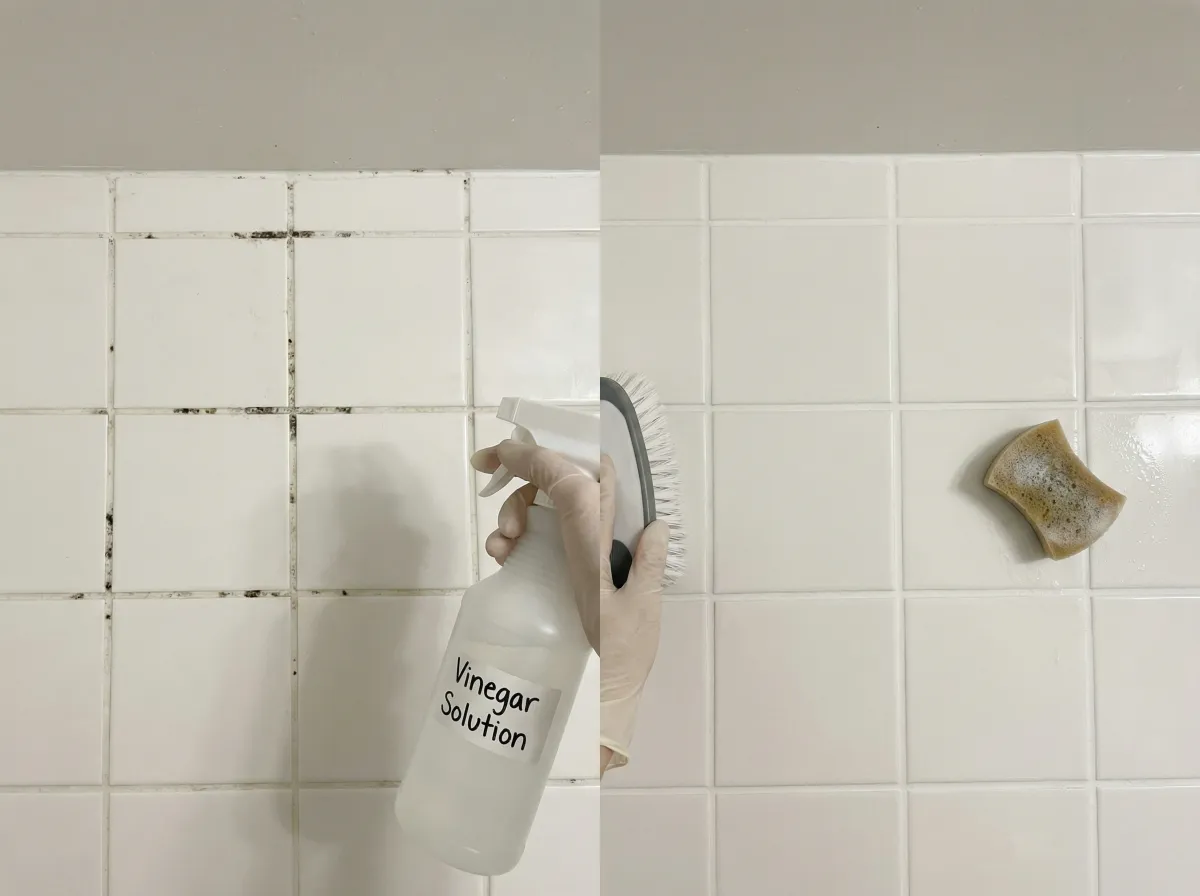
Cleaning mold is pointless if it comes back next month.
Control Humidity
- Keep indoor humidity between 30-50% (buy an inexpensive hygrometer to monitor)
- Run exhaust fans during and for 30 minutes after showers
- Use a dehumidifier in basements, crawl spaces, and other damp areas
- Don't leave wet towels or clothes sitting in enclosed spaces
Fix Water Problems
- Repair leaking pipes, faucets, and fixtures immediately
- Check roof and window seals annually
- Make sure gutters and downspouts direct water away from your foundation
- Address condensation on windows by improving ventilation or adding insulation
Maintain Airflow
- Don't push furniture flush against exterior walls; leave 2-3 inches for air circulation
- Keep closet doors open or use louvered doors
- Run ceiling fans periodically to circulate air
- Clean HVAC filters monthly during humid seasons
Routine Maintenance
- Spray vinegar on bathroom tile and grout monthly as a preventive measure
- Wipe down shower walls after each use (a squeegee takes 30 seconds)
- Check under sinks, behind toilets, and around water heaters quarterly
- Inspect attic, basement, and crawl space twice a year, spring and fall
When to Call a Professional Instead
Vinegar is for small, surface-level mold on hard materials. Beyond that, you need professional help.
Call a mold professional if:
- The mold covers more than about 10 square feet: EPA's benchmark for what a homeowner can usually handle, which is a benchmark rather than a cutoff
- Mold is on drywall, insulation, or carpet: these materials need removal, not surface cleaning
- Mold keeps coming back after cleaning: the moisture source and the extent need another look
- You can smell mold but can't see it: it's likely behind walls or under flooring
- Mold is in your HVAC system: cleaning ducts requires specialized equipment
- The growth is on porous material that has stayed wet a long time: drywall and ceiling tile hold contamination below the surface, where vinegar cannot reach it, and wet wood needs a case-by-case call
- Someone in the home has asthma, COPD, a mold allergy, or a weakened immune system: CDC says they shouldn't take part in the cleanup
- Water damage is involved: flooding, burst pipes, or chronic leaks
- You're preparing to sell your home: professional documentation protects you legally
- The mold is in a rental property: landlord/tenant laws may require professional remediation
Need a professional? Find a verified mold assessor in your area → Every listing is identity-checked, with state licenses verified where we hold the state's license records.
For more on costs: Mold remediation costs | Mold inspection costs
Next Steps
Vinegar is a legitimate, research-backed tool for cleaning small mold problems on hard surfaces. Use it confidently for bathroom tile, shower grout, and countertop mold. But respect its limits. When you're dealing with anything beyond surface mold, a professional will get the job done right and prevent it from coming back.
Mold identification guide →: Identify what type of mold you're dealing with
DIY vs professional removal →: Full guide on when to DIY and when to call a pro
Mold exposure symptoms →: Health signs that mean you should stop cleaning and get help