Basement Mold in Augusta: Causes, Costs & Solutions (2026)
Augusta basement mold guide. Why river proximity and older housing cause basement mold, remediation costs, prevention tips, and finding verified pros.
Cost Insights
$1,223 – $3,757
Average: $2,369 nationally, for a typical job, from 7,952 project costs reported to HomeAdvisor. We don't have an Augusta-specific figure.
- HomeAdvisor prints $500 to $3,000 for basement mold remediation nationally, without a stated method.
- Putting a finished basement back is its own cost: HomeAdvisor prints $1,000 to $2,900 for drywall repair.
- Basement waterproofing costs $2,460 to $8,205, average $5,245, from 5,794 costs reported to HomeAdvisor.
- HomeAdvisor prints $1,300 to $2,800 for an installed whole-house dehumidifier, without a reported sample.
Augusta's hot, humid summers and proximity to the Savannah River make basement mold a common problem for homeowners throughout the city. Many established neighborhoods have older homes with original foundations that weren't built to handle modern moisture loads, and the summer heat doesn't make things easier.
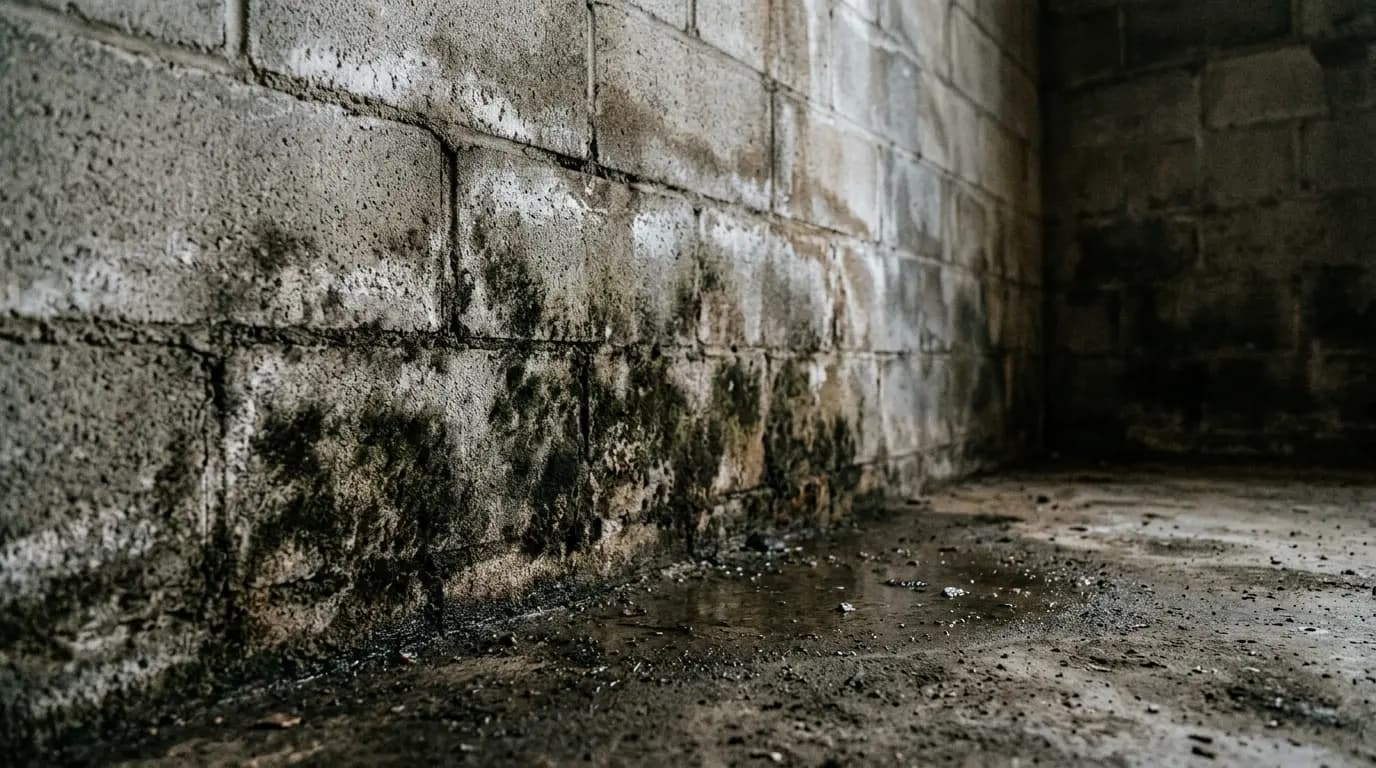
This guide explains why Augusta basements get mold, what remediation costs in the area, and how to make it less likely to come back.
In This Guide
- Why Augusta Basements Get Mold: Local factors driving the problem
- Signs of Basement Mold: What to look for
- Remediation Costs: Augusta pricing breakdown
- Prevention: Practical steps to stay ahead of mold
- Find a Pro: Verified Augusta professionals
Why Augusta Basements Get Mold
Augusta doesn't face the same extreme coastal moisture as Savannah or the dramatic clay-soil drainage problems of Atlanta, but it has its own combination of factors that make basement mold a regular occurrence.
Savannah River Proximity
The Savannah River runs along Augusta's eastern edge, and its presence affects the entire area. The river and its network of tributaries and creek beds keep the local water table elevated. Homes in low-lying areas near the river, Butler Creek, Rae's Creek, or other waterways face higher groundwater pressure against their foundations.
The river also contributes to Augusta's local humidity. River corridors tend to stay moister than surrounding terrain, and that extra ambient moisture adds up over a basement wall year after year.
Hot, Humid Summers
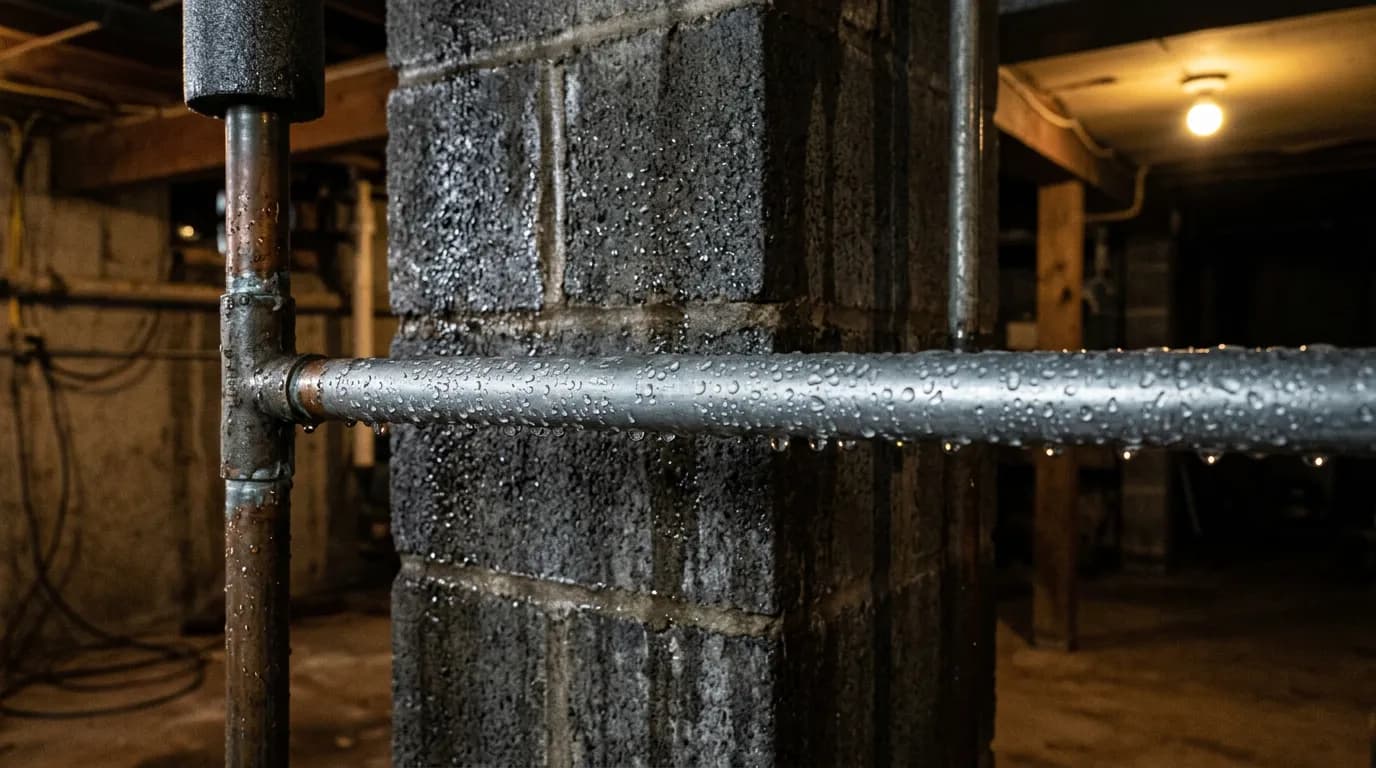
Augusta regularly sees temperatures above 90°F from June through August, with humidity to match. Summer relative humidity in Augusta routinely exceeds 70%, and warm, humid air seeping into a cooler basement creates condensation on walls, pipes, and concrete surfaces.
This moisture cycle happens even without any water intrusion. If your basement isn't dehumidified, the summer heat alone can create enough condensation to fuel mold growth on walls and stored items.
Older Housing Stock
Augusta's established neighborhoods (Summerville, Olde Town, the Hill, and others) have homes built from the 1940s through the 1970s. Many of these homes have original poured concrete or block foundations that were built without:
- Exterior waterproofing membranes
- Interior drainage systems
- Vapor barriers between soil and the basement
A 60-year-old foundation with no waterproofing is going to let moisture in. That's not a failure; it's just the reality of older construction. The question is whether the moisture is being managed.
Clay Soil
Like Atlanta, Augusta sits on Georgia's clay-heavy soils. Clay doesn't drain well. After a heavy rain, saturated clay holds water against your foundation for days, giving it time to seep through any crack or porous section of your foundation wall. This hydrostatic pressure is a primary driver of basement moisture in both cities.
Signs of Basement Mold
Watch for these in your Augusta basement:
Visual signs:
- Dark spots or patches on walls, especially along the floor line or at wall-floor joints
- White powdery deposits on concrete or block (could be mold or efflorescence; see our basement mold guide to tell the difference)
- Peeling paint or surface flaking on foundation walls
- Water stains or tide lines from past moisture intrusion
Smell:
- Persistent musty, earthy odor that doesn't clear with ventilation or cleaning
- Smell worsens after rain or during high-humidity periods
Physical signs:
- Damp patches on walls, particularly at the base
- Condensation on pipes, windows, or concrete surfaces after warm weather
- Warped wood trim or swollen framing at floor level
Health: symptoms can't tell you whether your basement has mold. If anyone in your household has respiratory symptoms that improve away from home, mention it to a doctor, though that pattern doesn't show that mold is the cause.
If you're not sure, a professional mold inspection can check for moisture and look for hidden growth before it spreads further, with sampling only where it answers a defined question. See our mold inspection cost guide for what to expect.
What Basement Mold Remediation Costs in Augusta
We don't have Augusta figures we'd stand behind, so these are national ones, each from a named source. Where an Augusta basement falls among them depends on the size of the problem and whether the basement is finished.
| Job | Price | Source |
|---|---|---|
| Basement mold remediation | $500 – $3,000 | HomeAdvisor, method not given |
| A typical remediation job, any room | $1,223 – $3,757 (average $2,369) | HomeAdvisor, 7,952 reported project costs |
| Several areas | $3,757 – $10,000 | No source measures this band; it runs between two that are sourced |
| Drywall repair afterward | $1,000 – $2,900 | HomeAdvisor, method not given |
Finished basements cost more because drywall, insulation, and carpet usually need to be removed to reach the mold and the moisture source behind them, and to dry the space properly. Any reconstruction afterward is an additional cost.
The fixes that make it less likely to come back, and the check afterward:
- Basement waterproofing: $2,460 – $8,205, average $5,245, from 5,794 costs reported to HomeAdvisor (interior and exterior methods together)
- A whole-house dehumidifier, installed: $1,300 – $2,800 (HomeAdvisor, no sample reported)
- Sump pump replacement: $645 – $2,120, average $1,362, from 1,696 costs reported to HomeAdvisor
- Clearance testing, where an independent verification is required or requested: $200 – $600 (one Austin assessor's published price sheet)
For other Georgia basements, see basement mold in Atlanta and basement mold in Savannah. For national pricing context, see our mold remediation cost guide.
How to Prevent Basement Mold in Augusta
Fix the Drainage Around Your Foundation
Most Augusta basement moisture problems start outside:
- Extend downspouts at least 6 feet from the foundation; short downspouts dump water right against your walls
- Grade soil away from the house on all sides; a 6-inch drop over 10 feet is the standard recommendation
- Clean gutters twice a year; clogged gutters overflow and saturate soil at the foundation
- Consider a French drain if you're in a low-lying area or near a creek; it intercepts groundwater before it reaches your foundation
Control Humidity Inside
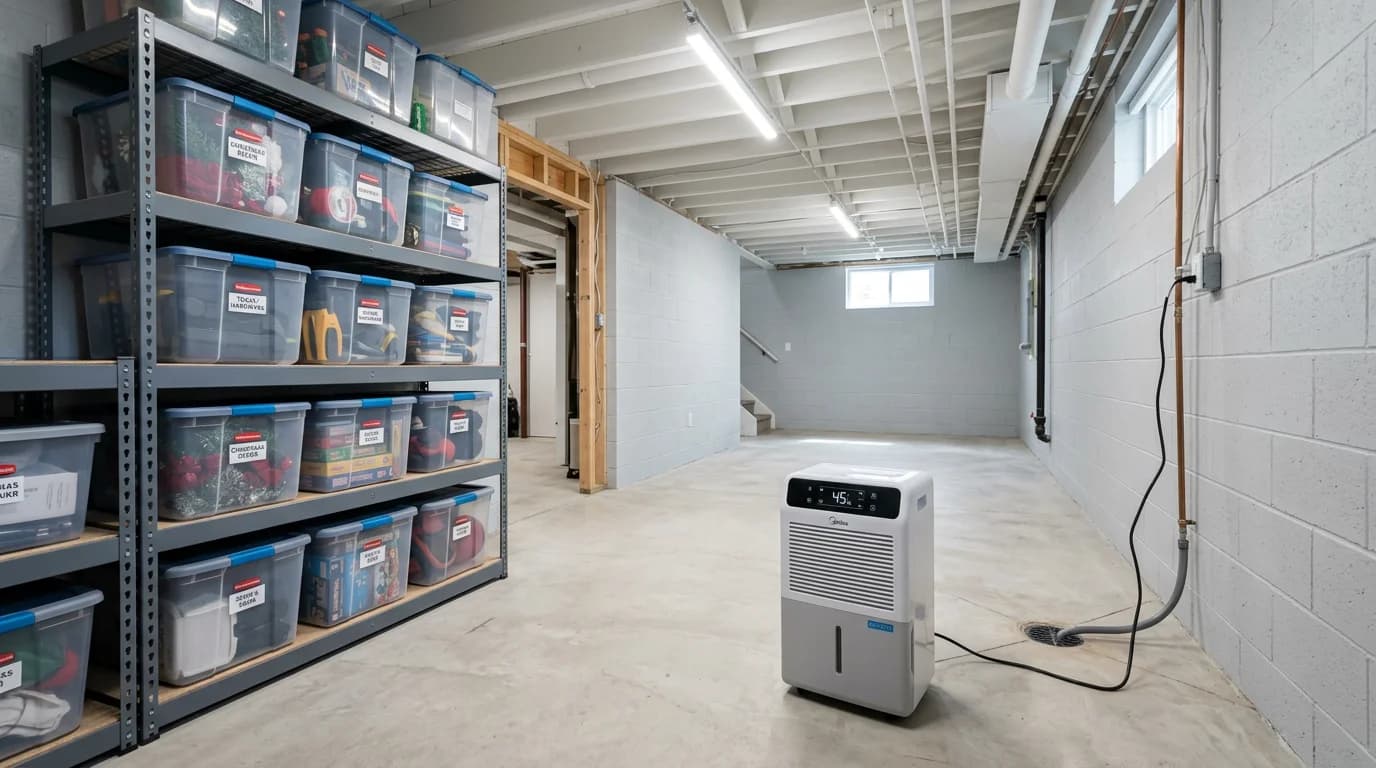
- Run a dehumidifier from spring through fall at minimum: target 30-50% relative humidity. Augusta's summers demand it.
- Monitor humidity with an inexpensive hygrometer and check it weekly
- Don't store cardboard or organic materials directly on concrete floors; they absorb moisture and provide food for mold
- Ensure airflow in finished basement spaces; closed rooms with no circulation tend to stay damper
Address Foundation Issues
- Seal cracks in foundation walls and floor slabs with hydraulic cement or epoxy injection
- Check your sump pump monthly during spring and summer; test it by pouring water into the pit
- Consider interior waterproofing if you have a recurring moisture problem; a drain system and sump pump catches water before it becomes a mold problem
After Heavy Rain or Flooding
Augusta sees occasional flooding from Savannah River tributaries and the creek system. After any flooding event:
- Check your basement within 24 hours
- Run dehumidifiers immediately
- If you had standing water, get a professional assessment; don't assume it dried out safely
For detailed guidance on post-flood mold prevention, see our mold after flooding in Georgia guide.
Connect with a Verified Professional
Augusta has qualified mold remediation professionals who understand the local climate and the older housing stock found in many established neighborhoods. For guidance on what to look for when hiring, see our hiring guide and questions to ask.
Find verified mold remediation professionals across Georgia. For additional context, see basement mold in Atlanta, basement mold in Savannah, and our comprehensive basement mold guide.