Mold on Bathroom Ceiling: Causes, Fixes, and Danger (2026)
Speckled dots usually point to condensation, a ring or patch to a leak. How to read bathroom ceiling mold, confirm and fix the cause, and when to call a pro.
You stepped out of the shower, looked up, and there they are, dark specks dusted across the paint. Your hand is already reaching for the bleach. Hold that thought. Mold on a bathroom ceiling comes from one of two things: shower steam condensing on a cool ceiling, or water getting in from above. The growth pattern is your first clue to which one you have, and the answer decides the fix.
That difference is worth thirty seconds of looking before you spend a Saturday on a ladder. One version is a ventilation problem you can usually solve for the price of a fan timer. The other is a leak that will keep refilling the drywall no matter how well you scrub. Reading the ceiling first is the whole game.
In This Guide
- Read the ceiling before you scrub it: the pattern is the first clue, and mildew versus mold
- What's above your bathroom changes the fix: the leak fork
- Black mold on a bathroom ceiling: what color does and doesn't tell you
- How to get mold off a bathroom ceiling: the safe-to-scrub gate
- The real fix is the fan: why it keeps coming back
- Renting?: who handles it, what to document
- When to call a pro: and what a leak really costs
- Bathroom ceiling mold FAQ: quick answers
Read the ceiling before you scrub it
The pattern of the growth is the first clue to the cause, and a bathroom ceiling only writes a few patterns. You've probably already scrubbed it once; that's everyone's first instinct, and it isn't wrong, it's just step three. Look first. A pattern points to the likely cause without proving it, so treat it as a clue and confirm the source before you pay for a fix.
What the pattern points to
Four patterns, from most common to most serious.
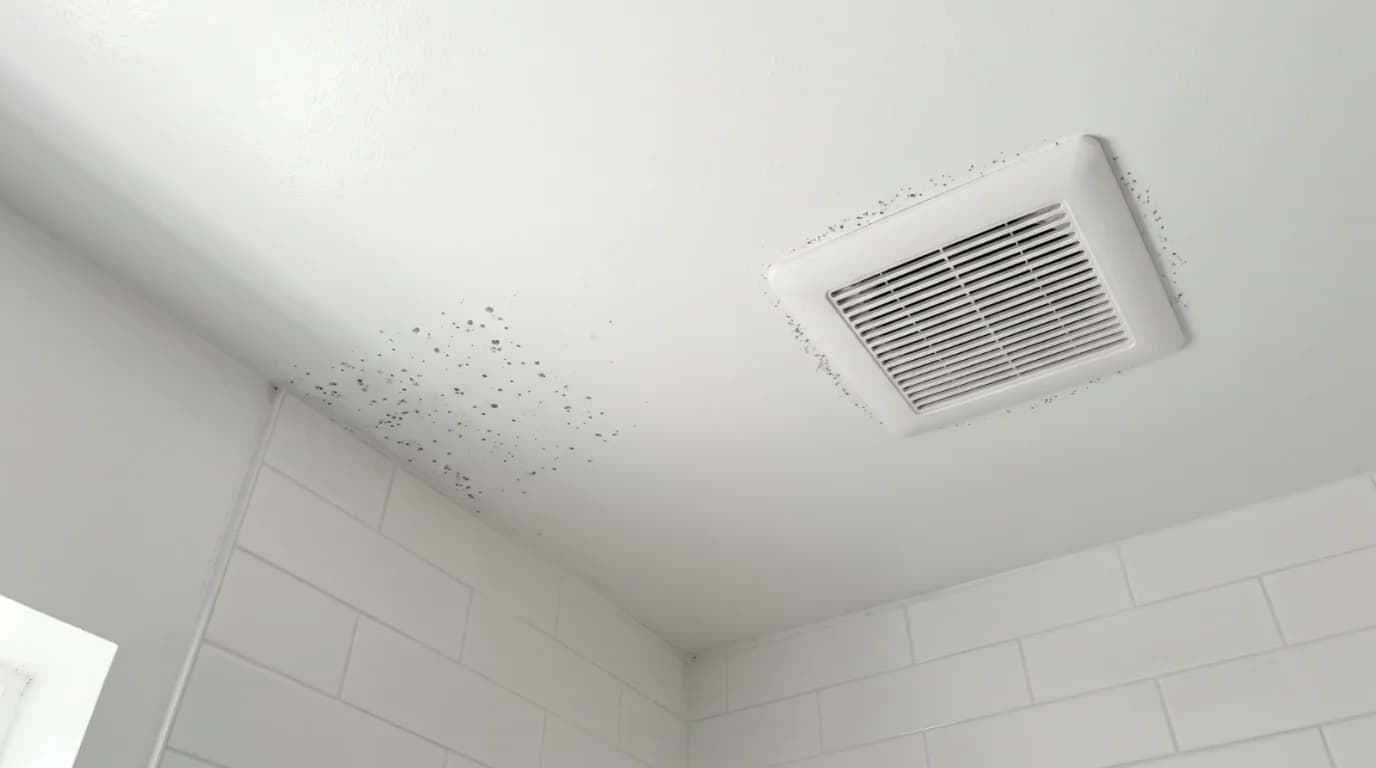
Dark dots spread evenly, heaviest above the shower and in corners. Usually condensation mold, a ventilation problem.
Next step: usually a DIY fix.
A light, even film across the paint. Usually chronic humidity.
Next step: fix the fan first, then clean.
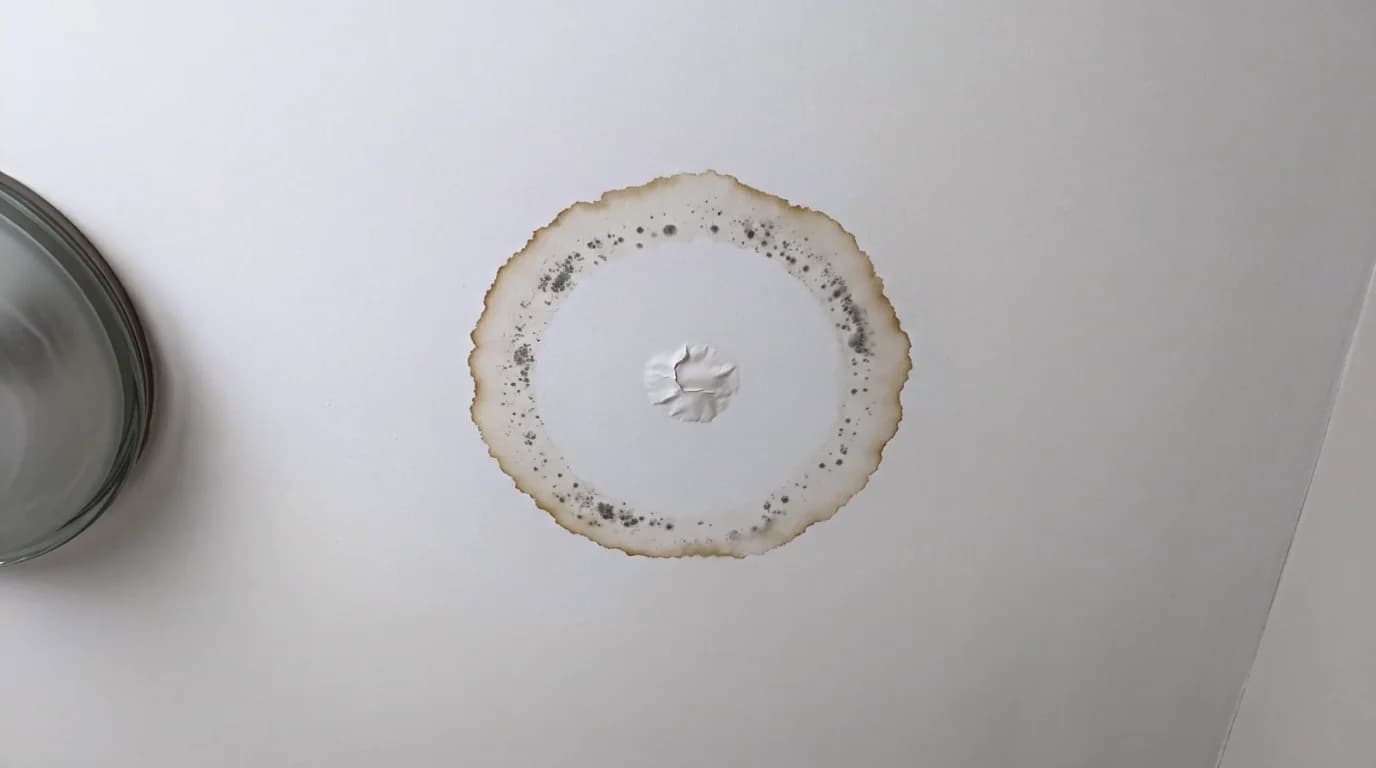
One defined area, maybe a brown edge or bubbling paint. Usually water from above.
Next step: stop scrubbing and find the leak.
The ceiling gives under a gentle press. The drywall has been soaked.
Next step: do not scrub; this is a professional call.
Speckled dots above the shower: usually condensation
Small dark dots scattered evenly across the ceiling, heaviest above the shower and in the corners, are usually condensation mold: steam met a cool painted surface, sat there, and fed the growth. The dots are usually the size of peppercorns. They favor the coldest stretches of paint, which is why corners and edges fill in first, and they read as discrete specks rather than one blotch. This is a very common bathroom ceiling pattern. It's usually a ventilation problem in a mold costume. Growth on the grout, caulk, or curtain is a different story; that's mold inside the shower itself, fed by standing water rather than steam.
A patch, ring, or tan stain: usually water from above
One defined patch with a tan or brown edge is typically a water stain with mold growing at its damp rim, and it usually means the water came through the ceiling rather than out of the air. Bubbling or blistering paint often carries the same message: liquid water reached the gypsum core and pushed the paint film loose. Stop scrubbing. Cleaning a leak-fed patch treats the exit point of the water while the drywall above it may still be wet, and the growth is likely to come back.
The press test
Press gently next to the growth with a dry fingertip: firm drywall is a good sign, though it doesn't prove nothing is wet behind it, while drywall that gives, flexes, or feels soft has been soaked from behind. The press test is a fast first check on whether this is a cosmetic job or a cavity job, and it costs nothing. When the board feels wrong or the patch is bigger than it looks, get a professional mold assessment: an assessor compares moisture readings on the suspect area with the same material somewhere known to be dry, using meters that don't damage the paint first and opening the ceiling only where that's warranted and you agree. Two boundary notes while you're diagnosing. A flat brown mark that doesn't lift when wiped is more likely an old stain than growth, and still a sign water got there. Photos can help illustrate common appearances and look-alikes, as the full mold identification chart and photos do, but they cannot confirm that a patch is mold or identify its species. If the distinction matters to the next step, evaluate the moisture and material conditions and obtain a professional assessment where needed. And if the moldy ceiling isn't over a bathroom at all, the full ceiling mold guide covers the rest of the house, where the cause list is different.
Mildew or mold on a bathroom ceiling?
Not by color, and not for certain by looking. EPA's definition is that mildew is a kind of mold, and the word is often used for mold growth with a flat growth habit. A flat, powdery, light film often cleans off with a bathroom cleaner, though the look can't tell you how far growth has gone. If growth keeps coming back, or the ceiling stays damp, the moisture source and the extent need another look, and a stain left after cleaning doesn't by itself show that mold remains; the wipe-and-watch cue in the mold-versus-mildew guide covers what to watch for after you clean. The press test above adds the other clue: drywall that has gone soft has been wet from behind. On this ceiling the label doesn't change the job: both mean moisture, so find where it is coming from, the shower's steam or a leak from above, before you clean.
What's above your bathroom changes the fix
Once the pattern points to a leak, the next question isn't on your ceiling at all. It's above it, and there are usually three suspects.
Three suspects overhead
Same stain, three different sources. Start with what sits overhead.
Plumbing, a tub drain, or a supply line.
The tell: the stain sits below the fixture and grows when that fixture is used.
A roof leak, or an exhaust fan venting into the attic instead of outside.
The tell: check where the fan duct actually ends.
Membrane or flashing failure.
The tell: the stain grows after rain, not after showers.
An upstairs bathroom or kitchen
A stain under an upstairs bathroom, kitchen, or laundry is worth treating as plumbing until it has been checked: a tub drain gasket, a toilet seal, a supply fitting sweating or seeping inside the floor. The tell is usage. Run the upstairs tub and watch the stain over the next day; a stain that responds to a specific fixture points strongly to that fixture. The growth you can see downstairs can be the exit point, with more growth in the wet cavity between the floors, which is why a confirmed leak here is opened up and dried rather than wiped down, once any asbestos and lead concerns in an older or unknown ceiling are resolved.
The attic
Above a top-floor bathroom, the water usually comes from one of two places: the roof, or your own shower steam being dumped into the attic by an exhaust duct that never made it outside. That second one surprises people. Building codes require bathroom fans to exhaust outdoors. However, plenty of houses still have a flex duct that ends at the insulation, quietly feeding an attic-side moisture problem that drips back through. Check where the duct actually ends before blaming the roof.
A flat or low-slope roof
A top-floor bathroom under a flat or low-slope roof adds membrane and flashing failure to the suspect list. The tell here is the calendar rather than the plumbing: a stain that grows after storms points to the roof, and one that grows after showers points to the fan. Watch it through one rainy week and it will usually confess.
Black mold on a bathroom ceiling: how worried should you be
Dark spotting on a bathroom ceiling is common, and color alone can't tell you how dangerous it is or which mold it is. If you've been searching with wet hair and one eye on the ceiling, take a breath. The CDC's guidance is simpler than most of what you'll read online: it doesn't recommend routine testing to identify the species, because all mold gets treated the same way, and the treatment is removal.
That is not the same as harmless. Mold exposure can mean a stuffy nose, coughing or wheezing, and irritated eyes or skin, and EPA notes it can cause asthma attacks in people with asthma who are allergic to mold. The risk concentrates in specific groups: people with asthma, mold allergies, or weakened immune systems. If someone in the house is in one of those groups, they shouldn't be the one on the ladder, and symptoms that ease when you leave home are worth reading about in the full breakdown of mold exposure symptoms and raising with a doctor. Color doesn't decide the response; the extent, the material, and the moisture do. A small patch on firm, painted drywall with the cause fixed is usually a cleaning job, and past about 10 square feet our advice is to bring in a professional, whatever the color.
How to get mold off a bathroom ceiling (when that's safe)
Good news: condensation mold on a smooth painted ceiling is one of the few mold jobs that's genuinely do-it-yourself. Bad news: three of the situations below only look like that job, and scrubbing them wastes the afternoon or worse. Run the gate first.
Is this a Saturday job?
Our two lists. When in doubt, treat it as a professional call.
What to use on a painted ceiling
A household detergent solution or a peroxide-based bathroom cleaner handles condensation mold on painted drywall. Bleach is the crowd favorite but not the tool to reach for here: the EPA doesn't recommend bleach as a routine practice during mold cleanup, and on a painted ceiling it mostly lightens the stain without touching the moisture that caused it. Suit up the way EPA and CDC advise for mold cleanup, with at least an N95 respirator, goggles without vent holes, and gloves that reach the middle of the forearm, and cover your arms and legs with long sleeves and long pants, because everything you scrub on a ceiling drips onto the person scrubbing it. This DIY guidance is for surface cleaning only; do not scrape, sand, cut, or remove ceiling material as part of this cleaning. If opening or material removal is needed, stop and reassess the hazards and who should perform the work. And one rule with no exceptions, straight from the CDC: never mix bleach with ammonia or any other cleaner, because the combination produces a poisonous gas. You don't need a specialty product for this job. The moisture fix matters far more than the chemical.
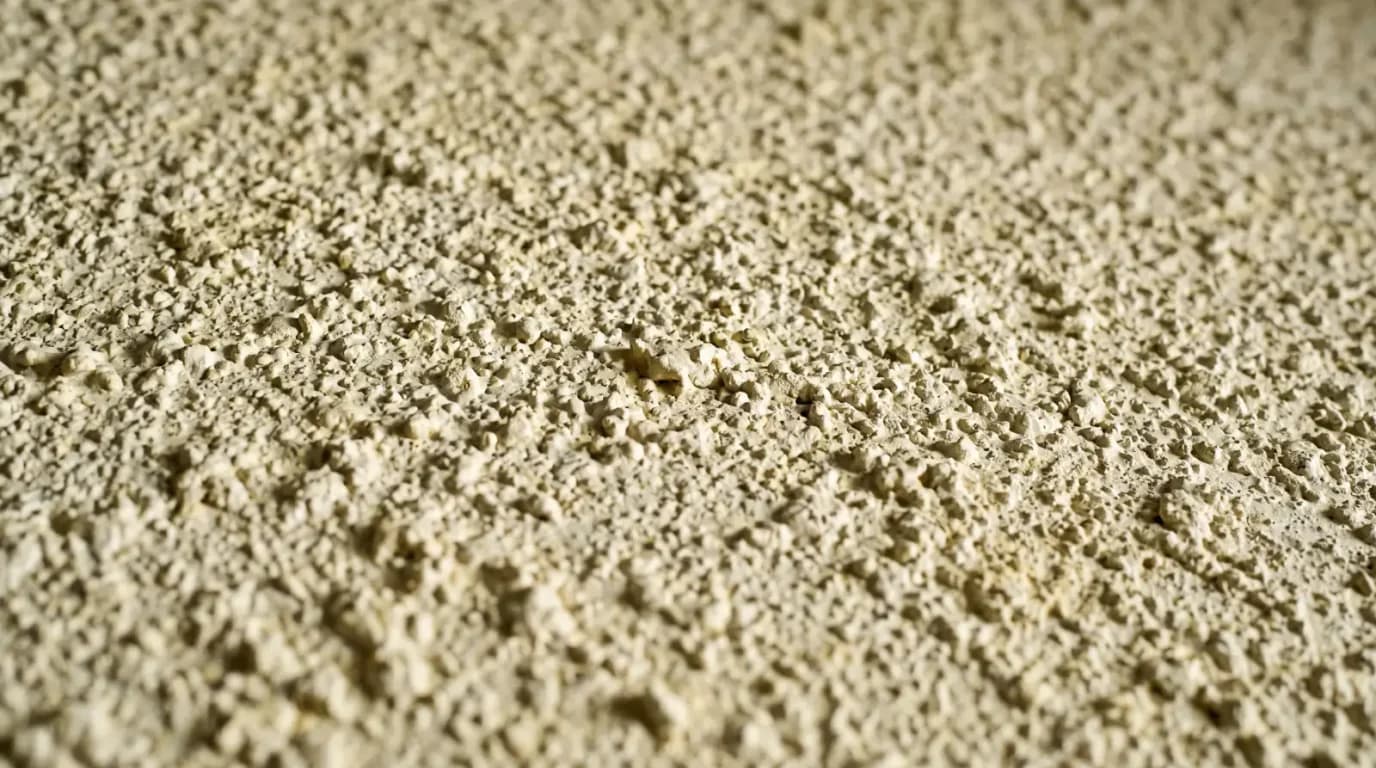
Popcorn or textured ceiling? Stop
A popcorn or textured ceiling installed before the early 1980s, or of unknown age, may contain asbestos, and you can't tell by looking. The CPSC says asbestos may be present in textured paint and in the patching compounds used on wall and ceiling joints, and that their use was banned in 1977; we use the early 1980s as our own margin, because a ban does not remove material already made or installed. The CPSC also warns that sprayed ceiling material that is loose, crumbly, or water-damaged may release fibers, as will sanding, drilling, or scraping it. Later or unknown-age material is not automatically asbestos-free; if the material will be disturbed and its asbestos status is uncertain, have it evaluated before disturbance. The EPA's advice for suspect material is to leave it alone and have it sampled by a trained and accredited asbestos professional, so do not scrape, sand, or scrub a ceiling of that age to remove mold. Get the texture tested first, whatever the mold is doing.
When scrubbing is the wrong move
Any leak pattern makes cleaning the wrong first move, because the water that fed the growth may still be in the drywall behind it. Before cutting or opening an older or unknown ceiling, resolve applicable asbestos and lead concerns. Fix the leak, dry or replace what it soaked, and save the surface work for last. Soft or sagging board never gets scrubbed at all; it generally gets cut out. For the full room-by-room protocol once the water is handled, the full mold remediation walkthrough picks up where this section stops.
The real fix is the fan, not the spray
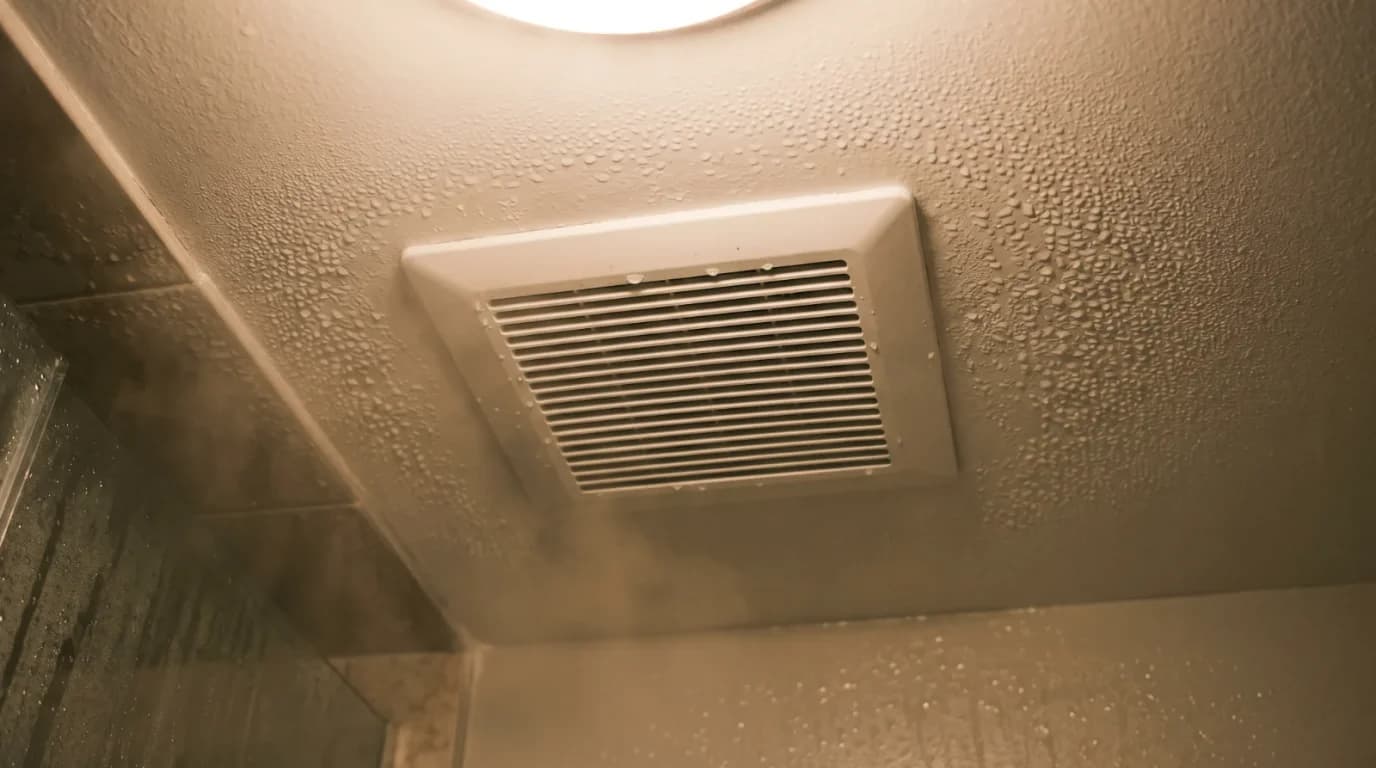
Condensation mold comes back because the moisture comes back, so keeping it away depends on the ventilation, not the cleaning bucket. The numbers are specific. The Home Ventilating Institute recommends about 1 CFM of fan capacity per square foot of bathroom floor, which puts a typical 5-by-8 bathroom at 40 CFM, and the fan needs to run during the shower and for a stretch afterward; the easy way to make that automatic is a timer switch that costs about as much as a pizza. Wherever that fan blows, the duct has to end outside the house. Per the CDC it's one line, vent fans to the outside, and a duct that stops in the attic just relocates the mold problem upstairs.
Two smaller levers finish the job. The EPA's target for indoor humidity is below 60 percent, ideally 30 to 50, and a bathroom that airs out between showers keeps the paint drier, which makes it harder for growth to get a foothold. And once the ceiling is clean and fully dry, a satin or semi-gloss bathroom paint sheds condensation better than flat builder's paint, so the repaint is really worth doing properly. The rest of the room follows the same physics; the full bathroom mold guide covers walls, grout, and the whole-room ventilation picture.
Why aren't shower ceilings tiled?
Because a ceiling sees condensation, not spray. Shower walls and floors take running water, so they get tile; the ceiling above them gets steam, which a moisture-resistant semi-gloss bathroom paint on a ventilated ceiling handles at a fraction of the weight, cost, and overhead grout of tile. Tile wouldn't end the mold problem either: on a tiled ceiling the same condensation grows on the grout lines instead of the paint. The exception is a steam shower, a sealed enclosure whose ceiling is waterproofed and tiled because it's wet all over. If a painted ceiling keeps growing spots, the answer is usually the fan and the paint, not tile.
Renting? Who handles it, and what to document
If you rent, the ceiling belongs to the landlord and the air belongs to you, and both facts matter. A leak pattern, soft drywall, or growth past what a homeowner should take on is the landlord's repair; your lease and local tenant rules govern the details. Your job is the paper trail. Photograph the ceiling with a date, send the notice in writing rather than a hallway conversation, keep copies, and re-photograph if the patch returns after a repair, because a recurrence photo is the difference between "still moldy" and strong evidence the fix didn't hold. In the meantime, the ventilation habit is the one lever you control: run the fan, crack the door after showers, and the problem grows slower while the paperwork works. The notices, the deadlines, and when to get your own assessment are in the full renter's guide to mold in an apartment.
When to call a pro, and what it costs if it's a leak
Four things take a bathroom ceiling off the weekend-project list: growth past about 10 square feet, drywall that's soft or sagging, a patch that keeps returning after cleaning even with the fan running, and any leak-pattern reading. The common thread is that the cause may be above or behind the ceiling in all four, and the person you want is one who can find water, not just remove stains.
If it's a leak, budget for the plumbing or roof repair plus drying and drywall, and know that the visible patch is usually the smallest line item; what mold remediation actually costs breaks the numbers down by scope. Who does the work matters as much as the price. Look for a company that will trace the moisture with you, contain the work area where the job calls for it, and dry the cavity, which is a different service from whoever answers a task app first with a spray bottle. Ask who will actually do the work and what certifications that person holds: a firm's certification doesn't mean every technician holds one, and no certification by itself shows that a particular job will be done right. Every company on Verified Remediation is identity-checked and tier-ranked before you ever see them, with licenses and insurance verified where available, so you know what's confirmed before the first phone call.
Bathroom ceiling mold FAQ
The questions homeowners ask most, with the short answer first.
Frequently Asked Questions
What causes mold on a bathroom ceiling?
Why does mold keep coming back on my bathroom ceiling?
Is black mold on a bathroom ceiling dangerous?
Can I paint over mold on a bathroom ceiling?
What is the black stuff on my bathroom ceiling?
When should I call a professional for bathroom ceiling mold?
How do you tell the difference between mildew and mold on a bathroom ceiling?
Why are shower ceilings not tiled?
Is the stain on my bathroom ceiling from the upstairs bathroom, or just steam from mine?
What to do next
Read the ceiling, then act in order: pattern, source, moisture fix, cleaning last. Speckled dots usually send you to the fan aisle. A ring, a patch, or soft drywall usually sends you above the bathroom, and sometimes to a professional. A ceiling that keeps growing spots needs the moisture and the extent looked at again, starting with where the water comes from.
This guide is for educational purposes only and is not a substitute for professional advice. Health information is summarized from CDC and EPA guidance, asbestos information from CPSC and EPA guidance, and ventilation guidance from HVI and CDC sources; verify any specific health or safety concern with a qualified professional. Always consult certified professionals for mold and asbestos situations in your home.