Shower Mold: How to Clean It and Keep It Gone (2026)
Shower mold: what the black, pink, or orange growth is, how to clean it off grout, caulk, and curtains, and when recurring mold means calling a pro.
Most shower mold is growth you can clean yourself: the dark film on grout lines, the spotted caulk at the tub joint, the pink ring by the drain. The growth that deserves more attention is the kind that keeps coming back after you scrub. Most often that means the shower isn't drying out between uses; if better ventilation and more frequent cleaning don't stop it, or there are signs of a leak, it's time to look for moisture you haven't reached.
If you just pulled back the curtain and found something growing, take a breath. This is one of the most common mold problems in any home, and most cases end with a stiff brush and better airflow, not a contractor.
In This Guide
- What's growing in your shower: black, pink, orange, or white
- How to clean it, surface by surface: grout, caulk, curtains, drains
- Why it keeps coming back: what is below the surface, seals, and airflow
- Is shower mold dangerous?: the honest risk picture
- When to call a professional: the DIY line
- How to prevent it: habits that work
- Shower mold FAQ: quick answers
What's growing in your shower: black, pink, orange, or white
Showers grow more than one thing, and not all of it is mold: the black film on grout often is, the pink slime by the drain can be bacteria, and the white haze on the glass may be nothing more than soap scum. Color narrows the possibilities. It never confirms a species. If you're not sure the patch is mold at all, mold or mildew: how to tell the difference covers what the two words mean and what to do about either.
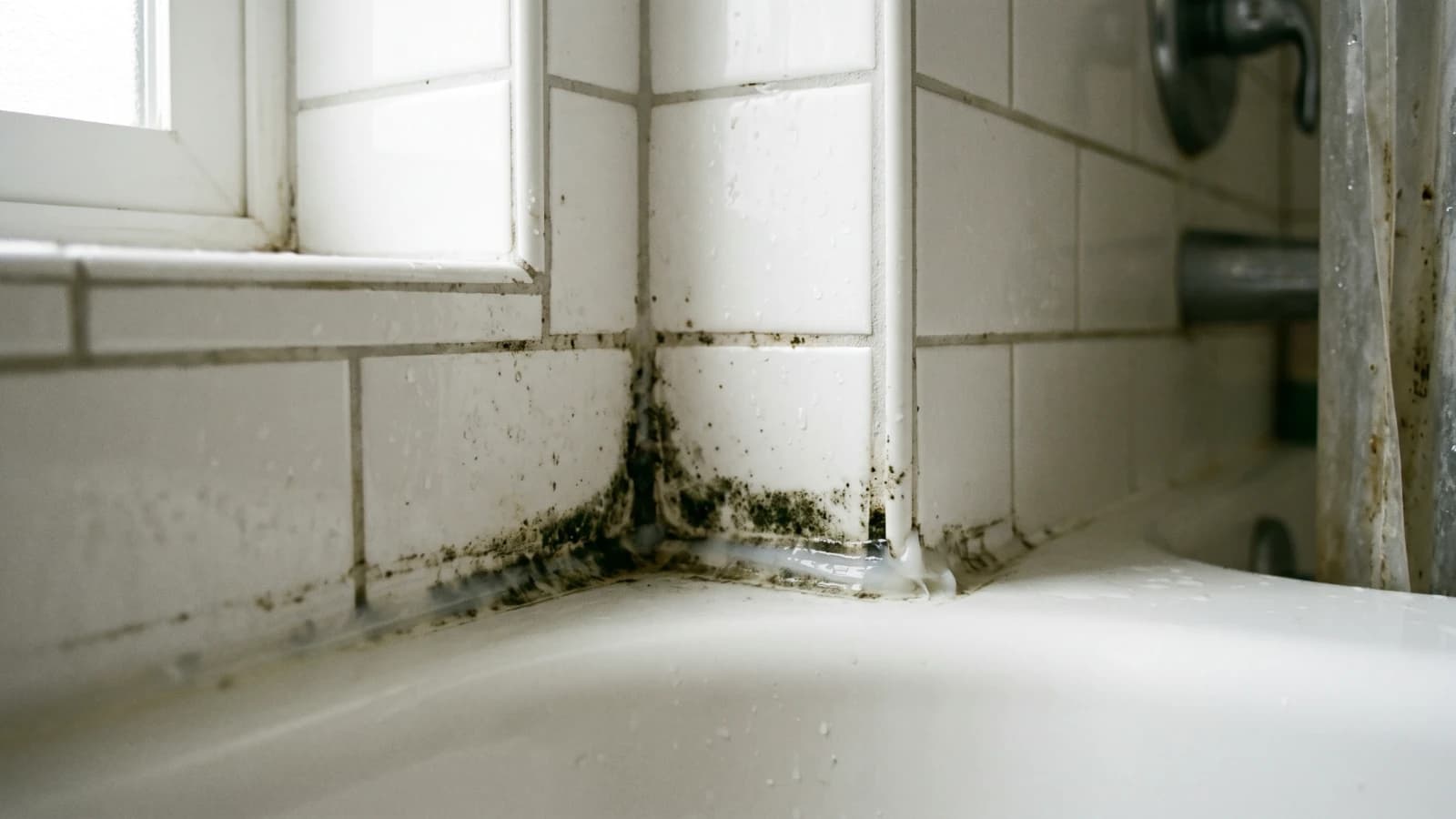
Black mold in the shower
Black or dark green growth on shower grout and caulk is often mold feeding on soap film and trapped moisture, and its color is not proof of a toxic species. The CDC states that the color of mold does not necessarily indicate how dangerous it is. Confirming a species takes a lab, and you don't need the lab name to act. The CDC's advice is the same for every mold: remove it and fix the moisture feeding it.
Where it sits matters more than its shade. Black spotting along grout lines and caulk is a cleaning job. Black growth spreading onto the painted wall above the tile, or returning to the same corner even with good ventilation and regular cleaning, can point to water moving where it shouldn't. For what black mold looks like on drywall, wood, and other surfaces, see what black mold actually looks like. For photos of what different growth can look like, see the full mold identification chart and photos; a photo can't name the species.
Pink film, which can be bacteria
The pink or orange film that rings shower drains and creeps along caulk lines can be bacterial growth, including Serratia marcescens, though its color and location don't confirm the organism. It feeds on soap residue and shampoo film, which is why it follows the water path across the pan and collects where suds settle. For Serratia, Cleveland Clinic says most people don't get sick from it at home, though it can cause infections in people with a weakened immune system, so it's worth cleaning promptly rather than ignoring.
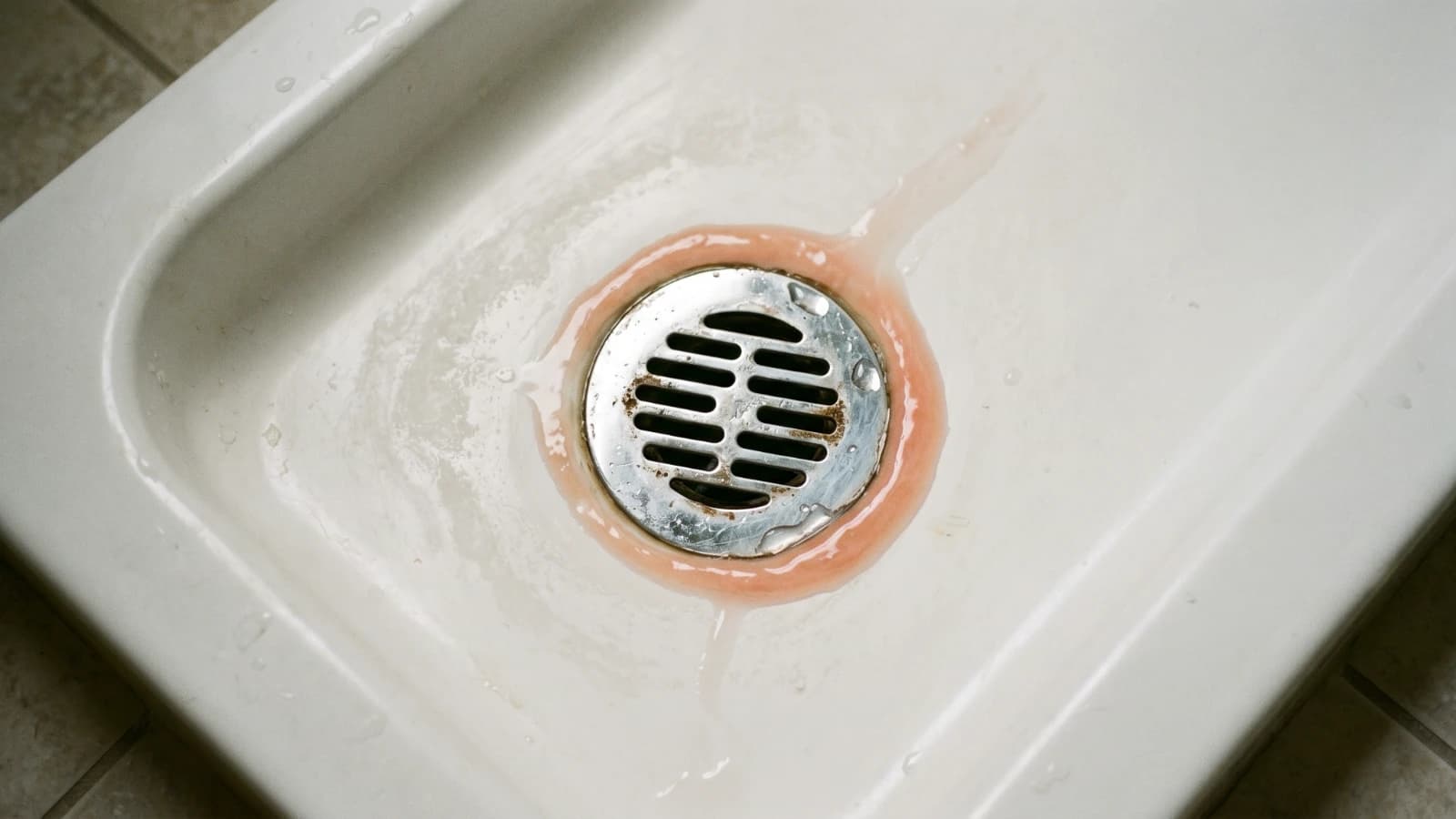
A bathroom cleaner and a rinse take it off in minutes. Keeping the surface dry makes it less likely to come back.
Orange and red growth
Orange or rust-colored patches in a shower can be the same kind of bacterial film as the pink, or mineral staining from iron in the water, and color alone can't tell you which. A wipe is a useful clue: biofilm smears and lifts onto the cloth, while mineral staining stays put and feels like part of the surface. If it's slimy, treat it like the pink film. If it's flat and won't move, staining from the water supply is the likelier answer.
White or gray film
A flat white or gray film on grout, doors, and corners is what people usually call mildew, which is mold with a flatter look, and on tile or glass it usually wipes off with an ordinary bathroom cleaner. The look can't tell you how far it reaches into grout, so if it keeps coming back, treat it like any other shower mold and keep reading.
How to clean shower mold, surface by surface
Cleaning shower mold comes down to matching the method to the surface: wipe sealed tile and glass, clean porous grout per the cleaner's label, and replace caulk the growth has worked into. Before you start, run the fan or open a window, put on rubber gloves, and never mix bleach with ammonia or any other cleaner; the fumes are genuinely hazardous.
One thing the cleaning aisle won't tell you: the EPA does not recommend chlorine bleach or other biocides as a routine practice during mold cleanup. Bleach can whiten the stain on porous grout without removing the growth, which is why a whitened line can go dark again. Soap and water, a dedicated bathroom mold cleaner, or cleaning mold with vinegar are better starting points.
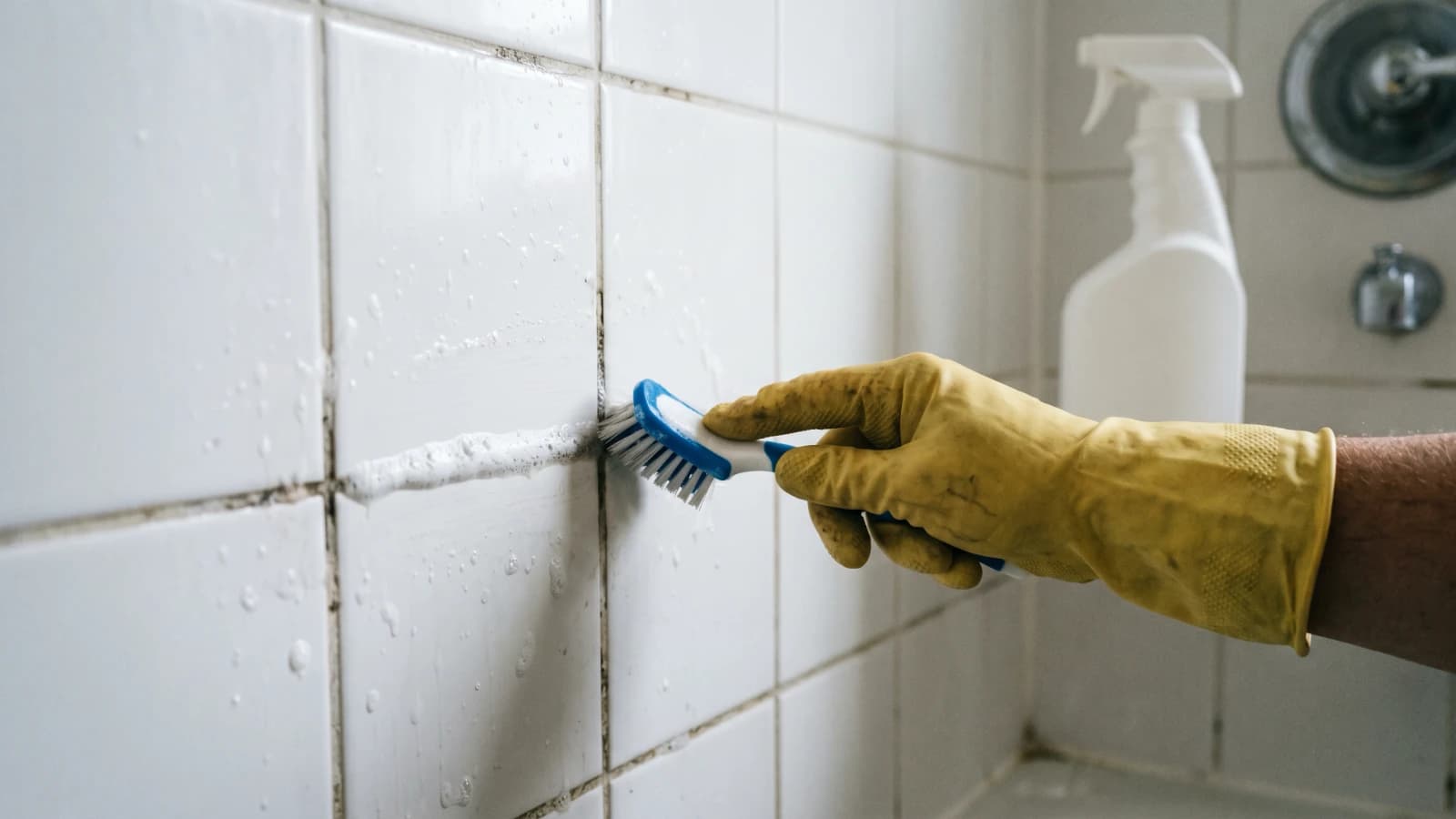
Tile, glass, and grout
Mold on sealed tile and glass is a wipe-and-scrub job; grout takes more work. If you use a cleaner on the grout lines, leave it on for the contact time its label gives, then scrub with a stiff brush and rinse. Stubborn lines often take a second round, and that's normal. Cement grout is porous, which is how growth gets a foothold in the first place. Once the lines are clean and fully dry, sealing them helps keep water out. Reseal cement grout about once a year. Epoxy grout is non-porous and doesn't need it.
Caulk and silicone, when cleaning won't work
Mold established inside a silicone caulk bead can't be scrubbed out, because the colony is growing in the caulk, not on it. Surface spots that wipe away are fine. However, dark spots suspended inside the bead usually mean the growth is embedded, and the bead is done. Cut it out with a utility knife or a caulk-removal tool, clean and dry the joint completely, then run a new bead of mold-resistant, 100 percent silicone. Give it a full 24 hours to cure before anyone showers. It's the repair homeowners put off the longest, and it takes an afternoon.
Shower curtains and liners
Fabric shower curtains go in the washing machine; spotted plastic liners get replaced. Wash fabric on warm with a couple of bath towels, and let the towels do the scrubbing. A plastic liner is cheap, so replacing it beats an hour of scrubbing it every time. Either way, spread it out after each shower instead of leaving it bunched.
Showerhead and drain
Growth on showerheads and around drains is often biofilm sitting on trapped water, and it wipes away once you reach it. Pull the drain cover and scrub the underside and the gasket, where the film actually lives. Wipe the showerhead face and the rubber nozzles while you're there. A ring that keeps returning usually means that corner isn't drying. Aim the squeegee at it.
One boundary worth knowing: mold on the ceiling above your shower rather than inside the enclosure is usually a room problem, steam condensing on a cold surface, though a leak from above is worth ruling out. The full bathroom mold guide covers ceilings, walls, and the ventilation fixes that make it less likely to come back.
Why shower mold keeps coming back
Shower mold usually comes back because the moisture feeding it never left: a shower is wet every day, and the EPA notes that places like that can be hard to keep completely free of mold. Less often, growth the cleaning didn't reach is still there. The good news: most of a shower is in plain view, so you can see growth early. The bad news: it's also where people scrub the same patch for a year instead of fixing the thing that grows it.
Airflow is the first suspect. A bathroom that stays humid after every shower keeps the grout and caulk wet, and EPA says more ventilation (running a fan or opening a window) and cleaning more often will usually stop shower mold recurring, or at least keep it to a minimum. The second suspect is growth the cleaning didn't reach: cement grout is porous and growth can work into silicone caulk, so a cleaner that only touches the top may not last. The third is the seal itself: cracked grout or a lifted caulk edge lets water behind the tile, where it can stay wet and feed growth you can't see.
Signs the problem is behind the wall
Mold behind a shower wall often gives signs before you see any growth: a musty smell that survives a thorough cleaning, tile that flexes or sounds hollow when you press it, growth that keeps returning to the same corner even with good ventilation and regular cleaning, and discoloration showing up on the painted wall outside the shower. Any one of those is the signal to stop scrubbing and get a professional mold assessment: an assessor compares moisture readings around the shower with the same materials somewhere known to be dry, using meters that don't damage the tile first and opening the wall only where that's warranted and you agree.
Is shower mold dangerous?
Ordinary shower mold is usually a cleaning job, but mold exposure isn't harmless. CDC says damp and moldy environments may cause a variety of health effects, or none at all; for some people, mold can cause a stuffy nose, sore throat, coughing or wheezing, burning eyes, or a skin rash. EPA adds that molds can cause asthma attacks in people with asthma who are allergic to mold. People with asthma, mold allergies, weakened immune systems, or chronic lung disease carry the higher risk and shouldn't be the ones doing the scrubbing.
The pink film gets its own line: it can be bacterial growth such as Serratia rather than mold, and either way the answer is to scrub it off and dry the surface. People with weakened immune systems should let someone else handle it.
Then there's the question behind the question: is the black stuff the dangerous kind? Color can't answer that. The CDC states that mold's color does not necessarily indicate how dangerous it is, and its guidance doesn't change with the species: remove the growth, dry the room. If anyone at home has symptoms that ease when they leave the house, read the full breakdown of mold exposure symptoms and bring it up with a doctor.
When to call a professional
The EPA's rule of thumb is the place to start: a moldy area smaller than about 10 square feet, roughly a 3 foot by 3 foot patch, is in most cases a job you can handle yourself. A shower rarely hits that number on its own, which is why most shower mold stays a DIY project.
Four situations override the size benchmark:
- The behind-the-wall signs are present. Flexing tile, a musty smell that survives cleaning, growth that keeps returning to the same spot even with good ventilation and cleaning. Those are reasons to look for moisture, not to keep cleaning.
- The growth has moved past the shower. Mold on the drywall, ceiling, or flooring outside the enclosure means the water has too. The full mold remediation guide covers what comes next.
- You've cleaned properly and re-caulked, and it still returns. At that point you're treating a symptom.
- The water involved was contaminated. Sewage backups carry more than mold, and the EPA points homeowners to a professional regardless of size.
How to prevent mold in the shower
Preventing shower mold is a moisture schedule, not a product: get the water off the surfaces and out of the air before growth can use it.

- Squeegee for 60 seconds after every shower. Walls, glass, and the corners where water pools. This one habit removes much of what growth needs.
- Run the exhaust fan properly. You want at least 1 CFM of fan capacity per square foot of bathroom floor, running during the shower and for 20 to 30 minutes after. If the fan can't hold a tissue against the grille, it isn't moving enough air to matter.
- Let things dry spread out. Curtain spread flat, towels hung with space, bath mat over the rail instead of on the floor.
- Keep the seals ahead of the water. Reseal cement grout about once a year and replace caulk at the first sign of lifting or internal staining, before water gets behind the tile.
- Watch the room's humidity. The EPA recommends keeping indoor humidity below 60 percent, ideally between 30 and 50 percent. An inexpensive hygrometer on the bathroom shelf tells you where you stand.
The same moisture logic protects the rest of the house, and controlling the moisture that feeds it is the whole game.
Shower mold FAQ
The questions homeowners ask most, with the short answer first.
Frequently Asked Questions
Is the pink stuff in my shower actually mold?
Is black mold in the shower dangerous?
Can I clean shower mold with bleach?
What's the best cleaner for shower mold?
Why does mold keep coming back in my shower?
How do I get mold out of shower caulk?
When should I call a professional about shower mold?
What to do next
Clean what sits on the surface, replace caulk the growth has worked into, and dry the shower daily so it's less likely to restart. Watch the one spot that keeps coming back; it's the spot that needs a closer look for moisture.
This guide is for educational purposes only and is not a substitute for professional advice. Health information is summarized from CDC and EPA mold guidance; verify any specific health concern with a healthcare provider. Always consult certified professionals for mold situations in your home.