Mold vs Mildew: How to Tell the Difference (2026)
Mold vs mildew: a side-by-side comparison of color, texture, smell, and health risk, plus a simple at-home test and when to call a verified pro.
Mildew is a surface form of mold you can usually wipe off. Mold can grow down into the material it sits on, and once it does, it often needs more than a cloth and a spray bottle. That is the whole distinction in two sentences, and it is the one that decides what you do next.
If you are staring at a patch on the wall or the grout and trying to figure out which one you have before you touch it, here is the fast version: the side-by-side comparison, the simple test a remediator actually uses, and the honest line on when a spot is worth a professional's eyes.
In This Guide
- Mold vs mildew at a glance: the side-by-side table
- How to tell which one you have: the at-home test
- Is it dangerous?: mildew, mold, and toxic black mold
- Mold vs mildew by surface: shower, walls, drywall, concrete, fabric
- Can you clean it yourself, or call a pro?: the DIY line
- Mold vs mildew FAQ: quick answers
Mold vs mildew at a glance
Mildew is mold. The word usually means a thin, flat, surface-level growth, the kind you find on tile grout, window sills, and fabric, while people say mold for the fuzzy, raised growth that works into drywall, wood, and ceilings. The EPA describes mildew as mold growth with a flat growth habit, so the real question is not whether it is mold. It is whether the growth sits on the surface or grows into the material.
MILDEW
Cosmetic, surface-level growth
MOLD
Structural, gets into the material
Texture
Flat, powdery or downy
Fuzzy, raised, sometimes slimy
Color
White, gray, or yellowish
Black, green, blue, many colors
Surface depth
Sits on top of the surface
Penetrates into the material
Wipes off
Yes, with household cleaner
No, roots stay behind
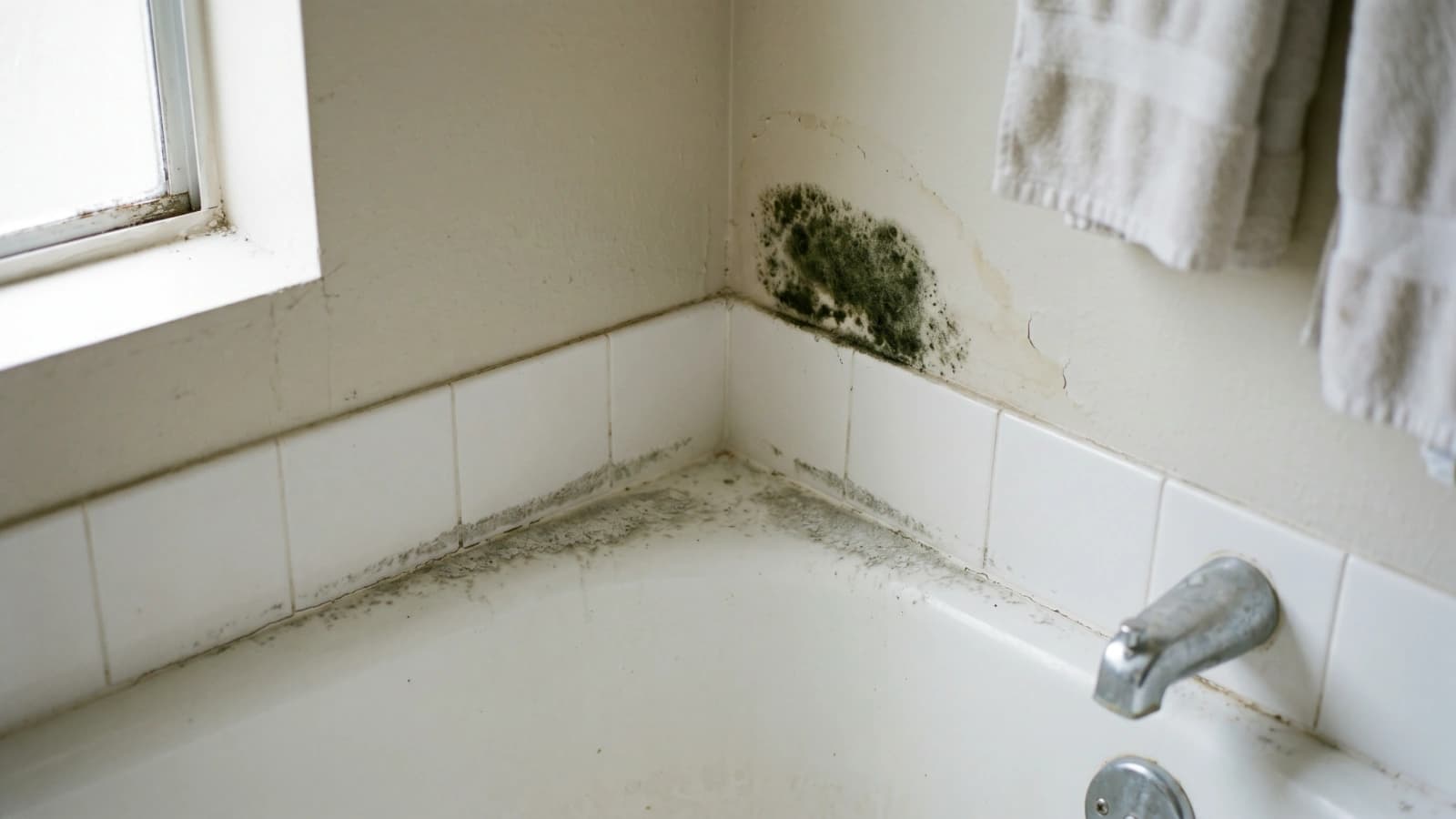
Here is what that looks like in a real bathroom: surface mildew along the grout by the tub, and a mold patch that has grown into the drywall above the tile.
| Mildew | Mold | |
|---|---|---|
| Appearance | Flat, powdery, or downy | Fuzzy, raised, sometimes slimy |
| Color | White, gray, or yellowish | Black, green, blue, brown, many colors |
| Texture | Dry and dusty to the touch | Soft, fuzzy, or wet-looking |
| Surface depth | Sits on top of the surface | Penetrates into the material |
| Smell | Faint, if any | Strong, musty, earthy |
| Common locations | Shower grout, window sills, fabric | Drywall, wood, insulation, HVAC |
| Health risk | Allergy or irritation in sensitive people; it is still mold | Allergy and asthma symptoms, more for at-risk groups |
| How to remove | Usually wipes off hard surfaces with household cleaner | Often needs material removed; larger jobs need a pro |
Most of the time, the row that settles it is surface depth. Mildew sits on top, so a damp cloth lifts it and the surface underneath looks clean. Mold has grown into the material, so wiping smears the surface and the patch returns. Color and fuzz help, but they fool people. The depth rarely does.
For a photo-by-photo walk through the eight household mold types by color, see the full mold identification chart and photos. This guide stays on the mildew versus mold question.
How to tell which one you have
You can settle most mold versus mildew questions at home with a few simple checks and your nose.
The surface versus penetration check
The most reliable tell is whether the growth sits on the surface or has grown into it. Mildew is surface growth; it lifts off a non-porous surface like tile or glass with a damp cloth and a household cleaner, and the surface underneath looks clean. Mold grows as a network of filaments called hyphae, which work into porous materials like drywall, wood, and grout, so wiping the surface leaves a stain and the growth comes back. If it comes off and stays off, you are almost certainly looking at mildew. If it smears, stains, or returns, treat it as mold.
The wipe-and-watch cue
After you wipe a spot clean, watch it for a few days, because that is what separates surface mildew from growth that has worked into the material. Mildew that wiped away on a hard surface stays gone once the area dries. Mold returns within days, because the part you could see was only the top of the colony. A patch that keeps coming back in the same place is telling you there is a moisture source feeding it behind or beneath the surface.
Why color is not enough
Color cannot tell you whether a growth is dangerous, and it cannot confirm so-called toxic black mold. The CDC states that the color of mold does not necessarily indicate whether it is more or less dangerous. Confirming a species takes a lab, and here is the part most pages skip: you do not need to identify it. The CDC says all molds should be treated the same for health and cleanup, so chasing a lab name does not change what you should do. If you are trying to tell whether a dark patch is black mold to begin with, what black mold looks like covers the visual signals and the things people mistake for it. When a patch is large, you cannot find where the water is coming from, or someone in the home has symptoms, that is the time to get a professional mold assessment rather than guess.
"Color is the first thing homeowners reach for, and it's the least reliable. I've cut into walls behind 'just mildew' and found mold well into the drywall. The real tell is whether it sits on the surface or goes into it. If you can't wipe it off and it keeps coming back, treat it as mold until a sample says otherwise."
Reviewed by Drew Fuller, IICRC-certified mold remediator, Principal at Restoration 365 (IICRC Certified Firm), Willow Grove, PA.
The diagram below lays out four quick at-home checks, including a bleach-dab spot test. Treat them as clues that work together, not proof on their own. One note on the bleach dab: it can help you identify growth, but per the EPA, bleach is not a recommended way to clean mold, so use it to tell what you have, not to treat it.

Is it dangerous? Mildew vs mold vs toxic black mold
The honest answer is that mold and mildew sit on the same risk spectrum, not on opposite sides of a safe line. Because mildew is a surface form of mold, the CDC recommends treating all molds the same for health and cleanup. What changes is how much you are exposed to it and how sensitive you are.
Mildew, mold, and so-called toxic black mold
Different names, same response. Find the moisture, remove the growth, and see a doctor if anyone in the home has persistent symptoms.
Mildew
A surface form of mold. May trigger allergy symptoms in people who are sensitive.
Common household mold
Can trigger congestion, coughing, wheezing, and asthma flare-ups.
So-called toxic black mold
Color alone cannot confirm it, only a lab can. The CDC has not proven a link to serious illness.
For many people, a small amount of surface mildew is mostly a cleaning problem. The same growth can still cause symptoms in people who are sensitive to mold. According to the EPA, inhaling or touching mold or mold spores can cause allergic reactions in sensitive individuals, including hay-fever-type symptoms such as sneezing, a runny nose, red eyes, and a skin rash.
Larger growth, or growth that has worked into the material, raises the exposure. The CDC reports that mold can cause a stuffy nose, sore throat, coughing or wheezing, burning eyes, or a skin rash, and that it can trigger asthma attacks in people who are allergic to mold. People with asthma or a mold allergy may have severe reactions, and people with weakened immune systems or chronic lung disease can develop lung infections from mold.
Then there is so-called toxic black mold, the reason many people search this question in the first place. Here is the measured version: you cannot confirm it by color, and the CDC has not proven a link between Stachybotrys chartarum and serious illness. The CDC's guidance is the same regardless of species: treat every mold alike, find the moisture, and remove the growth. If anyone in the home has trouble breathing or symptoms that ease when they leave the house, see a doctor and have the home looked at. For the full picture of who is most at risk and which symptoms warrant a doctor, see the full breakdown of mold exposure symptoms.
Mold vs mildew by surface (where you're seeing it)
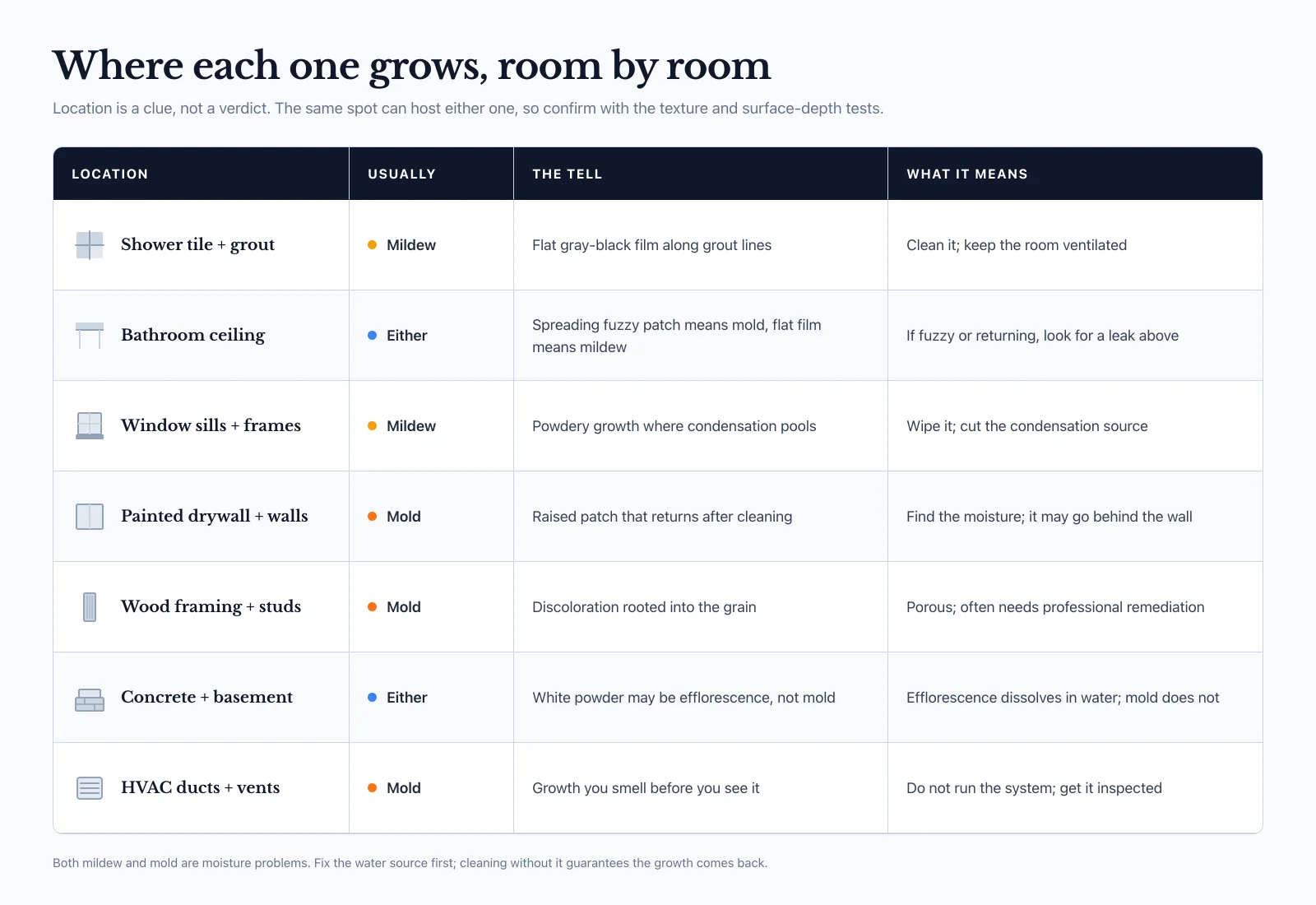
Shower, tile, and grout
On shower tile and grout, the flat gray or black film along the grout lines is usually mildew, a surface mold you can clean. It grows on soap film and stays wet between showers, sitting on top of the non-porous tile. A bathroom cleaner and a scrub brush usually handle it, and a working exhaust fan keeps it from coming back. If the growth is fuzzy, raised, or spreading onto the painted wall or ceiling, or it keeps returning in the same corner, there is likely a moisture problem behind the surface. For the full shower and grout playbook, see the shower mold guide.
Walls and ceilings
On painted drywall and ceilings, a raised patch that returns after you clean it is usually mold, not mildew. The paint film is non-porous, but the drywall behind it is porous and holds moisture, so growth that looks like a surface stain can extend into the board. A flat, powdery film near a cold window or a humid corner can be mildew. A fuzzy patch that spreads, or a brown ring with growth in it, points to a leak or condensation behind the wall that needs finding before you repaint. The full mold on walls guide reads each pattern and makes the scrub-or-cut call on drywall.
Drywall and wood
On drywall and wood, mold grows into the material, which is why porosity decides whether you clean it or replace it. Non-porous surfaces such as sealed tile and glass can be cleaned. Porous materials such as drywall, insulation, and bare wood hold the growth below the surface, so badly affected drywall and insulation usually get cut out and replaced rather than wiped. Surface mildew on finished, sealed wood can often be cleaned, but mold that has darkened and softened the wood grain has gone deeper than a cloth reaches.
Concrete and basements
On basement concrete, a white crystalline powder is often efflorescence, a mineral deposit, not mold. The quick test: efflorescence dissolves in water, and mold does not. Efflorescence is left behind when water moves through masonry and evaporates, so it points to a moisture path worth fixing, but it is not a fungus. Actual mold on concrete feeds on the dust and organic film on the surface and looks fuzzy or stained. For the basement details, see basement mold and efflorescence on concrete.
Clothes and fabric
On clothes and fabric, mildew shows up as flat, powdery white or gray spots with a musty smell, and it is the more common of the two. It grows on damp fabric left in a pile or a closet without airflow. Washing and fully drying the item, then airing out the space, usually clears it. Dark, set-in spots that survive a wash have likely grown into the fibers and may not come out.
What each smells like
Mildew has a faint musty odor, while mold usually smells stronger and earthier. Smell is one of the most useful early signals, because a damp, musty smell that lingers after you have cleaned a room often means there is mold growing where you cannot see it, behind a wall, under flooring, or in a ceiling cavity. If you can smell it but cannot find it, the growth is the kind worth a closer look.
Can you clean it yourself, or do you need a pro?
The EPA's rule of thumb is the clearest line to start with: if the moldy area is less than about 10 square feet, which is roughly a 3 foot by 3 foot patch, in most cases you can clean it yourself. Larger than that, the agency points homeowners to professional remediation guidance, because bigger jobs need containment and equipment a homeowner does not have. That threshold is for mold; surface mildew on a hard surface is almost always a cleaning job.
A few situations move the answer to a professional no matter how small the patch looks:
- Porous materials are involved. Mold in drywall, insulation, carpet, or ceiling tile has grown below the surface. The EPA notes that absorbent or porous materials may have to be thrown away when they become moldy, because cleaning the surface does not reach the growth inside.
- It is in the HVAC system. A contaminated system can carry spores or fragments beyond the source area, and needs specialized cleaning. Don't run it until a professional has evaluated it.
- You can smell it but cannot find it, or it keeps coming back. Hidden or returning growth means a moisture source you have not fixed yet.
- The water was contaminated. Sewage or flood water carries more than mold, and the EPA recommends a professional regardless of size.
One note on bleach: the EPA does not recommend chlorine bleach or other biocides as a routine practice during mold cleanup, and on porous materials the moldy material usually has to come out anyway. For the step-by-step on a job you can handle, see how to get rid of mold the right way.
Mold vs mildew FAQ
The questions that come up most often, with the short answer first.
Frequently Asked Questions
Is mildew the same as mold?
Can mildew turn into mold?
Is mildew dangerous?
Does mildew smell?
How do I know if it's black mold?
Can I clean mold with bleach?
What to do next
Mold and mildew are both moisture problems wearing different faces. Mildew is the surface version you can usually clean, and mold is the version that has grown into the material and may need a professional. Either way, the patch comes back until the water does not, so the lasting fix is controlling the moisture that causes both. The EPA recommends keeping indoor humidity below 60 percent, ideally between 30 and 50 percent.
This guide is for educational purposes only and is not a substitute for professional advice. Health information is summarized from CDC and EPA mold guidance; verify any specific health concern with a healthcare provider. Always consult certified professionals for mold situations in your home.