What Does Mold Smell Like? How to Identify the Musty Odor
Mold smells musty, earthy, and damp. What mold and black mold smell like, what gets mistaken for it, and when a musty house has no mold at all.
There is a smell in the house, and you cannot find where it is coming from. Musty. A little damp. Earthy, maybe, like an old basement or a cardboard box that got left out in the rain. And the question underneath it is the one that brought you here: is that mold?
Most of the time, yes. Mold smells musty, earthy, and damp, like an old library book, wet cardboard, or a basement that never quite dries out, and your nose usually catches it long before your eyes do. The smell itself is mVOCs, the gases mold gives off as it grows, and it drifts through a room while the growth stays hidden behind a wall or under a floor.
Here is the part most pages skip. Your nose can tell you that you are probably dealing with mold, and roughly how active it is. It cannot tell you the species, and it cannot tell you how dangerous it is. Only a test does that. This guide covers what mold actually smells like, why it happens, the everyday smells people blame on mold by mistake, and what to do when you can smell it but cannot find it.
Drew Fuller, who reviews this guide, runs Restoration 365, an IICRC-certified remediation firm in Willow Grove, PA. From a working remediator's perspective, the smell is the first thing most homeowners notice and the last thing they should wave off: a musty odor that keeps coming back almost always means active growth feeding on something damp behind a surface, not a smell that will simply air out. The note itself, musty or sweet or sharp, does not name the species, and it does not need to. The honest move is to treat a persistent musty smell as a reason to find the moisture source, not a reason to reach for an air freshener.
In This Guide
- Why mold smells the way it does: the mVOC answer
- What different molds smell like: the range of odors
- Where the smell is coming from: hidden mold
- When that smell isn't mold: the look-alikes, a musty house with no mold, and whether a mildew smell goes away
- What black mold smells like: and whether it is dangerous
- What to do if you smell mold: the next step
- Mold smell FAQ: quick answers
Why mold smells the way it does
That musty smell is not the mold itself. It is a set of gases called microbial volatile organic compounds, or mVOCs, that mold releases as it digests the material it is growing on. As the colony feeds on drywall paper, wood, dust, or fabric, it gives off these compounds, and your nose picks them up in the air.
A few things follow from that. The smell can appear before any visible growth, because the gases travel through the air while the colony is still small or hidden inside a wall. The smell is usually strongest when the mold is active and damp, which is why it often intensifies after rain or when humidity climbs. And the specific odor can shift depending on the species and what it is eating, which is why mold does not have one single, fixed smell.
The EPA notes that a musty or earthy odor is one of the common signs of a mold problem, and that controlling moisture is the key to controlling mold. For the health side of that, the CDC and EPA guidance on mold and indoor air is the authority worth reading, and we link to it directly in the health section below.
What different molds smell like
Most people reach for the same handful of words, and they are a good starting point. The descriptions fall into three groups.
The classic musty family is what most people mean by a mold smell:
- Musty and stale, like an old basement, a damp towel, or a closed-up room that has not been aired out
- Earthy, like soil after heavy rain, a forest floor, or fresh dirt
- Damp, like wet cardboard, wet paper, an old library book, or a mildewed towel left too long in the washer
Heavier or older growth tends to smell stronger and stranger:
- Rotting or decaying, like wet rotting wood or decaying leaves
- Fermented, like beer, bread dough, or overripe and rotting fruit
- Stale and sweaty, like gym socks or a locker room
The surprising notes are the ones people do not expect, and they are where mold most often gets misread:
- Sharp and ammonia-like, which is the smell people most often mistake for cat urine
- Sweet and sickly, a heavy, cloying smell some people notice before the musty one
- Fishy, which can show up in damp, poorly ventilated spaces
The surface mold is growing on shifts the note, even though it never names the species. On wet drywall and cardboard you get the classic damp-paper musty smell. On old wood and framing it reads more like rotting wood. On damp concrete or a basement floor it turns earthier, like wet soil. And in carpet or fabric it goes sour, closer to dirty laundry.
A few practical things to take from that range. A stronger smell usually means more active growth or a larger colony, not a more dangerous one. A smell that keeps changing, or keeps getting worse, points to growth that is spreading rather than drying out. And the specific note comes from what the mold is feeding on and which gases it is releasing, not from how harmful it is.
Here is the honest limit, and it is the part most guides on this topic quietly skip: your nose can tell you that you are probably dealing with mold, and roughly how active it is, but it cannot tell you the species. The strength of the odor is a better clue to how much mold is present than the exact note is to which one it is. And by the time a whole room smells musty, the growth feeding that smell is usually well established behind a surface, not just starting. Anyone who tells you they can name the mold from the smell alone is overstating what a nose can do; only a lab test confirms a species. If you want to see how the same caution applies to appearance, our guide on what black mold looks like covers the visual side, and the mold identification hub ties the signals together.
Where the smell is coming from when you can't see it
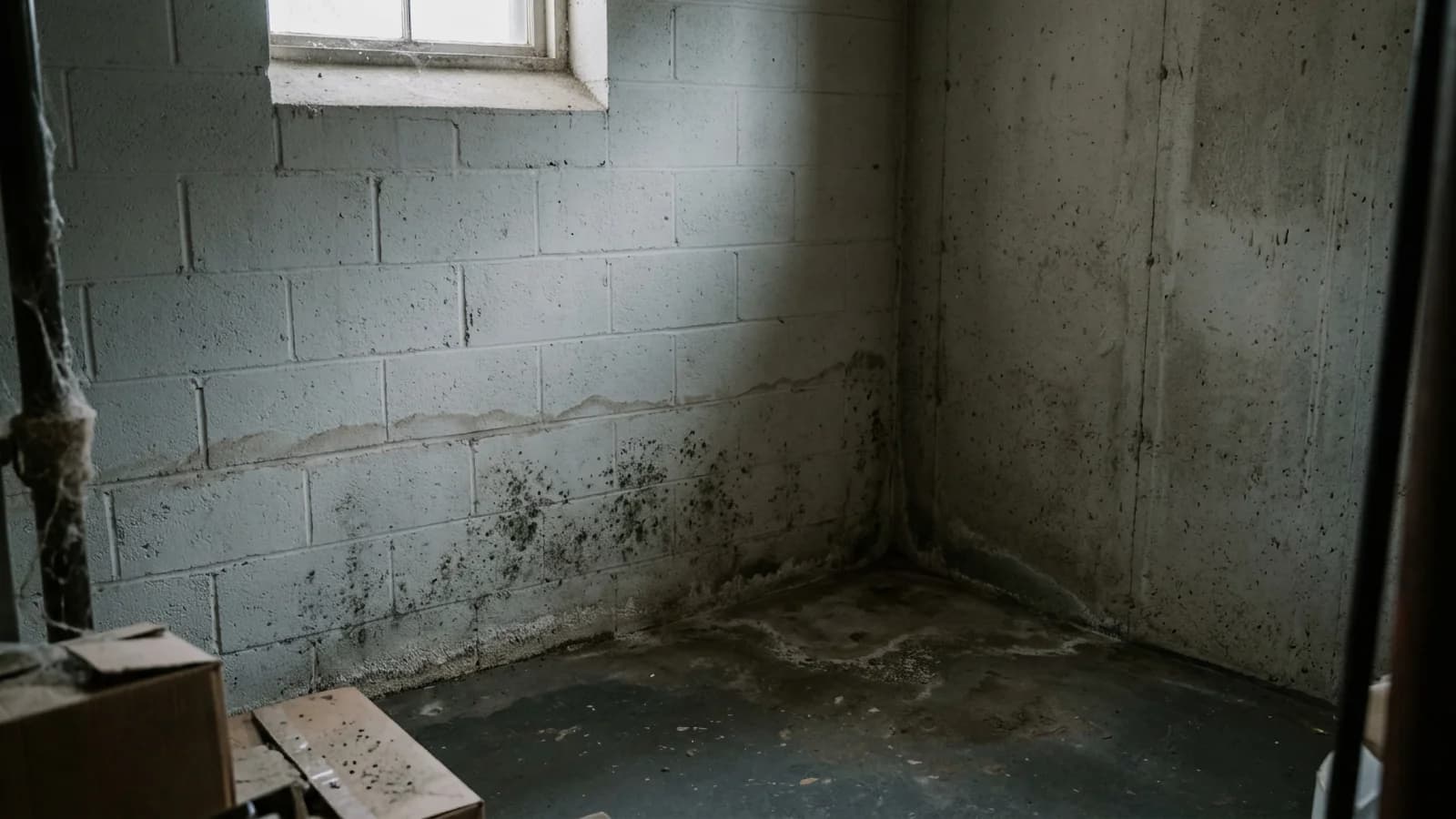
The most common version of this question is the hardest one: the house smells musty, but there is no mold in sight. That is normal. Most mold grows where you cannot easily see it, and the smell reaches you through the air long before the growth does.
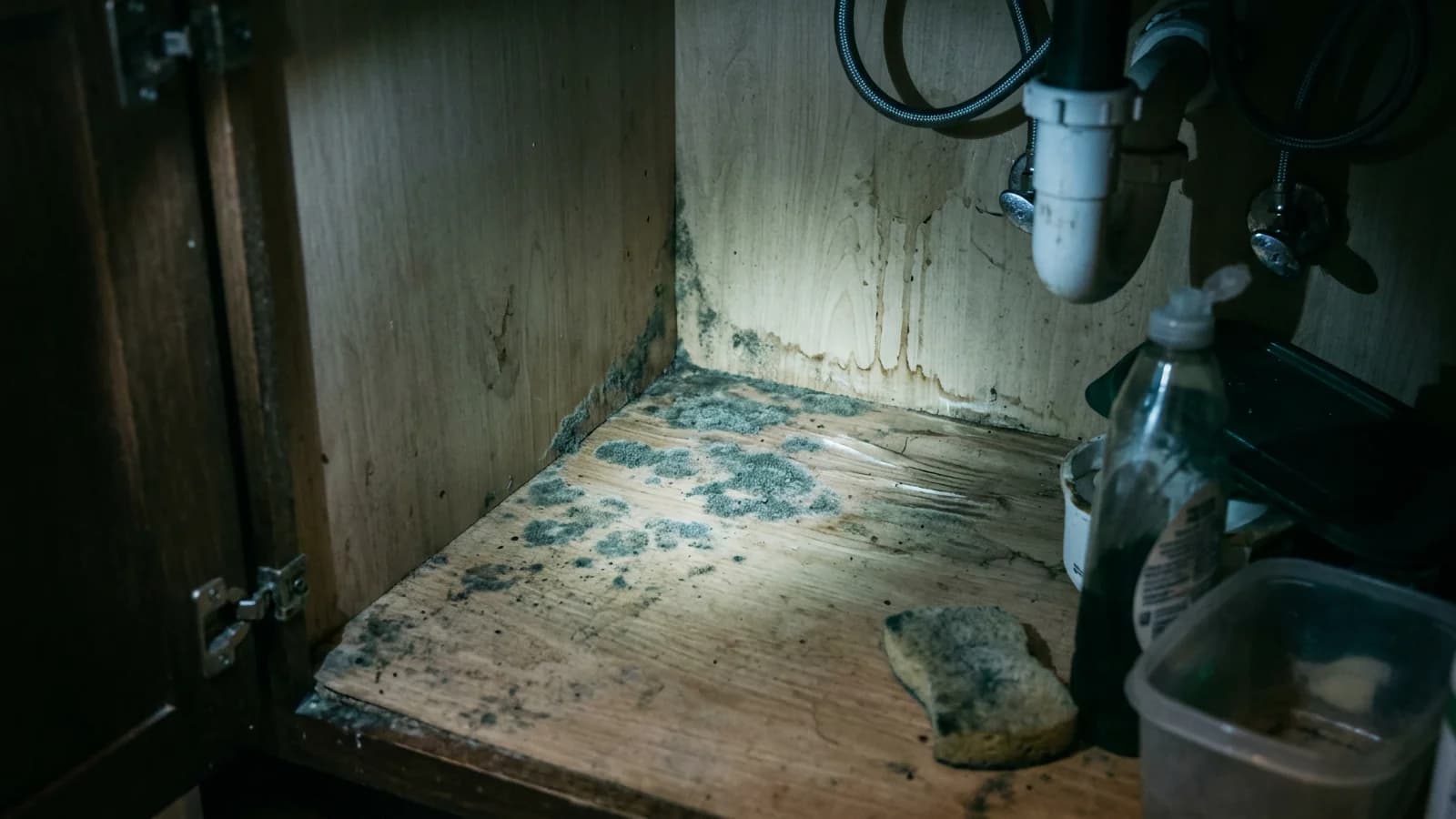
The usual hiding places are behind walls, under flooring and carpet padding, inside HVAC ductwork, in the attic, and in the crawl space or basement. The way the smell reads helps you narrow it down. From the basement or crawl space it is a heavy, earthy musty that gets worse in humid weather, because damp air rises into the living space above. From the HVAC it tends to arrive as a burst when the system kicks on and then fade, which points to growth in the ducts or near a return. From behind a wall it is fainter but persistent, and it is often strongest if you put your face near an outlet or a baseboard. If it is worst in one room, start there, checking under the sink, around windows, behind furniture on exterior walls, and near any spot that has leaked before.
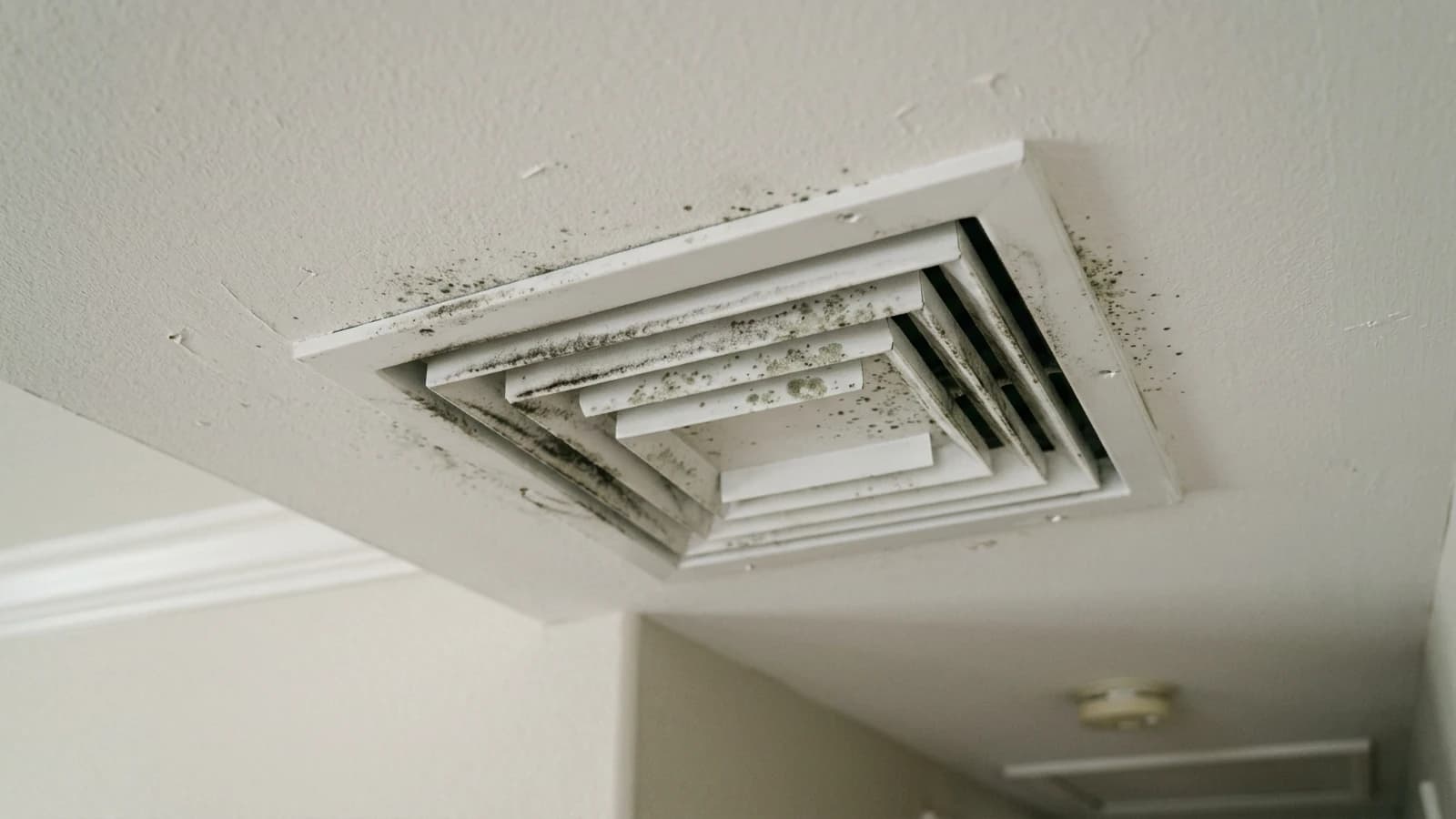
Because these are exactly the places mold tends to settle, it is worth knowing the room-by-room signs. We cover them in the guides on basement mold, bathroom mold, attic mold, crawl space mold, ceiling mold, and shower mold.
When that smell isn't mold
What can be mistaken for mold smell?
Other damp things, mostly, plus a few smells that have nothing to do with moisture: sewer gas, a gas leak, a dead animal, bacteria on an air-conditioner coil. Not every musty or unpleasant smell is mold, and a few of the look-alikes matter for safety, which is why the rotten-egg row comes first.
One safety note first: if you smell a strong rotten-egg odor, treat it as a possible natural gas leak, not mold. Leave the house and call your gas utility from outside before you investigate anything. Natural gas has no smell on its own, so utilities add that rotten-egg odor on purpose for exactly this reason. For everything else, match the smell to its likely source.
| What you smell | Often actually | What to do |
|---|---|---|
| A strong rotten-egg smell | A natural gas leak, or sewer gas | Treat it as a possible gas leak first: leave the house and call your gas utility. If it is mild and clearly near a drain, it is more likely a dry plumbing trap. |
| Sweet, rotten, decaying | A dead animal in a wall, vent, or attic | Trace it to the source; this is not mold and air fresheners will not fix it. |
| Dirty socks from the vents | Bacteria on the AC coil ("dirty sock syndrome") | Have the coil cleaned; it is a cooling-system issue, not mold in the house. |
| Wet dog, with no dog in the house | Growth on the AC coil or drain pan, a rug or pad that got wet, an animal in a wall or duct; sometimes mold itself | If it arrives with the air conditioning, start with the coil. If it stays after the room is dry and aired out, check for mold. |
| Stale, musty, damp | Mildew, damp fabric, a humid basement, stagnant drain water | If it clears with drying and ventilation, it was surface dampness. If it returns, suspect mold. |
Mildew is the closest call, because mildew and mold both smell musty. The difference is mostly that mildew is a lighter, surface-level growth and mold tends to be stronger and to have worked further into the material. We break down how to tell them apart, by both smell and sight, in the guide on mold versus mildew.
Can a house smell musty without mold?
Yes. Musty is the smell of damp, and damp has more sources than mold. A closed-up house with no air moving through it smells stale and musty on its own, and so does one that sits above 60 percent humidity, which is why EPA's target is below 60 and ideally 30 to 50; a cheap hygrometer settles that part in an afternoon. Carpet and its pad hold old spills and years of humidity. Cardboard, books, leather, and stored clothes pick up a basement note without any growth on them. Dust on a furnace or baseboard heater smells scorched and dusty the first time it runs each fall. A dirty HVAC filter, a condensate pan that never fully drains, or damp duct liner smells musty every time the fan starts. And the earthy note people describe in basements and crawl spaces is often soil bacteria, which make a compound called geosmin, the same smell as rain on dry ground.
The test is the one this guide keeps coming back to: dry it, ventilate it, and wait. A smell from stale air, dust, or a damp rug clears in a day or two and stays gone. One that comes back, or never lifts, is coming from something still wet, and by then mold is the likely cause whether or not you can see it; where hidden mold sits is covered above.
Does a mildew smell go away on its own?
Only when the source dries out. The smell is mVOCs, the gases active growth gives off, so it usually fades within days of the growth being removed and the material drying, and it doesn't fade while the material stays damp. If it hangs on after everything is dry, one of two things is true: something absorbent (carpet pad, a mattress, cardboard, upholstery) soaked up the odor and needs cleaning or replacing, or there's still growth somewhere you haven't found. An air freshener or an ozone machine changes neither.
What black mold smells like, and whether the smell is dangerous
Black mold tends to smell strongly musty, with the heavier notes people describe as rotting wood or damp soil. As with any mold, a strong odor is a sign of active growth worth taking seriously. It is not a way to confirm the species. You cannot smell the difference between Stachybotrys and the more ordinary dark molds that look and smell similar, which is why testing, not your nose, is what names a species.
On the health question, it helps to separate the smell from the hazard. The odor itself is not the danger; it is a signal that active growth is present, and ongoing exposure to that growth is what can affect people. The CDC and EPA note that mold exposure can cause symptoms such as a stuffy nose, irritated eyes, coughing, or worsened asthma, and that people with allergies or breathing conditions tend to react more. This is worth keeping in proportion: a brief whiff of a musty room is not a medical emergency, and the responsible move is to find and fix the source rather than to panic about the smell. If anyone in the home has symptoms that ease when they leave, our guide on mold exposure symptoms walks through what to watch for.
What to do if you smell mold
A smell is a starting point, so treat it like one. The order that actually works:
- Find the moisture, not just the smell. Mold needs water, so the source of the smell is almost always a source of dampness: a leak, condensation, high humidity, or past water damage. Masking the odor with air fresheners or an ozone machine does nothing about the growth producing it.
- Judge the scale. The EPA's rule of thumb is that a patch under about ten square feet is, in most cases, something a homeowner can clean; we'd keep that to a hard, non-porous surface. Our guide on how to get rid of mold covers that safely.
- Know when to bring in a professional. If the musty smell persists for two to three days after you clean and dry the area, keeps returning, has no visible source, involves porous materials like drywall or carpet, follows a flood or major leak, or comes with health symptoms in the home, it is worth a professional assessment.
When you reach that point, a certified mold assessor can test the air and surfaces to confirm whether mold is present and locate a hidden source. You can find a verified mold inspection company on Verified Remediation. Every company is identity-checked, with licenses and insurance verified where available, so you can see what's confirmed before you ever make contact.
Frequently Asked Questions
How do I know if I'm actually smelling mold?
What can be mistaken for mold smell?
Why does my house smell musty but I can't see any mold?
Does black mold have a smell?
Is it dangerous to smell mold?
Does mold ever smell sweet or like cat urine?
Does a musty smell always mean mold?
Can a house smell musty without mold?
Does a mildew smell eventually go away?
Does mold smell like wet dog?
This guide is for educational purposes only and is not a substitute for professional advice. Health information is summarized from CDC and EPA mold guidance; verify any specific health concern with a healthcare provider. Always consult certified professionals for mold situations in your home.