Mold Exposure Symptoms: How to Tell If Mold's the Cause (2026)
What mold exposure does to your body, plus how to tell if mold's the cause: the symptom pattern and its limits, symptoms by mold type, who's at risk.
Three weeks of sinus pressure that antihistamines won't touch. A cough that won't quit at night. Eyes that burn for no reason you can name. If those symptoms ease when you're away from home for a weekend and snap back the day you walk in the door, this guide is for you.
Mold exposure rarely comes up in routine medical workups, and most doctors won't put mold on the differential without prompting. So the thing worth bringing to the appointment is the pattern itself: when symptoms are worse, when they ease, and what changed at home before they started.
Below: how to read the symptom pattern, which mold types do what, who's at higher risk, and what to do once you have a working theory. Most household mold is ordinary. A few kinds are serious. The patterns that separate the two are clearer than the medical literature makes them sound.
If you are not yet sure mold is the culprit, the health difference between mold and mildew explains which one you likely have and why it matters for your symptoms.
Drew Fuller, who reviews this guide, runs Restoration 365, an IICRC-certified remediation firm in Willow Grove, PA. He has stood in homes where people thought they had recurring sinus infections and the antihistamines weren't working, and where the assessment found elevated moisture and fungal conditions that warranted correction and further evaluation. The doctor treats the body. The moisture meter finds the water.
In This Guide
- What the Symptom Pattern Tells You (and what it doesn't)
- Common Symptoms (and where to look for moisture)
- Symptoms by Mold Type (Stachybotrys, Aspergillus, and others)
- Who's Most at Risk (including kids)
- Short-Term vs Long-Term Exposure
- Mold in Your Lungs (Aspergillosis)
- Is It Mold or Seasonal Allergies?
- When to See a Doctor
- Mold Exposure Test: Body and Home
- Testing Your Home for Mold
- What to Do If You Suspect Mold Exposure
What the Symptom Pattern Tells You, and What It Doesn't
You've probably already noticed it: symptoms that ease when you're away from home, then come back once you've been back a while. That's worth writing down. It's exposure history, and it's the kind of detail a doctor can actually use.
What it isn't is an answer. EPA lists dust mites, pet allergens, and pests alongside mold as indoor biological pollutants, and any of them can produce that same pattern. So it tells you the building is worth looking at. It doesn't tell you what's in it.
What the pattern looks like
Time away is what makes the observation worth anything, and how much time varies from person to person. Symptoms that ease for an hour at a coffee shop and then come back don't tell you much. Staying somewhere else for a stretch, somewhere drier and on a different HVAC system, gives you something to compare. Some conditions take considerably longer than that to settle.
Write down what changes and when: which symptoms ease, how long it takes, and how fast they come back. That record is the part a doctor can use, and it's the part that tells you the building is worth investigating. EPA's Mold Course gives the two cues worth checking once the pattern points indoors: a moldy odor suggests mold is growing in the building and should be investigated, and moisture is the most important factor in whether it grows there at all.
The room-by-room pattern
Track which rooms make symptoms worse. The bedroom-on-an-exterior-wall is the most common offender, since the homeowner spends eight hours a night sleeping with the door closed and the air still. The bathroom with no exhaust fan, or a fan that vents into the attic instead of through the roof, is the second. Basements and ground floors run a close third.
If symptoms get worse the moment you sit down at a specific desk, or worse the moment you lie down in a specific bed, that room is where to start looking for moisture.
The timing pattern
Allergic-type reactions hit fast. Sneezing, congestion, itchy eyes, and skin rash often start within minutes to hours of exposure. People with mold allergies or asthma can have a reaction the second they walk into a moldy basement. Plenty of people are sensitized to mold without knowing it, because they have never been tested for it.
Not everything shows up that quickly. A cough can outlast the cold that seemed to explain it, and upper-airway irritation can settle into something a person reads as a sinus problem rather than an exposure. What the slower version doesn't do is tell you what's causing it. Fatigue and brain fog come up constantly in this context and are not among the effects health agencies have found sufficient evidence for, which is covered further down.
Common Symptoms of Mold Exposure

Mold releases microscopic spores into the air. You breathe them in, or they land on your skin, and the body reacts. The symptom is the smoke. The moisture is the fire.
Respiratory Symptoms
Nasal congestion and runny nose. Usually the first sign, and the easiest to blame on something else.
Sneezing in clusters, especially indoors. Spore counts spike whenever the air gets stirred. Vacuuming does it. So does opening a closet that's been shut for a month, or running the AC after a hot, still afternoon.
Coughing, dry or productive, persistent. A cough that outlives the cold by three weeks is the single most common reason people finally ask their doctor "could this be mold?"
Wheezing. A whistling on the breath, worst in people with asthma. CDC says people with asthma or a mold allergy may have severe reactions, and the 2004 Institute of Medicine review it cites found sufficient evidence linking indoor mold exposure to asthma symptoms in people who already have asthma.
Sore throat. Post-nasal drip, or plain upper-airway irritation.
Shortness of breath. Bigger exposures, or any pre-existing lung condition.
Eye and Skin Symptoms
Itchy, watery, or red eyes. Reads like hay fever, except it never quits when the season turns.
Skin rashes or irritation. Either direct contact or an allergic response to what's airborne. Handling water-damaged material barehanded is the usual direct-contact route.
Where to look for the moisture
None of the symptoms above points at a particular room, and treating one as a pointer will send you to the wrong place. What they justify is looking at the building at all. In most houses that have a moisture problem, it turns up in a short list of places.
Start with the air system, because it moves whatever it finds. A supply grille furred with dust, a return that pulls from an attached garage, standing water in the condensate pan, growth inside a duct boot: all of it sits in the airstream every time the heat or AC runs. Then the still corners. Closets on exterior walls, especially ones holding clothes that got damp once and never fully dried. Bedrooms on exterior walls, where the door stays shut eight hours a night. Bathrooms with no exhaust fan, or a fan that vents into the attic instead of through the roof. Basements and crawl spaces, particularly the ones somebody actually spends time in.
Renovation is its own category. Cutting into water-damaged material puts far more into the air than leaving it alone, which is why disturbance is worth planning for rather than discovering.
What you are looking for is visible growth, a musty odor, water stains, condensation, or a humidity reading that stays high. Any of those is worth acting on, and the moisture is what needs fixing, not just the growth you can see.
Fatigue and brain fog: what the evidence actually supports
You will find both on nearly every mold page, usually stated flatly. We are not going to state them flatly, because the evidence does not.
What health agencies do support is the allergic and respiratory picture above. The 2004 Institute of Medicine review that CDC cites found sufficient evidence linking indoor mold exposure to upper respiratory symptoms, cough and wheeze in otherwise healthy people, to asthma symptoms in people with asthma, and to hypersensitivity pneumonitis in susceptible individuals. Fatigue and cognitive complaints are not on that list.
That does not mean nobody experiences them, and it is not a reason to dismiss how you feel. It means mold is not established as the cause, and a doctor is the right person to work through it with rather than a remediation company.
Symptoms by Mold Type
Any mold can set off allergies in someone sensitive. CDC treats all molds the same for health risk and removal, so what follows is about what each one is commonly associated with, not a ranking of danger. One thing to carry through all of it: neither where a mold is growing nor what it looks like will tell you which one it is. That takes laboratory analysis, and CDC's position is that identifying the type generally isn't necessary before cleaning it up. The common ones:
Black Mold (Stachybotrys chartarum)
This is where most of the internet's mold anxiety lives, and where the evidence is thinnest.
CDC's position is that no test exists that proves an association between Stachybotrys chartarum and particular health symptoms, and that all molds should be treated the same for health risk and removal. So the symptom picture for Stachybotrys is the symptom picture for mold generally: the allergic and respiratory effects described above.
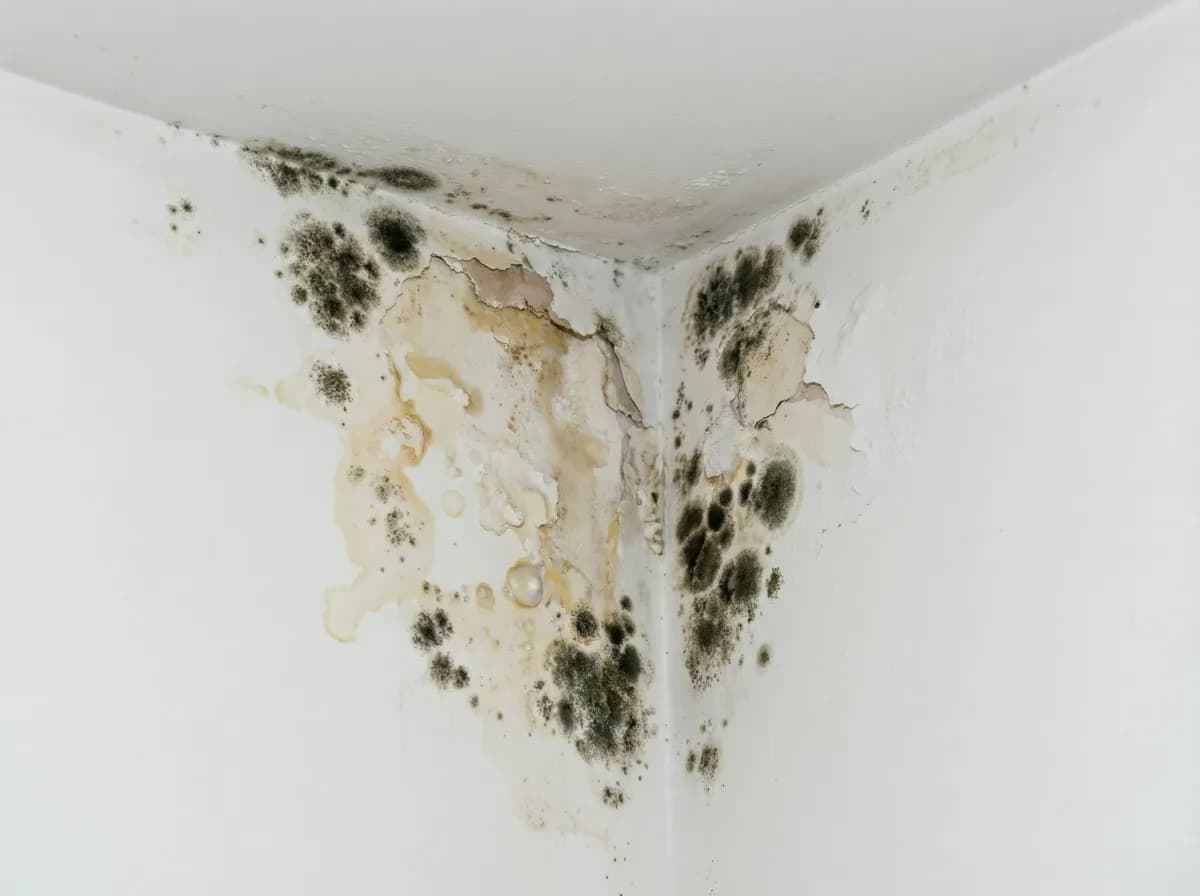
What is actually different about it is where it grows, not what it does to you. Stachybotrys needs chronic water damage, usually on drywall or ceiling tile, so finding it tells you something reliable about the building even though it tells you little about your symptoms. Take it seriously for that reason: a colony means sustained moisture that has been there a while, and that is worth finding regardless.
It needs chronic water damage to settle in, usually on drywall or ceiling tile. One of the most common Stachybotrys colonies a remediator turns up is the rubber gasket where the bathroom exhaust fan meets the ceiling, especially when that fan dumps into the attic instead of venting through the roof.
Important: not all dark-colored mold is Stachybotrys. Only laboratory testing can confirm species. If you see dark, slimy mold near chronic water damage, treat it seriously and don't disturb it. See what mold actually looks like for visual ID, and how to get rid of black mold for what professional remediation looks like.
Aspergillus
One of the most common indoor molds. It turns up where there's chronic moisture, including damp building materials and parts of an air system that stay wet without anyone noticing.
What it tends to cause:
- Allergic reactions: sneezing, congestion, itchy eyes
- Asthma attacks in people with mold-sensitive asthma
- Aspergillosis, a serious lung infection in immunocompromised individuals (more on this below)
Penicillium
Commonly associated with food, wallpaper, and water-damaged paper. Like the rest of them, what it needs is material that stayed wet.
Reactions people report:
- Allergic rhinitis: stuffy, runny nose
- Sinus irritation
- Mild respiratory symptoms
Alternaria
Fast-growing, and commonly associated with damp spots and the aftermath of a water event.
Reactions:
- Asthma symptoms in people sensitized to it
- Severe allergic reactions
- Upper respiratory symptoms
Cladosporium
Commonly associated with damp indoor surfaces. It's odd among molds in that it keeps growing at cooler temperatures, which is why cold weather doesn't necessarily stop it.
What shows up:
- Hay fever symptoms
- Asthma exacerbation
Who's Most at Risk
Anyone can react to mold. Some people react harder, and a few are at risk of something worse than allergies.
High-Risk Groups
People with asthma. CDC says people with asthma or a mold allergy may have severe reactions, and the Institute of Medicine review it cites found sufficient evidence linking indoor mold exposure to asthma symptoms in people who already have asthma.
People with mold allergies. CDC names mold allergy alongside asthma in that same sentence about severe reactions, so this is a risk category of its own and not a milder version of the one above.
Immunocompromised individuals. People with HIV/AIDS, cancer patients on chemotherapy, organ transplant recipients, and others on immunosuppressants are at risk for fungal infections, not just allergic reactions. This is a meaningfully different risk category.
Infants and young children. Developing immune systems are more susceptible. More on what that does and doesn't mean in the kids subsection below.
Elderly adults. Age-related immune decline increases vulnerability, and many older adults have additional comorbidities (asthma, COPD, heart conditions) that compound the response.
People with chronic lung disease. COPD, cystic fibrosis, and other chronic respiratory conditions make it harder for the body to clear inhaled spores.
Kids
Children's airways are smaller and their immune systems are still developing. CDC notes that studies have suggested a potential link between early mold exposure and the development of asthma in some children, particularly children who may be genetically susceptible to it. The better-established link still runs the other way, from exposure to worse symptoms in children who already have asthma.
So the respiratory picture is the one to watch: wheezing, coughing, and airway irritation that eases the weekend they sleep at grandma's and comes back on Monday. In a child who already has asthma, symptoms that get harder to control are worth raising with the pediatrician, along with anything you know about damp or visible mold at home.
Recurring ear infections and colds that run back to back are a different matter. They're common in young children for reasons that have nothing to do with a building, and the CDC and IOM evidence doesn't establish them as signs of mold exposure. They're worth a pediatrician's attention on their own terms, not as a clue about the house.
A pediatrician can work through infection, allergy and asthma. What they can't do is look at your building. If there's visible mold, a musty smell, or a water problem you already know about, that's worth fixing whatever the symptoms turn out to be.
Occupational Risk
Some jobs can involve mold or dampness exposure:
- Water damage restoration workers
- Building inspectors and assessors
- Agricultural workers
- Construction workers in renovation or demolition
- HVAC technicians
What respirator any of that calls for is a question about the task, not the job title. Under OSHA's respiratory protection standard, 29 CFR 1910.134, an employer has to identify and evaluate the respiratory hazards in the workplace and select a respirator based on the hazards a worker is actually exposed to, run through a written program with worksite-specific procedures. For some mold-cleanup activities an N95 may be the minimum; heavier disturbance or higher anticipated exposure may call for more.
ANSI/IICRC S520-2024 does not prescribe a filter class for mold work at all. What it does note is that NIOSH designates a HEPA filter as filter class "100", which is where the 100 in P100 comes from. For the IICRC standards mold professionals work to: S520 is the remediation protocol, and S500 covers water damage.
Short-Term vs Long-Term Exposure
How long you've been breathing it changes what it does to you.
Short-Term Exposure (Days to Weeks)
Most short-term reactions are allergic in nature and tend to ease once you're away from the source:
- Sneezing, congestion, runny nose
- Eye irritation
- Coughing and throat irritation
- Skin rashes
How quickly they settle varies by person, by condition, and by how much exposure there was. Symptoms that persist or get worse after the source has been dealt with are worth taking to a healthcare professional.
Long-Term Exposure (Months to Years)
Chronic exposure can lead to more persistent issues:
Chronic sinus problems. Ongoing inflammation and recurring infections are commonly reported in this context, though they sit outside what the cited reviews establish. Working out what is actually driving them is a job for a doctor.
Hypersensitivity pneumonitis. An inflammatory lung condition from repeated spore inhalation. Symptoms can mimic chronic bronchitis.
Allergic sensitization. Developing a mold allergy you didn't previously have. Whether that persists, and for how long, is a question for an allergist.
Worsening asthma. Harder-to-control symptoms in people who already have it.
Fatigue and cognitive complaints come up constantly in this context and are not on the list of effects health agencies have found sufficient evidence for. That is covered above. If you are experiencing them, it is a conversation for a doctor rather than a remediation company.
Don't wait to address mold. Fixing the moisture and removing the growth is the part you control, and it gets harder and more expensive the longer it runs. What symptoms do afterwards varies by person and by condition, which is a conversation for a doctor rather than a remediation company.
Mold in Your Lungs (Aspergillosis)
Aspergillosis is a fungal lung condition caused by Aspergillus species. It takes several forms, and only one of them is a medical emergency. Cleveland Clinic's aspergillosis overview puts the baseline plainly: most people breathe in Aspergillus spores every day without getting sick. Aspergillosis happens in specific risk profiles. Three of those forms are covered below. Cleveland Clinic also describes aspergilloma, a fungus ball that grows inside a lung cavity that already exists. An aspergilloma that has not invaded tissue is usually not dangerous, and surgery can often cure it.
Allergic Bronchopulmonary Aspergillosis (ABPA)
ABPA is an allergic reaction to Aspergillus in the lungs. It causes wheezing, coughing, shortness of breath, and sometimes fever. ABPA is most common in people with asthma or cystic fibrosis. It is diagnosed and managed by a physician rather than self-treated.
Chronic Pulmonary Aspergillosis
Chronic pulmonary aspergillosis is a slower-developing infection in people with existing lung damage (prior tuberculosis, sarcoidosis, COPD with cavities). Symptoms include chronic cough, fatigue, weight loss, and coughing up blood.
Invasive Aspergillosis
Invasive aspergillosis is the most serious form. It occurs almost exclusively in severely immunocompromised people (advanced HIV, post-transplant, leukemia/lymphoma). The infection can spread from lungs to brain, heart, kidneys, and skin. This is a medical emergency.
Symptoms to watch for
See a doctor if you experience:
- Coughing up blood or bloody mucus
- Persistent chest pain or tightness
- Fever that doesn't respond to antibiotics
- Unexplained weight loss with respiratory symptoms
- Shortness of breath that's getting progressively worse
Is It Mold or Seasonal Allergies?

Mold and hay fever share most of the same symptoms, which is why they're so easy to mix up. The differences:
| Mold Exposure | Seasonal Allergies | |
|---|---|---|
| Timing | Year-round, worse indoors | Seasonal (spring/fall), worse outdoors |
| Location pattern | Worse in specific rooms or buildings | Worse outside, better inside |
| Response to medication | May not fully respond to antihistamines | Usually responds well to antihistamines |
| Musty smell | Often present in affected areas | Not relevant |
| Visible signs | May see mold, water stains, or condensation | No indoor visual indicators |
| Time away | Symptoms improve away from home | Symptoms follow you (if same pollen region) |
The most useful signal is whether symptoms change with where you are, though it narrows things down rather than settling them. EPA's guide to biological pollutants lists mold, dust mites, pollen, pet allergens, and pests among the things that can cause asthma symptoms. Mold is on that list and so is pollen, which is why telling the two apart takes more than the symptoms. Mold is the one that announces itself, through a musty smell or a visible moisture problem.
When to See a Doctor
Mold exposure symptoms can mimic a lot of other conditions. A doctor can rule them in or out. When to go is a judgment call rather than a timetable, but these situations are worth an appointment.
See a Doctor If
- Respiratory symptoms that persist, keep coming back, or are getting worse
- Over-the-counter allergy medications don't help
- You develop new or worsening asthma symptoms
- You have sinus infections that keep recurring
- You notice blood when you cough
- You're in a high-risk group and have any symptoms
Go to Urgent Care or ER If
- You're having difficulty breathing or chest tightness
- You're coughing up blood
- You have a high fever with respiratory symptoms
- You experience sudden, severe allergic reaction (swelling, hives, difficulty breathing)
What to Tell Your Doctor
Many physicians don't ask about environmental exposures. Mention:
- You suspect mold in your home (or workplace)
- When symptoms started and the pattern (worse at home, better away)
- Any visible mold, water damage, or musty odors you've noticed
- Whether other household members have similar symptoms
- Your relevant medical history (asthma, allergies, immune conditions)
Your doctor may recommend:
- Allergy testing (skin prick test or blood test for mold-specific IgE)
- Pulmonary function tests if breathing is affected
- Chest X-ray or CT scan in more severe cases
- Referral to an allergist or pulmonologist
Mold Exposure Test: Body and Home
Search "mold exposure test" and you're really looking at two different tests that answer two different questions. Sorting out which one you need saves you a wasted appointment and a few hundred dollars.
Test the body (allergy testing)
Whether allergy testing makes sense is a call for your doctor, based on your history and symptoms. If it does, a doctor can test whether you're sensitized to mold using:
Skin prick test. A tiny amount of mold allergen is introduced through the skin, and a wheal-and-flare reaction shows your immune system recognizes it. Most allergists offer this. What it demonstrates is sensitization, not that mold in a particular building is causing your symptoms, and not whether mold is in your house.
Specific IgE blood test. Measures mold-specific antibodies. Same question, less invasive, about a week for results. Like the skin test it shows sensitization, and a clinician reads it alongside your history and symptoms to decide what it means.
Urine mycotoxin panels. Some integrative-medicine practitioners offer these, and CDC does not recommend them. There is no FDA-approved test for mycotoxins in human urine, and levels that predict disease have not been established. Low levels of mycotoxins turn up in many foods, which is why they show up in the urine of healthy people too. Most insurance won't cover them either, which is the least of the reasons to skip them.
Test the home (professional mold assessment)
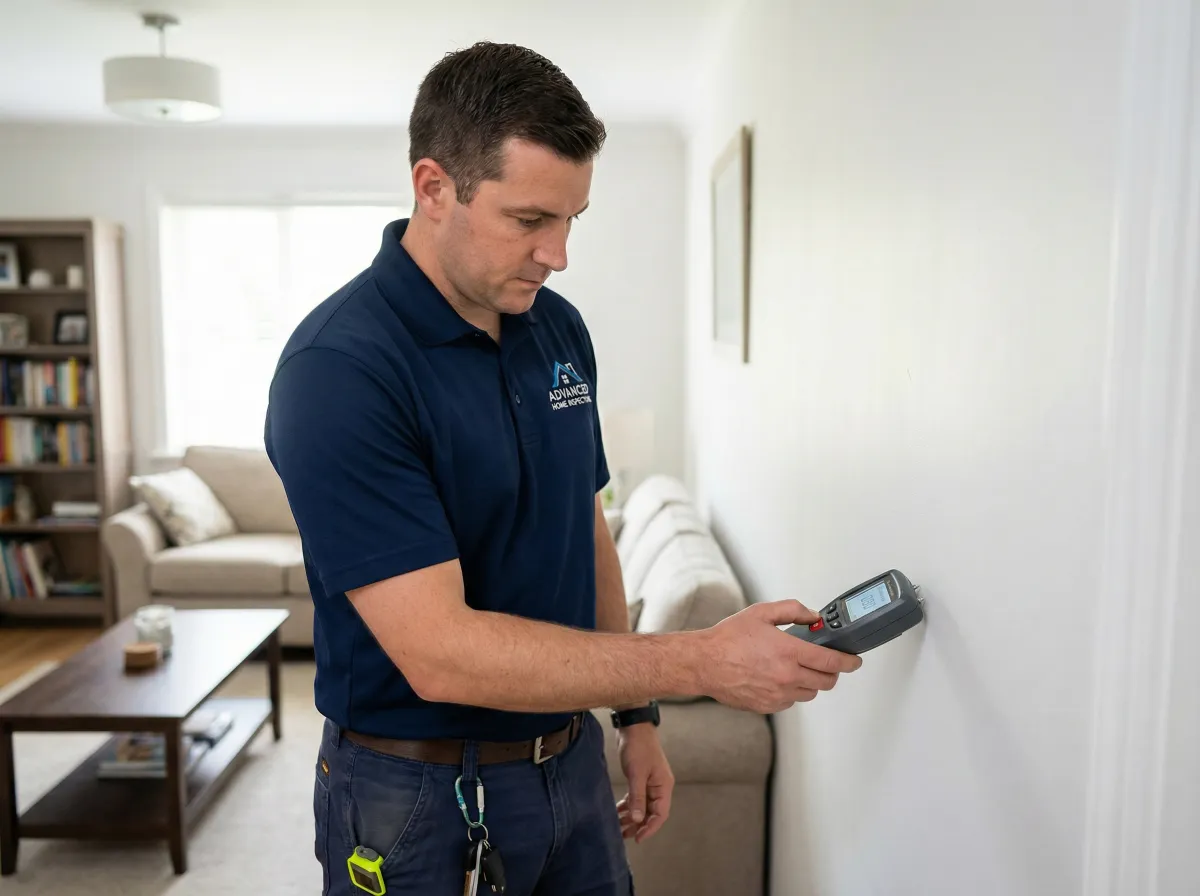
A qualified mold assessor, licensed where the state requires it, starts with visual inspection and moisture investigation rather than with a sample. What the work can involve:
- Moisture meter readings (Tramex Moisture Encounter Plus or similar) to find hidden water intrusion behind walls
- Thermal imaging (FLIR camera), which shows temperature anomalies that may indicate moisture and want confirming with an actual moisture reading
- Air sampling with an Air-O-Cell spore-trap cassette, commonly run at 15 LPM. How long each sample runs is the assessor's judgment, based on expected particle loading and the question being asked, since doubling the time doubles the air volume and changes both the detection limit and the overloading risk. Samples go sealed to the lab and get handled per its instructions. The accreditation to ask for is AIHA LAP EMLAP, current for the relevant fungal method
- Surface sampling on visible growth, sent to the same lab
- Lab analysis reporting counts in spores per cubic meter (sp/m³). Spore-trap microscopy commonly reports fungal categories or genus groups rather than reliable species identification
A sample describes the spot and the moment it was taken, not the whole house. It doesn't tell you whether you're personally sensitized, and it doesn't establish what's causing your symptoms.
What testing actually measures goes deeper on the methods. The short version: if you want to know whether YOU are reacting to mold, see a doctor. If you want to know what's in your house, hire an assessor. They answer different questions.
Testing Your Home for Mold
If symptoms point to mold and you want to know what's going on in the building, the next step is looking at the building.
DIY Checks
Before hiring anyone, do a visual and smell inspection:
- Check common mold locations. Bathrooms, under sinks, basement walls, attic, around windows, behind furniture on exterior walls. The mold identification guide has the full location list.
- Follow the smell. A persistent musty, earthy odor in specific areas is a strong indicator.
- Look for moisture. Condensation on windows, water stains on ceilings, damp spots on walls. Mold follows moisture; find the moisture and you've found the mold.
- Check the HVAC. Remove a vent cover and look inside with a flashlight. A contaminated system can distribute spores or fragments beyond the source area when it runs. If contamination is known or suspected, the system should be evaluated before it keeps running or gets cleaned.
Professional Mold Assessment
If you can't find the source, or if you've found mold and want to understand the extent, hire a qualified mold assessor, licensed where your state requires it.
A professional assessment typically includes:
- Visual inspection of the building and a review of its conditions
- Moisture meter readings to find hidden water intrusion
- Thermal imaging, which flags temperature anomalies that may point to moisture and want confirming with a moisture reading
- Air or surface sampling where it is needed to answer a defined question, rather than as a matter of course
- Lab analysis, which commonly reports fungal categories or genus groups rather than species
- Written report with findings and remediation recommendations
What a professional mold assessment costs breaks down typical pricing. Nationally, an inspection costs $303 to $1,045, with an average of $671, from 8,284 costs reported to HomeAdvisor; where yours falls depends on home size and whether lab testing is included.
Important: separation rules vary by state, and some states bar the same licensee or related firms from doing both jobs. Florida bars a mold assessor or their company from remediating a structure they assessed within the previous 12 months, with an exception for certain Division I certified contractors. Texas is stricter under Occupations Code §1958.155: the same person cannot do both jobs on one project, and cannot hold an interest in both firms either. Check current law in your state. Where no such rule exists, keeping them separate is our recommendation rather than a legal requirement, because the conflict does not change at the state line: whoever finds the mold writes the quote to fix it. Why the inspector and the remediator should be different companies walks through the mechanism.
What to Do If You Suspect Mold Exposure
If you're experiencing symptoms and suspect mold, here's a practical sequence:
Step 1. Reduce your exposure
- Increase ventilation in affected areas; open windows, run exhaust fans
- Use a HEPA air purifier in rooms where you spend the most time
- Keep humidity below 50% with a dehumidifier (the EPA's recommended threshold)
- Don't disturb visible mold; doing so releases more spores into the air
- Spend time outside the home when possible to give your body a break
Step 2. Find the source
- Do the DIY checks above
- If you can't find it or the problem looks significant, hire a professional assessor
- Find a verified mold assessor in your state
Step 3. Address the mold
- EPA says that under about 10 square feet you can usually handle it yourself, and we'd keep that to hard surfaces. That is a benchmark and not a cutoff; what actually decides it covers the rest
- If someone in the house is already reacting, that is a reason to get help below that size too
- Larger problems need professional remediation; what remediation typically costs covers the price ranges
- Always fix the moisture source. Mold returns if the water problem isn't solved.
Step 4. Follow up on your health
- See a doctor if symptoms persist or get worse after the mold and the moisture are dealt with
- Ask your doctor whether allergy testing makes sense if you've developed new sensitivities
- Use humidity control and prevention basics to keep RH at 30-50% year-round; this is the single most useful thing you can do to prevent recurrence
Next Steps
Mold exposure symptoms are real, disruptive, and often misdiagnosed. The good news is they're usually reversible once the source is identified and properly removed.
If you suspect mold in your home, don't wait for symptoms to get worse. Find a verified mold assessor who can tell you exactly what you're dealing with and what needs to happen next.
Mold identification guide. Visual guide to identifying 8 common mold types.
Mold testing and inspection costs. What professional assessment typically costs.
Mold remediation cost guide. How much remediation typically costs.
Find a Verified Mold Professional
Don't trust your home and health to just anyone. Find a verified mold assessor in your state: every listing is identity-checked, with state licenses verified where we hold the state's license records.
This guide is for educational purposes only and is not a substitute for medical advice. If you're experiencing health symptoms, consult a healthcare provider. If you suspect mold in your home, consult a certified mold professional.
Frequently Asked Questions
What are the first signs of mold exposure?
Can mold make you sick?
What does black mold do to your body?
How long does it take for mold to affect your health?
Can mold exposure cause long-term health problems?
How do you test for mold exposure in your body?
What are the symptoms of mold in your lungs?
Do air purifiers help with mold?
How do you know if mold is making you sick?
Should I see a doctor for mold exposure?
If symptoms started after suspected mold exposure, the next step is removing the source. You can find a verified mold removal company. Every contractor is identity-checked, with licenses and insurance verified where available.