Mold Prevention: 12-Point Checklist for Every Homeowner (2026)
Prevent mold before it starts. Room-by-room checklist covering humidity control, ventilation, leak detection, and seasonal maintenance, based on EPA guidelines.
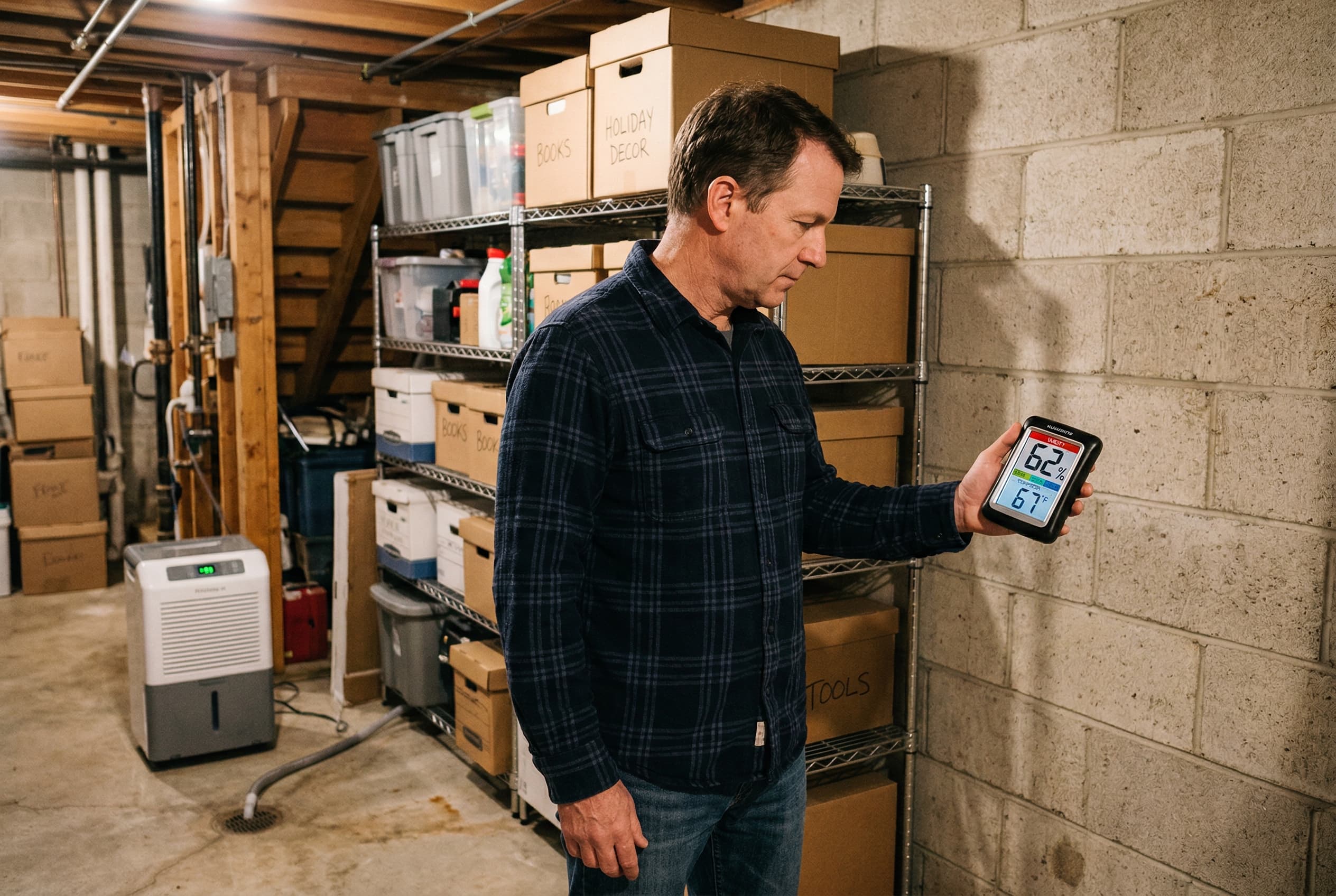
Mold is not a cleaning problem; it's a moisture problem. Every mold situation starts the same way: water gets somewhere it shouldn't, and stays there too long.
The good news? Mold prevention is straightforward. You don't need expensive products or professional help. You need a basic understanding of how moisture moves through your home and a simple routine to keep it in check.
Quick answer: Keep indoor humidity below 50%, fix leaks within 24 hours, run bathroom exhaust fans for 30 minutes after showers, and inspect high-risk areas monthly. All four control moisture, and as EPA puts it, the key to mold control is moisture control.
In This Guide
- Why Mold Grows: The three conditions mold needs
- 12-Point Checklist: Room-by-room prevention
- Humidity Control: Tools, targets, tips, and the 40 percent question
- Room-by-Room Guide: Specific advice for each area
- After Water Damage: The 48-hour window
- Mold-Resistant Products: What's worth buying
- Seasonal Maintenance: When to check what
- FAQs: Common questions answered
Why Mold Grows in Homes
Mold needs three things to grow, and moisture is the one to control first:
| Condition | Threshold | Your Control |
|---|---|---|
| Moisture | A wet surface: a leak, condensation, standing water, or humidity that stays high | High: this is your primary lever |
| Food | Any organic material (drywall paper, wood, carpet, dust) | Moderate: paperless drywall in wet rooms, and regular cleaning |
| Time | 24-48 hours of sustained moisture | High: speed of response matters |
Temperature is notably absent from this list. Mold grows across the whole range of temperatures people keep their homes at, so you cannot prevent it by adjusting your thermostat.
The reason mold is so common in homes is simple: homes are full of organic materials (food) and homeowners can't always control moisture. A slow drip under a sink, shower steam that doesn't vent properly, or a basement that stays damp: any of these creates the conditions mold needs in less than two days.
Already dealing with mold? This guide is about prevention. If you've found mold, see our How to Get Rid of Mold Guide or How to Get Rid of Black Mold for removal steps.
The 12-Point Mold Prevention Checklist
This checklist covers every area of your home. Print it, bookmark it, or save it to your phone. Work through it once, then revisit monthly for high-risk areas and seasonally for the rest.
Moisture Control
- Measure indoor humidity: Place a hygrometer in your most humid room. Target 30-50%. Run a dehumidifier if above 50%.
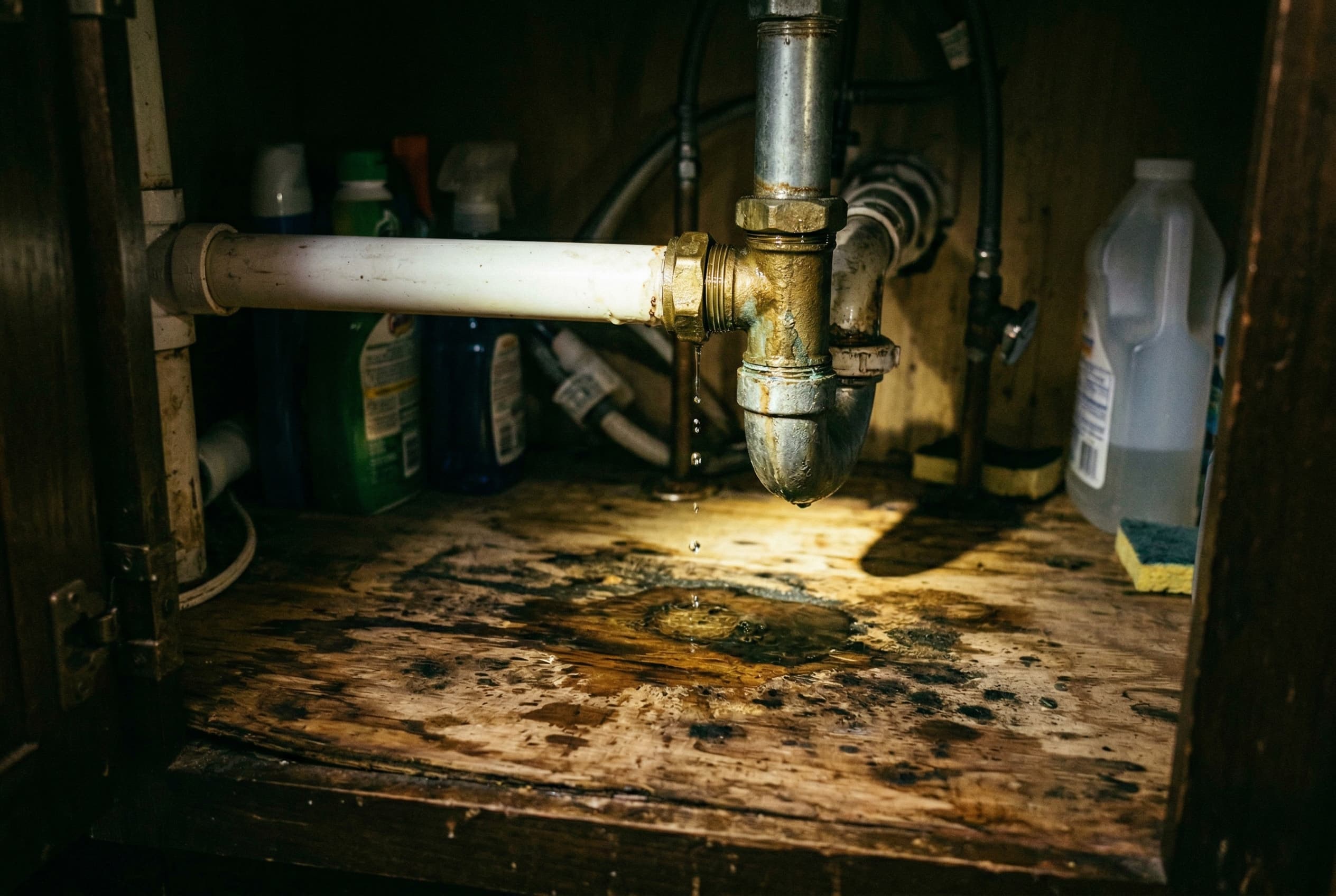
- Fix all active leaks: Check under sinks, around toilets, near water heaters, along visible pipes. Fix within 24 hours.
- Dry wet materials within 48 hours: After any water event, extract water and dry or remove materials that can't dry in time.
Ventilation
- Run bathroom fans: During showers AND 30 minutes after. Verify fans vent outside, not into the attic.
- Ventilate kitchen and laundry: Run exhaust fans when cooking. Vent dryer outside. Leave washing machine door open after use.
- Improve closet air circulation: Leave doors open or cracked. Don't pack items against exterior walls.
Maintenance
- Clean gutters and grade soil: Twice yearly. Downspouts direct water 4-6 ft from foundation. Soil slopes away from house.
- Maintain HVAC: Change filters every 1-3 months. Inspect ducts every 3-5 years. Keep drip pans and drain lines clean.
- Check attic and crawl space: Seasonally. Look for roof leaks, condensation, adequate ventilation, intact vapor barriers.
Materials & Products
- Use mold-resistant materials: In bathrooms, basements, kitchens: mold-resistant drywall (paperless in basements), paint, and caulk.
- Inspect monthly: Under sinks, around toilets, in basement. Use your nose; musty smell often precedes visible mold.
- Schedule seasonal deep checks: Full home inspection in spring and fall. After storms, check basement, attic, exterior walls.
Humidity Control: The Most Important Factor
If you do only one thing from this guide, control your humidity. Keeping indoor humidity between 30-50% prevents the vast majority of mold problems.
How to Monitor Humidity
A digital hygrometer is inexpensive and the single best mold prevention investment. Place one in your most moisture-prone area (usually the basement or main bathroom).
| Humidity Level | What it means | Action |
|---|---|---|
| Below 30% | Too dry: wood cracking, static, dry skin | Reduce dehumidifier or add humidifier |
| 30-50% | EPA's ideal range, and within CDC's 50% ceiling | Maintain current conditions, and still watch cold surfaces |
| 50-60% | Above CDC's ceiling, under EPA's 60% limit | Run dehumidifier, increase ventilation |
| Above 60% | Above EPA's limit: condensation and mold on cool surfaces get more likely | Dehumidify now and look for the moisture source |
Can mold grow in 40% humidity?
Not from the air in the room, and yes on a surface that's wetter than the room. Forty percent sits inside EPA's 30 to 50 percent target, so a house that reads 40 with no leaks and no condensation is about as safe from mold as a house gets. But mold needs moisture on a surface, not a number on a hygrometer. A cold exterior wall, a window frame, the floor behind a couch pushed against an outside wall, or a pipe sweating inside a cabinet can be at dew point while the meter across the room reads 40, and EPA's mold course puts it plainly: mold is frequently found on walls in cold corners behind furniture where condensation forms. If you see growth at 40 percent, look for the wet surface, not a drier setting.
Air purifier or dehumidifier for mold?
Dehumidifier, if you can only have one. A dehumidifier removes the moisture mold needs to grow; an air purifier with a HEPA filter removes spores and fragments already in the air and does nothing about growth on a wet surface. Buy the purifier for the symptoms of what's growing and the dehumidifier to stop it growing. In a damp house both earn their place, in that order.
Dehumidifiers: The #1 Mold Prevention Tool
For chronically damp spaces like basements, a dehumidifier is essential:
- Small rooms (up to 300 sq ft): 30-pint unit
- Medium rooms (300-700 sq ft): 50-pint unit
- Large basements (700+ sq ft): 70-pint unit
- Whole-home: a ducted dehumidifier integrated with HVAC; HomeAdvisor prints $1,300 to $2,800 installed, without a reported sample
Tips for effective dehumidifier use:
- Set to 45% (gives a safety margin below 50%)
- Run continuously in summer and shoulder seasons
- Empty collection tank daily, or connect a drain hose for continuous operation
- Clean the filter monthly
- Position away from walls for proper airflow
Air Conditioning as Dehumidification
Central AC naturally dehumidifies as it cools. This is why mold is less common in homes with AC. But AC can also cause mold if:
- The system is oversized: short-cycles without removing enough moisture
- Drain pans are clogged: condensate backs up and overflows
- Filters are dirty: restricted airflow causes coil freezing and excess moisture
- The system runs in fan-only mode: circulates air without dehumidifying
Room-by-Room Prevention Guide
Bathroom
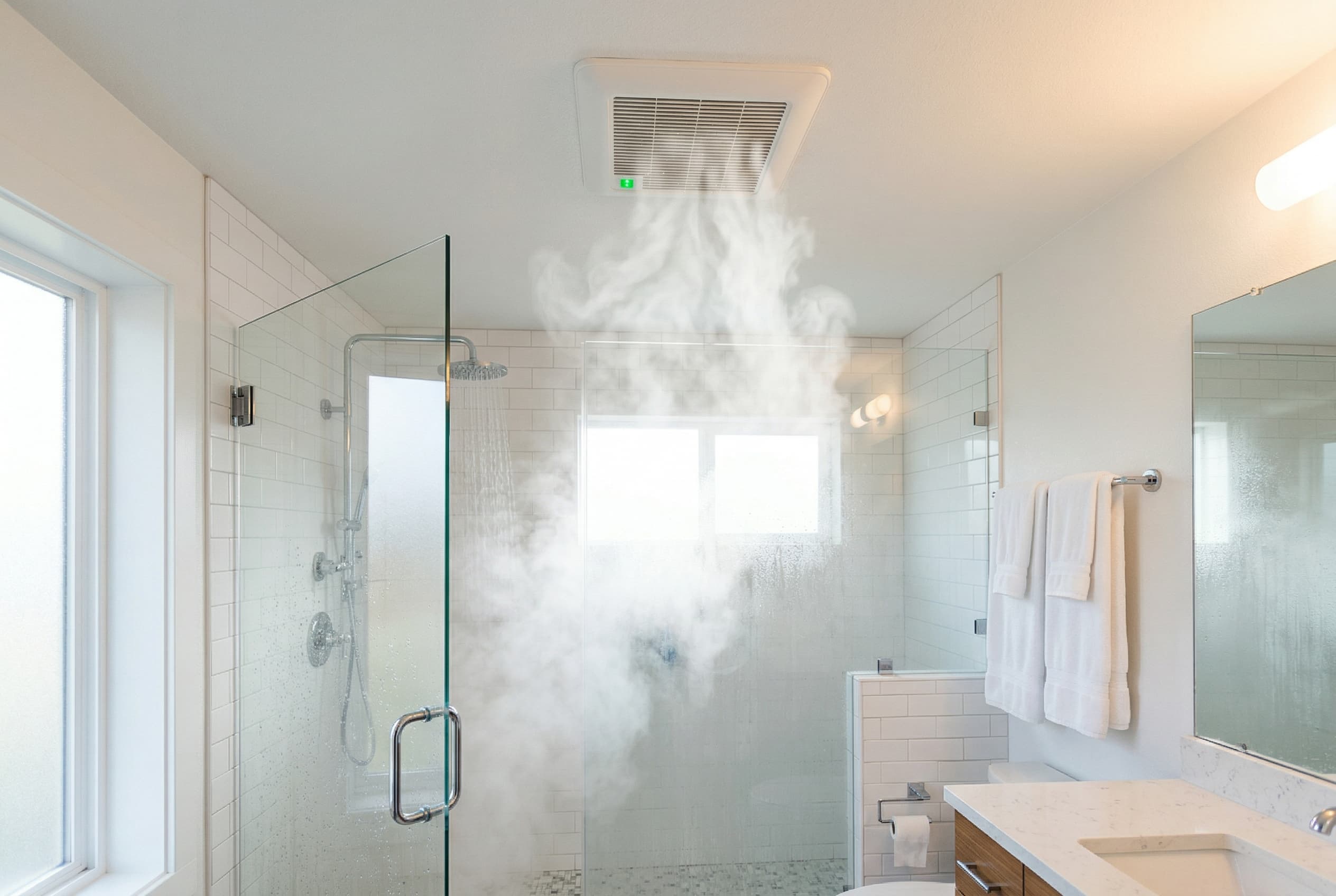
Bathrooms are the #1 location for household mold. Every shower creates steam that coats surfaces with moisture.
Prevention essentials:
- Run the exhaust fan during and 30 minutes after every shower
- Verify the fan vents outside, not into the attic (a surprisingly common builder shortcut)
- Squeegee shower walls after use, so less water is left to evaporate into the room
- Spread shower curtains fully open to dry
- Re-caulk with mold-resistant silicone when existing caulk deteriorates
- Wash bath mats weekly; they trap moisture against the floor
- Leave the bathroom door open after showers to let moisture dissipate
The shower itself is where most of this growth starts. For the surface-by-surface routine, see how to prevent mold in the shower, which also covers what the black, pink, or orange growth actually is.
For detailed bathroom mold remediation and prevention, see our Bathroom Mold Guide.
Basement
Basements are inherently moisture-prone: they're below grade, surrounded by soil moisture, and often poorly ventilated.
Prevention essentials:
- Run a dehumidifier year-round (set to 45%)
- Check for foundation cracks and seal with hydraulic cement
- Ensure the sump pump is functional; test it by pouring water into the pit
- Keep items off the floor on wire shelving or pallets
- Use mold-resistant materials for finished basements (no paper-faced drywall)
- Insulate cold water pipes to prevent condensation dripping
For existing basement mold issues, see our Basement Mold Guide.
Kitchen
Cooking, dishwashing, and plumbing connections make kitchens the second most common mold site.
Prevention essentials:
- Run the range hood fan when cooking (especially boiling or steaming)
- Check under the sink monthly for drips from supply lines, drain connections, or the garbage disposal
- Clean the refrigerator drip pan quarterly
- Empty and dry the dishwasher filter regularly
- Don't let wet dishes air-dry in enclosed cabinets
Attic
Attic mold is often invisible until it's severe. Causes: roof leaks, inadequate ventilation, and bathroom fans vented into the attic.
Prevention essentials:
- Verify all bathroom and kitchen exhaust fans vent through the roof, not into the attic
- Ensure soffit vents aren't blocked by insulation
- Check for roof leaks after storms; look for daylight, water stains, or damp insulation
- Maintain proper ventilation ratio (1 sq ft of vent per 150 sq ft of attic floor)
For attic mold problems, see our Attic Mold Guide.
Crawl Space
Crawl spaces combine ground moisture, poor ventilation, and organic materials (wood joists), a perfect mold environment.
Prevention essentials:
- Install a 6-mil (minimum) polyethylene vapor barrier over all exposed soil
- Extend vapor barrier up foundation walls and seal seams with tape
- Add a crawl space dehumidifier or ventilation fan
- Ensure no standing water; grade the interior if needed
- Insulate water pipes to prevent condensation
For crawl space mold issues, see our Crawl Space Mold Guide.
Laundry Room
Washing machines and dryers generate significant moisture that's often overlooked.
Prevention essentials:
- Vent the dryer to the outside (never into the attic, crawl space, or garage)
- Clean the dryer vent duct annually (also a fire prevention measure)
- Leave the front-loader washing machine door open after use; the door gasket traps moisture
- Check washing machine supply hoses for bulges or cracks (replace every 5 years)
- Wipe down the door gasket monthly to prevent mold buildup
Preventing Mold After Water Damage
The 48-hour rule: mold can begin growing on wet materials within 24 to 48 hours, which is why EPA says to dry water-damaged areas and items inside that window. Your response speed determines whether you're dealing with a cleanup or a remediation project.
Immediate Response (First 24 Hours)
- Stop the water source: shut off the valve, tarp the roof, or call a plumber
- Extract standing water: wet/dry vacuum, mops, towels, or professional extraction
- Remove saturated materials: carpet padding, area rugs, and any items that can't be dried quickly
- Start air movement: fans, open windows, dehumidifiers running 24/7
Days 2-5: Active Drying
- Run dehumidifiers and fans continuously
- Monitor humidity; it should drop below 50% within 72 hours
- Remove wet drywall if it hasn't started drying (drywall absorbs water like a sponge)
- Pull back wet carpet from tack strips to dry the pad and subfloor
Days 5-14: Monitoring
- Continue dehumidification until moisture readings are normal
- Check daily for musty odors or visible mold
- If mold appears, don't try to clean it over dried water damage; call a professional
When DIY Isn't Enough
Call a professional water extraction service if:
- Standing water covers more than one room
- Water came from a contaminated source (sewage, floodwater)
- Drywall or structural materials were wet for more than 48 hours
- You can't get humidity below 50% within 72 hours
After flooding in Georgia specifically, see our Mold After Flooding in Georgia Guide for state-specific resources and timelines.
Mold-Resistant Products That Actually Work
Not all "mold-resistant" products are equal. Here's what professionals recommend:
Worth the Investment
| Product | What It Does | Where to Use |
|---|---|---|
| Mold-resistant drywall (DensArmor Plus, Gold Bond XP) | Paperless boards swap the paper face for fiberglass; treated-paper boards build mold resistance into the paper and core | Bathrooms and kitchens; paperless boards in basements |
| Mold-resistant paint (Zinsser Perma-White, Benjamin Moore Aura Bath) | Antimicrobial additives inhibit surface mold | Any high-moisture room |
| Mold-resistant caulk (GE Supreme Silicone, DAP 3.0) | Silicone with an antimicrobial additive that inhibits mold growth in the caulk bead | Showers, tubs, sinks |
| Digital hygrometer | Monitors humidity so you know when to act | Every home should have one |
| Dehumidifier | Removes excess moisture from air | Basements, crawl spaces, any damp room |
Not Worth the Hype
- Mold-killing primer over existing mold: Primer does not deal with contamination below the surface, and painting over growth is not remediation. Remove the mold first, then paint.
- Ozone generators: Can damage lungs and rubber/fabric. EPA does not recommend for residential mold prevention.
- UV light systems: Effective in HVAC units for airborne mold but won't prevent surface mold from moisture.
Seasonal Mold Prevention Calendar
| Season | Focus Areas | Actions |
|---|---|---|
| Spring | Basement, crawl space, exterior | Check for winter water damage, clean gutters, inspect foundation, start dehumidifiers |
| Summer | Whole home, AC system | Monitor humidity daily, change AC filters, check drain pans, watch for condensation on cold surfaces |
| Fall | Attic, gutters, heating system | Inspect attic before winter, clean gutters, service furnace, check for roof damage |
| Winter | Windows, bathroom, kitchen | Watch for condensation on windows, monitor humidity (heating dries air but cold surfaces create condensation), ventilate after cooking |
Monthly Checklist (All Seasons)
- Check under all sinks for drips or moisture
- Inspect bathroom caulk and grout
- Empty and clean dehumidifier
- Check hygrometer readings
- Sniff test in basement and bathrooms; musty = investigate
The Cost of Prevention vs Remediation
Mold prevention is one of the clearest ROI calculations in home maintenance:
| Approach | Cost | What You Get |
|---|---|---|
| Hygrometer + monthly checks | Inexpensive, plus 10 min/month | Early warning system |
| Portable dehumidifier (basement) | A one-time purchase, plus its electricity | Continuous moisture control |
| Whole-house dehumidifier | $1,300 – $2,800 installed (HomeAdvisor, no sample reported) | Moisture control for the whole house |
| Professional mold remediation | $1,223 – $3,757 for a typical job (HomeAdvisor, 7,947 reported project costs) | Fixing the problem after it happens |
A dehumidifier running in your basement costs far less than the typical remediation job it can prevent.
For detailed remediation pricing, see our Mold Remediation Cost Guide.
Frequently Asked Questions
Frequently Asked Questions
What humidity level prevents mold?
Does running the AC prevent mold?
What is the best mold prevention spray?
Can you mold-proof a house?
How do you prevent mold after a flood or leak?
Does mold-resistant drywall actually work?
How often should you check for mold in your home?
Do dehumidifiers prevent mold?
What rooms are most prone to mold?
Does mold-resistant paint work?
Can mold grow in 40% humidity?
Which is better for mold, an air purifier or a dehumidifier?
Is it a good idea to put a dehumidifier in a closet?
Prevention failed? You can browse verified mold remediation companies; every contractor is identity-checked before going live, with licenses and insurance verified where available.
The Bottom Line
Mold prevention comes down to one principle: control moisture, and mold cannot grow.
The 12-point checklist in this guide covers every area of your home. But if you want the absolute minimum, these are the four habits that matter most:
- Keep humidity below 50%: buy a hygrometer and a dehumidifier
- Fix leaks within 24 hours: no drip is too small to ignore
- Run bathroom fans: during and 30 minutes after every shower
- Check monthly: under sinks, around toilets, and in the basement
Mold is a moisture problem. Solve the moisture, and you solve the mold.