White Mold: Is It Dangerous, and Is It Even Mold? (2026)
Is white mold dangerous? What CDC and EPA say, what it looks like on wood, walls and concrete, and the white deposits that aren't mold at all.
You moved a dresser or cleared out a closet and found a white, fuzzy patch. White mold isn't one kind of mold. It's a look many different molds can have. CDC says to treat all molds the same and that you don't need to know the type. And some white deposits, like efflorescence on concrete, aren't mold at all.
In This Guide
- What is white mold?: one name, many molds
- Is white mold dangerous?: what CDC, EPA and Health Canada say
- What does white mold look like?: fuzzy, powdery, and the garden kind
- What else looks like white mold?: efflorescence, plus where mildew and food mold fit
- Where white mold grows in a house: moisture, condensation and walls
- White mold on wood and furniture: mold, decay fungi and finishes
- How to get rid of white mold: the method, and when to call a professional
- White mold FAQ: quick answers
What is white mold?
Mold can be white, EPA's mold course says, and "white mold" covers many molds, not one species. What you see is mostly a dense mass of microscopic threads (ANSI/IICRC S520-2024, Section B, pp. 17, 19). Wanting a name for it really does make sense. To decide what to do, though, you won't need one: CDC's advice is to remove mold whatever type it is.
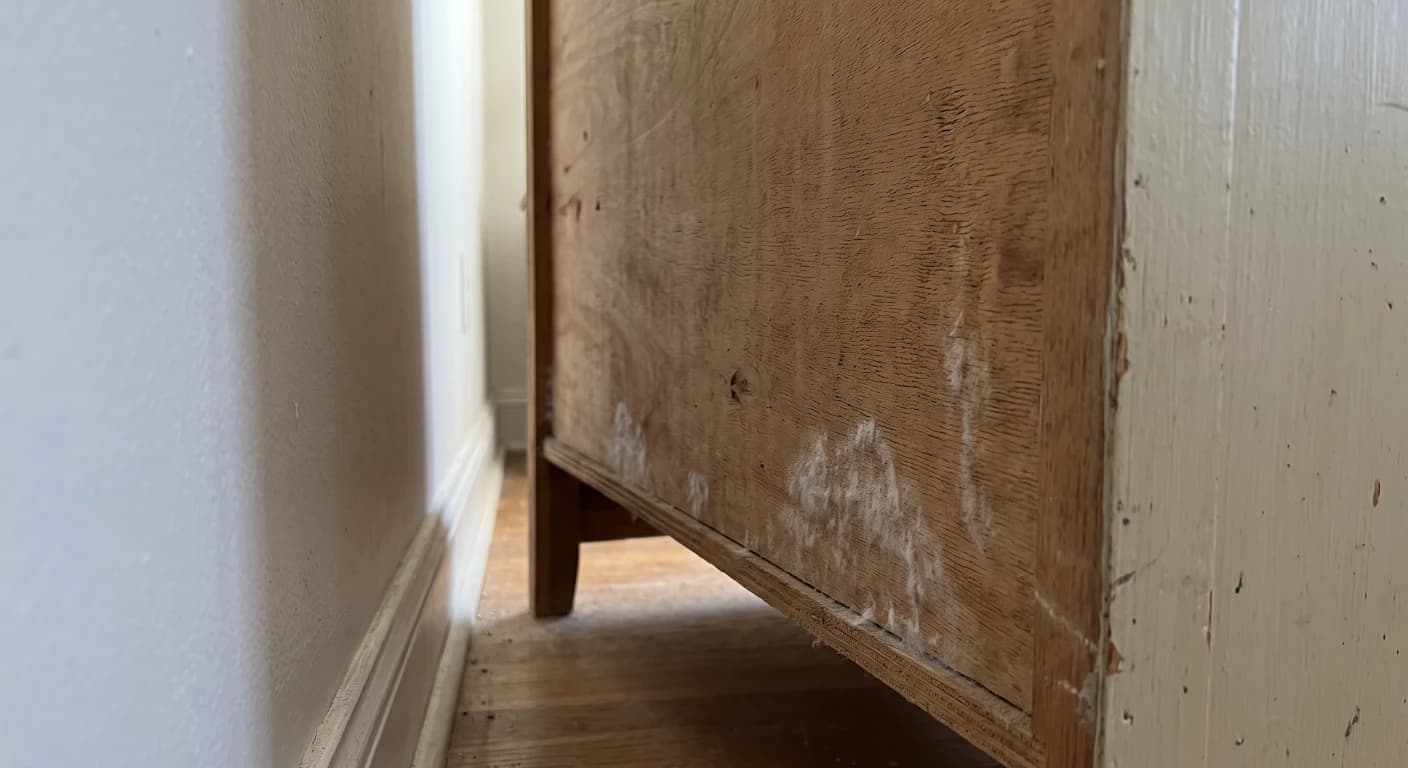
Which molds can look white?
Molds that can look white include some Aspergillus, Penicillium, Mucor and Acremonium, and young Trichoderma. Those are examples from lab colonies (University of Adelaide, Mycology Online), not a way to identify what's on your wall. If you've seen Cladosporium, Aspergillus and Penicillium called "the white molds," that's CDC's list of the most common indoor molds, which says nothing about color. Cladosporium, which is usually olive-brown to black in those lab descriptions, is an odd one to call white.
Is white mold dangerous?
White mold can affect health the way any indoor mold can, and its color doesn't change that: CDC says damp, moldy places may cause a variety of health effects or none at all, and that all molds should be treated the same for health risk and removal.
For some people, CDC says, mold can cause a stuffy nose, sore throat, coughing or wheezing, burning eyes or a skin rash. People with asthma or a mold allergy may have severe reactions, and people with weakened immune systems or chronic lung disease may get lung infections. There's more on what mold exposure symptoms look like.
Health Canada says: "The level of risk depends on the extent of mould growth, regardless of the species, how long it has been present, and the susceptibility and overall health of the individuals exposed." More growth can raise the potential for exposure, especially when disturbed. Actual exposure depends on the activity, ventilation, who's home and for how long.
The health research covers damp buildings, not colors or species. It consistently associates damp or moldy buildings with several respiratory effects. Overall, the epidemiological evidence wasn't enough to establish that dampness or mold causes a specific health effect (IOM, 2004; WHO, 2009, §4.4), while WHO found that one strong intervention study, together with the other available studies, suggested dampness or mold can make asthma worse in children. And you can't tell by looking whether a mold makes mycotoxins (EPA).
There's no established health-based numerical threshold that can be used to declare an indoor mold level safe or unsafe (WHO, 2009, §5.3; Health Canada).
Is white mold worse than black mold?
CDC doesn't recommend treating indoor molds differently based on color or type, so white isn't the safe one and black isn't the only one to worry about. EPA notes that "black mold" and "toxic mold" aren't specific species.
Who should stay out of the cleanup
CDC says people with asthma, COPD or another lung condition, allergies, or a weakened immune system shouldn't take part in cleaning up mold. Its post-disaster guidance goes further. People with asthma, COPD or a weakened immune system shouldn't stay in a moldy home or be there while it's cleaned. The job's size and method depend mainly on the mold, the materials, the water and how much the work stirs up. Health concerns can still change who does the work or stays home, and may call for an independent mold assessment or a doctor's advice.
About Mucor. You can't tell by looking whether a white patch is Mucor or any other mold, and a photo can't tell you anyone's health risk. Certain molds in the order Mucorales, including some Mucor species, can cause mucormycosis. It's a rare but severe infection that mainly affects people with weakened immune systems or uncontrolled diabetes, and Rhizopus is the most common cause (CDC). If that describes someone in your home, talk to their doctor, and we'd keep them out of the cleanup. This doesn't mean a white patch in a home is Mucorales or that its color tells you whether it poses a mucormycosis risk. The cleanup itself is the same as for any mold.
What does white mold look like?
The color runs from white to light gray, and the texture from flat and powdery to raised and cottony. Color and texture tell you where to look, not what it is.
White fuzzy or fluffy mold
Fuzzy white mold rises off the surface in a soft, cottony layer instead of lying flat like a stain. Fluffy, hairy and stringy describe the same look.
White powdery patches
A flat, powdery white layer can be mold. On bare concrete, brick, stone or tile, it can also be efflorescence, a mineral salt. If it's on masonry, check the efflorescence clues first.
White mold on plants is a different thing. In the garden, "white mold" is the name of a plant disease caused by Sclerotinia, and white powder on leaves can be powdery mildew. Neither is the mold in your house; University of Wisconsin-Madison Extension and University of Minnesota Extension cover both.
What else looks like white mold?
Efflorescence isn't mold at all, and mildew is. Dust, leather bloom and other lookalikes are in the full mold identification chart and photos.
White mold on concrete, or efflorescence?
Efflorescence is a white, crystalline deposit of mineral salts left on concrete, brick, stone, tile or grout when water carries salts to the surface and evaporates (Brick Industry Association, Technical Note 23A, p. 1; ANSI/IICRC S500-2021, Appendix A, informative, pp. 146, 154, 156). It isn't mold, though it signals what mold does: water has reached that surface. Bare concrete is a poor food source. Mold on it is feeding on something else, like paint, another coating, adhesive or dirt (S500 Appendix A, p. 146).
A drop of water is a clue, not proof: most efflorescence salts dissolve, and not all do (Technical Note 23A, p. 9). Fixing the water prevents or limits new deposits (Technical Note 23A, p. 10). See efflorescence on basement walls.
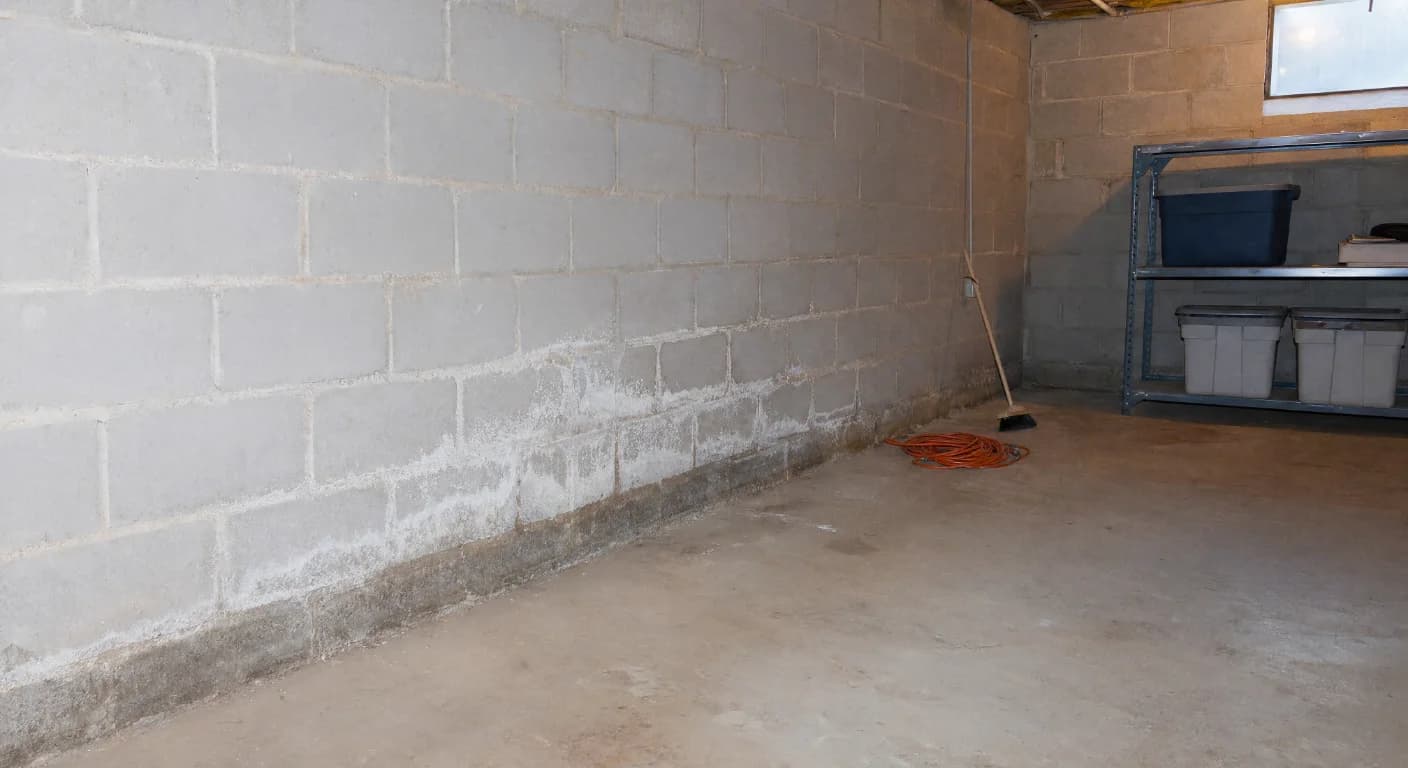
Salt or growth? Three clues on masonry
Three clues for a white deposit on concrete, brick or tile. None of them is proof.
- 1
Look at what it sits on
On bare concrete, brick, stone, tile or grout, a white deposit can be efflorescence. Mold on concrete grows on paint, a coating, adhesive or dirt, not the concrete itself, which is a poor food source.
- 2
Add a drop of water
Most efflorescence salts dissolve. Not all do, so this is a clue, not proof.
- 3
Find the water
Fixing the moisture source prevents or limits new deposits and makes new growth less likely. Clearing the surface alone doesn't.
Salt or growth, a white deposit on masonry is a sign moisture has reached it.
Sources: Brick Industry Association, Technical Note 23A; ANSI/IICRC S500-2021, Appendix A (informative).
The full standard is available from iicrc.org.
White mold vs mildew
Mildew is a common name for some molds, usually ones growing flat on a surface (EPA), not a separate organism you can test apart from mold. The two words are compared in mold vs mildew, side by side.
White mold on food is its own question. USDA's Food Safety and Inspection Service covers which moldy foods to throw out, and the molds used to make cheeses like Brie and Camembert are safe to eat.
Where white mold grows in a house, and what causes it
To grow indoors, mold needs moisture and food, like paper, cloth or wood (EPA). EPA's course notes that a little condensation can be enough.
EPA's targets are to dry anything wet within 24 to 48 hours to prevent mold growth and to keep indoor humidity below 60%, ideally 30 to 50%.
In a basement, crawl space or attic, white growth on joists, sheathing or block points to moisture there; see mold in a basement, mold in a crawl space and mold in an attic. On a bathroom ceiling, check shower steam and ventilation first; see mold on a bathroom ceiling and what mold on a ceiling means.
White mold on walls and drywall
When white mold shows up on a wall, something has been keeping that wall or the air against it damp. Two possible sources are condensation on a cold outside wall and a leak inside it, and the pattern alone can't prove which.
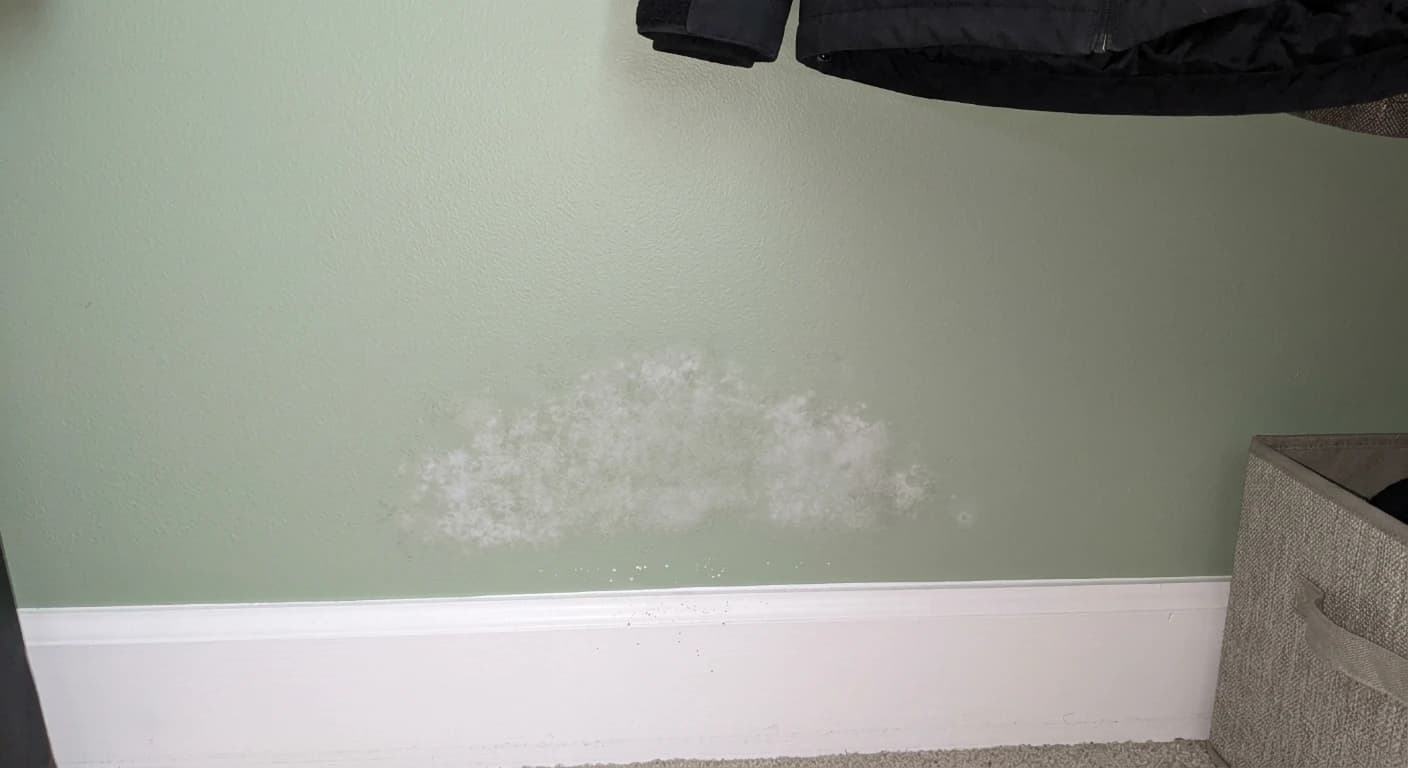
White fuzz on paint isn't an "early stage" that turns into some other mold. EPA says not to paint over mold. Drywall is porous and generally isn't cleanable once moldy (S520 Section B, p. 20), so it's commonly cut out and replaced. See what mold on a wall is telling you.
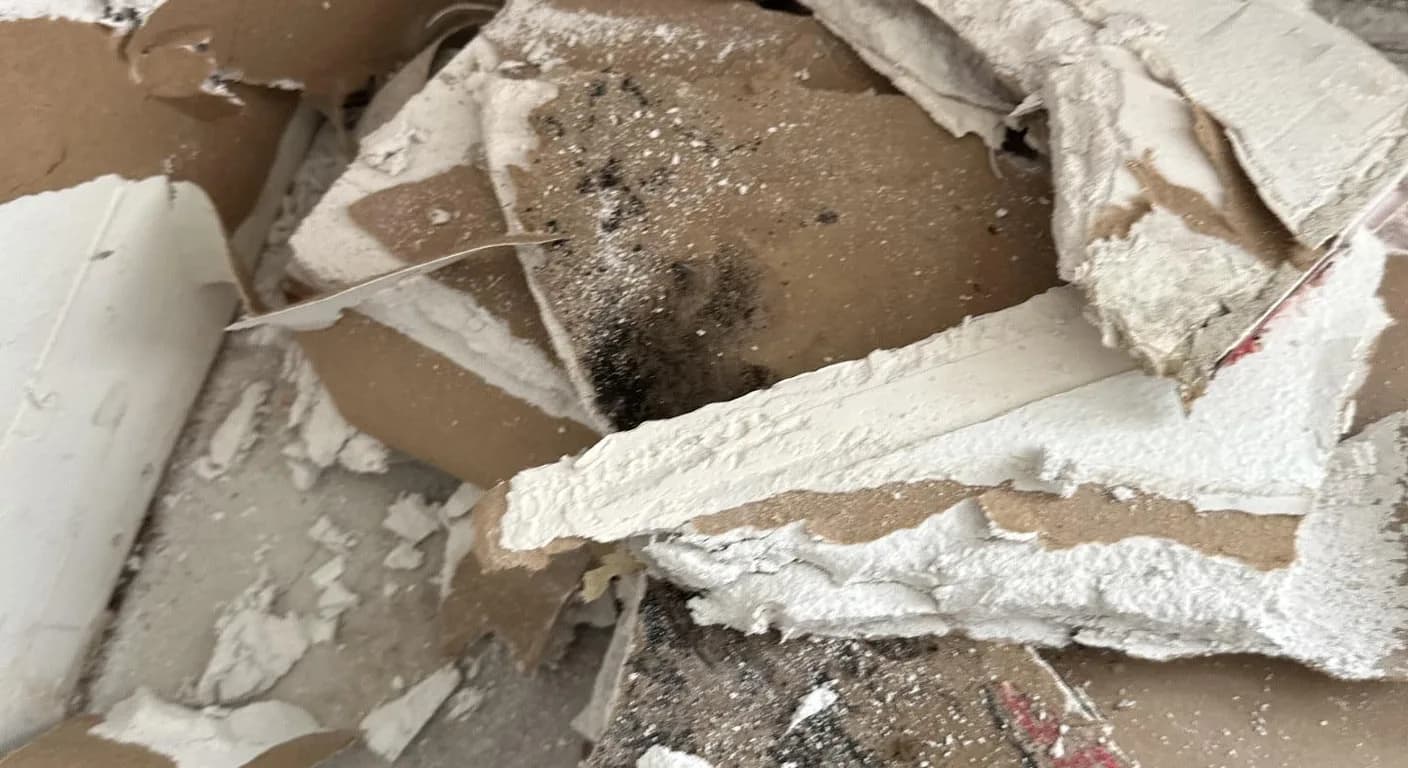
White mold on wood and furniture
On damp lumber, framing or furniture, white growth can be mold, which ordinarily weakens wood only slightly, or the fresh growth of decay fungi, which can also look white (Wood Handbook, pp. 14-2, 14-3). The same dampness can let in both. Is white mold on wood dangerous? Same answer as anywhere else. Bare wood is evaluated case by case based on material condition, extent of contamination and whether it can be returned to Condition 1, S520's term for normal fungal ecology (Section B, p. 20; §9.3.7, p. 49). If load-bearing wood has been compromised and has to be removed, S520 requires a qualified structural engineer to be involved in that decision (§9, p. 44). For any structural component that's removed or replaced, the standard says the remediator should involve a structural engineer or another specialized expert (§9.3.7, p. 49). See the full mold remediation walkthrough for cleanup on bare wood.
White mold on furniture
On furniture, the finish decides the job. A sealed or painted surface cleans like any hard surface (S520-2024, Section B, p. 20), and bare wood on backs, drawer bottoms and furniture frames is judged piece by piece (§11.3.5, p. 58). A stain left after cleaning doesn't by itself show that growth remains (S520 Section B, p. 21). If growth returns or the wood stays damp, look again. The stain itself doesn't call for bleach.
How to get rid of white mold
Getting rid of white mold starts with the water. Fix the moisture source, then physically remove the growth. EPA's method for hard surfaces is detergent and water, then drying completely. Porous materials like carpet may have to go.
With growth you can see, routine sampling usually isn't needed unless it answers a specific question.
Spraying or fogging without physical removal departs from the standard of care, and a product generally can't stand in for removal (S520-2024, §1.4, pp. 23, 24). Dead mold can still cause allergic reactions (EPA). EPA doesn't recommend bleach as routine. If it's used on a hard surface, CDC says no more than 1 cup of bleach in 1 gallon of water, never mixed with ammonia. Vinegar, peroxide and borax are household options, not EPA or CDC methods (what vinegar does and doesn't do).
Don't touch it bare-handed. Wear gloves, goggles without vent holes, long sleeves and pants, and at least an N95 (EPA, CDC), and step up for heavier work. The steps are in the full mold remediation walkthrough.
When to call a professional
White mold remediation follows the same rules as any mold job, and EPA's benchmark is that in most cases you can clean up an area smaller than about 10 square feet yourself; it's a guideline, not a cutoff.
We'd bring in a professional, below or above that benchmark, when the growth sits on drywall, carpet or insulation that stayed wet, comes back after cleaning, or reaches the heating and cooling system. EPA says to call one for sewage or other contaminated water, and not to run the system if you suspect it's moldy.
Anyone in CDC's higher-risk group shouldn't take part in the cleanup; someone else or a professional can do it.
White mold FAQ
Frequently Asked Questions
Can you live in a house with white mold?
Is it safe to touch or clean white mold yourself?
How long does it take for white mold to affect you?
Can white mold kill you?
What does white mold in a bathroom or on a ceiling mean?
Why is there white mold in my closet?
Is white mold on carpet the same problem?
What to do next
Find the water first. Clean small hard-surface patches with detergent and water in the gear above, then dry them, unless you're in CDC's higher-risk group. Call a professional when the triggers above apply, whatever the size.