How to Hire a Mold Company: 6-Step Checklist (2026)
Verify licensing, check certifications, spot red flags, compare quotes fairly. The 6-step hiring process that protects you from overpriced work and scams.
Finding mold in your home is stressful. Hiring the wrong company to fix it can make things worse. This guide walks you through how to find a qualified mold professional, what to verify before signing anything, and how to protect yourself from overpriced work and common scams.

In This Guide
- What to Look For in a Mold Professional: Licensing, insurance, certifications, reviews
- The Assessor vs. Remediator Distinction: Why this matters before you hire anyone
- Questions to Ask Before Hiring: What to ask on the first call
- Red Flags and Scams to Avoid: Warning signs that should make you walk away
- Understanding Certifications: What IICRC, ACAC, and NORMI credentials mean
- How Much Does Mold Remediation Cost?: Cost ranges and what drives the price
- How to Hire: Step by Step: The full process from start to finish
What to Look For in a Mold Professional
Not every mold company is the same. These are the credentials and qualities that separate legitimate professionals from contractors you should avoid.
State Licensing
Five jurisdictions license mold work: Florida, Texas, New York, Louisiana, and Washington DC. In those places, mold assessors and remediators must hold a state-issued license. Ask for the number and verify it yourself; do not take their word for it. The state databases are free and searchable, and each one is listed here with what a check can and cannot tell you.
Check that the license:
- Is active (not expired)
- Covers the right type of work (assessment vs. remediation)
- Has no disciplinary actions or complaints on record
Insurance
Every mold professional you hire should carry current insurance. At minimum, ask for:
- General liability: Covers property damage during work
- Workers' compensation: Required in most states if they have employees
- Professional liability (errors & omissions): Covers mistakes in assessment or remediation
Ask for a certificate of insurance (COI) and verify it's current before work starts. If they hesitate, that's a red flag.
Certifications
Certifications go beyond what a state license requires. They confirm that a professional has completed additional training in mold-specific techniques. Industry certifications from IICRC and ACAC are the most widely recognized. See the certifications section below for a breakdown of which ones matter and why.
Reviews and Experience
Check Google reviews and the Better Business Bureau. Look specifically for:
- Recent reviews (within the last 12 months)
- Comments about how the company handled problems, not just praise
- Volume of reviews: five reviews is a thin track record
Ask how many mold projects they complete per year and whether they have experience with your specific situation (attic, crawl space, HVAC, post-flood, etc.).
The Assessor vs. Remediator Distinction
Before you start calling mold companies, understand this: mold assessment and mold remediation are two different jobs that should be performed by two different companies.
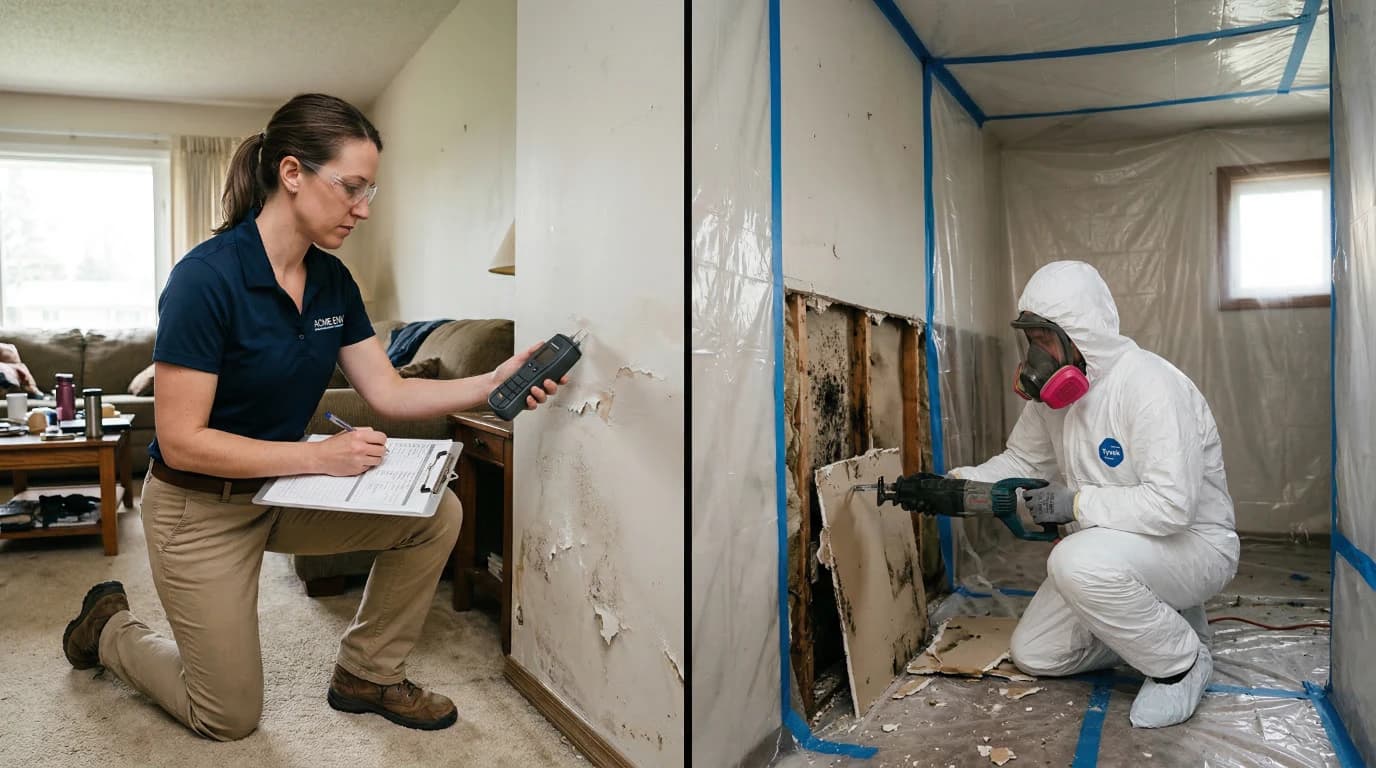
A mold assessor diagnoses the problem. They inspect, test, document, and create a remediation protocol, a written plan specifying exactly what needs to be done. They do not remove mold.
A mold remediator fixes the problem. They follow the assessor's protocol to set up containment, remove contaminated materials, clean affected areas, and dry everything out.
When one company does both, they have a financial incentive to overstate the scope of your problem. Texas law bans it outright for this reason. Even in states where it's legal, the independent assessment protects you.
Always get an independent assessment before hiring a remediator. For a full breakdown of how this works and why it matters, see our mold assessor vs. remediator guide.
If you're unsure whether you even need a professional, our DIY vs. professional mold removal guide can help you decide.
Questions to Ask Before Hiring
Ask these questions before you sign anything. A qualified professional will answer them without hesitation.
About credentials:
- What is your state license number, and what type of license do you hold?
- Can you provide a certificate of insurance for general liability and workers' comp?
- Do you hold any industry certifications (IICRC, ACAC, or NORMI)?
About the process:
- Do you perform both assessment and remediation? (If yes, that's a conflict of interest; see above.)
- Will you provide a written remediation protocol before work begins?
- Who performs the post-remediation clearance testing?
About the project:
- How many projects like mine have you handled in the past year?
- What containment procedures do you use?
- What's your timeline, and what happens if you find more mold than expected?
About the contract:
- Is everything tied to the assessor's written protocol?
- What is the payment schedule? (Avoid paying in full upfront.)
- Do you provide a written warranty on your work?
For the complete list of questions organized by project phase, see our questions to ask a mold company guide.
Red Flags and Scams to Avoid
These are the warning signs that should make you pause or walk away entirely.
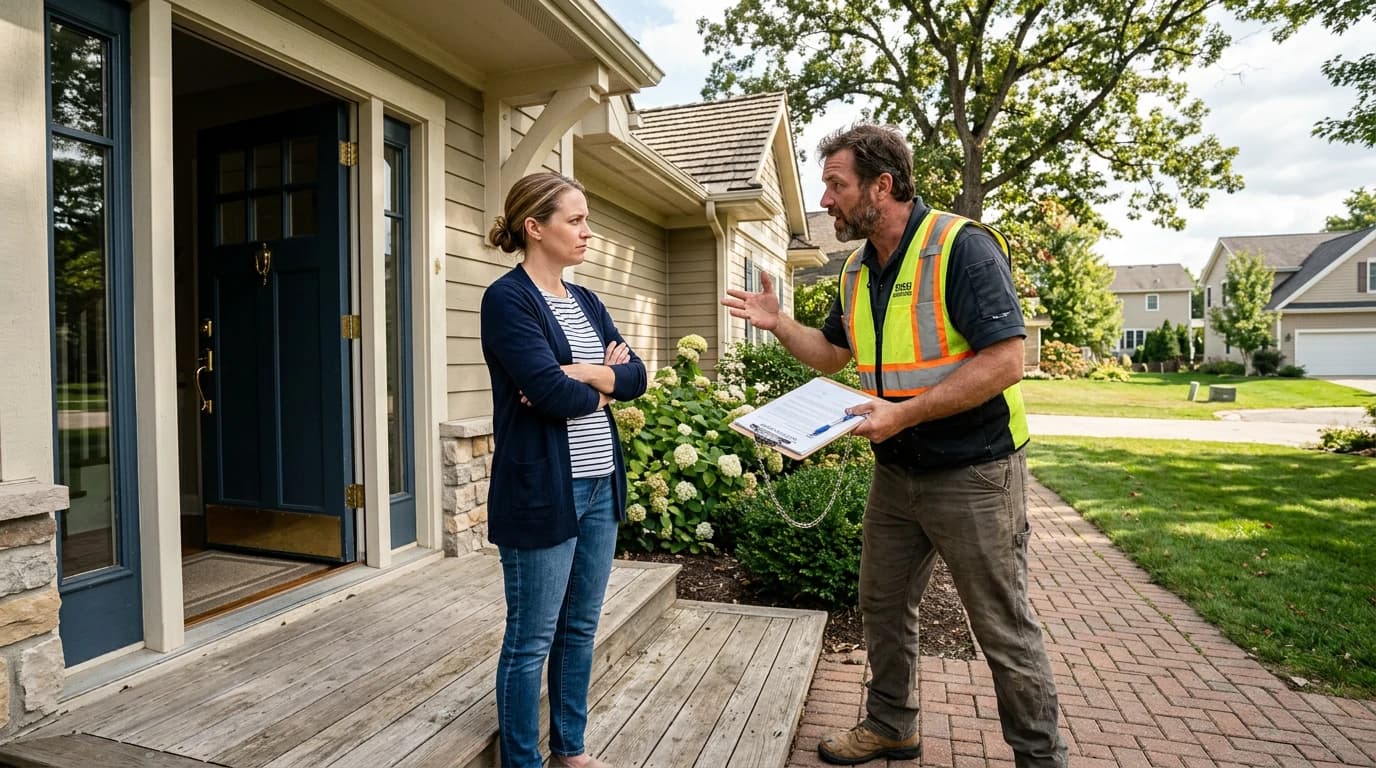
The "free inspection" offer. A company that offers a free inspection and then immediately quotes you for remediation has a direct financial incentive to find (and exaggerate) your mold problem. This is the most common setup for inflated scopes. Always pay for an independent assessment from a separate company.
Refusal to provide license or insurance. Any licensed professional should hand over their license number and a COI without hesitation. Delays, excuses, or vague responses mean you should move on.
High-pressure tactics. A contractor who pushes you to sign the same day, claims the mold is spreading by the hour, or offers a discount only valid "right now" is using pressure to prevent you from doing your homework. Legitimate mold companies don't work this way.
Cash-only payment requests. This signals a company that may not be properly licensed or insured, and gives you no recourse if the work isn't done right.
Guaranteed mold elimination. Mold spores exist naturally in every home. Any company that guarantees to "eliminate all mold" or "make your home mold-free forever" is making a claim that's scientifically impossible. It's a sales tactic, not a promise they can keep.
For a detailed breakdown of how these scams work and how to protect yourself, see our mold remediation scams guide.
Understanding Certifications
State licensing is the minimum bar. Certifications from industry organizations indicate additional training and testing beyond what a license requires.
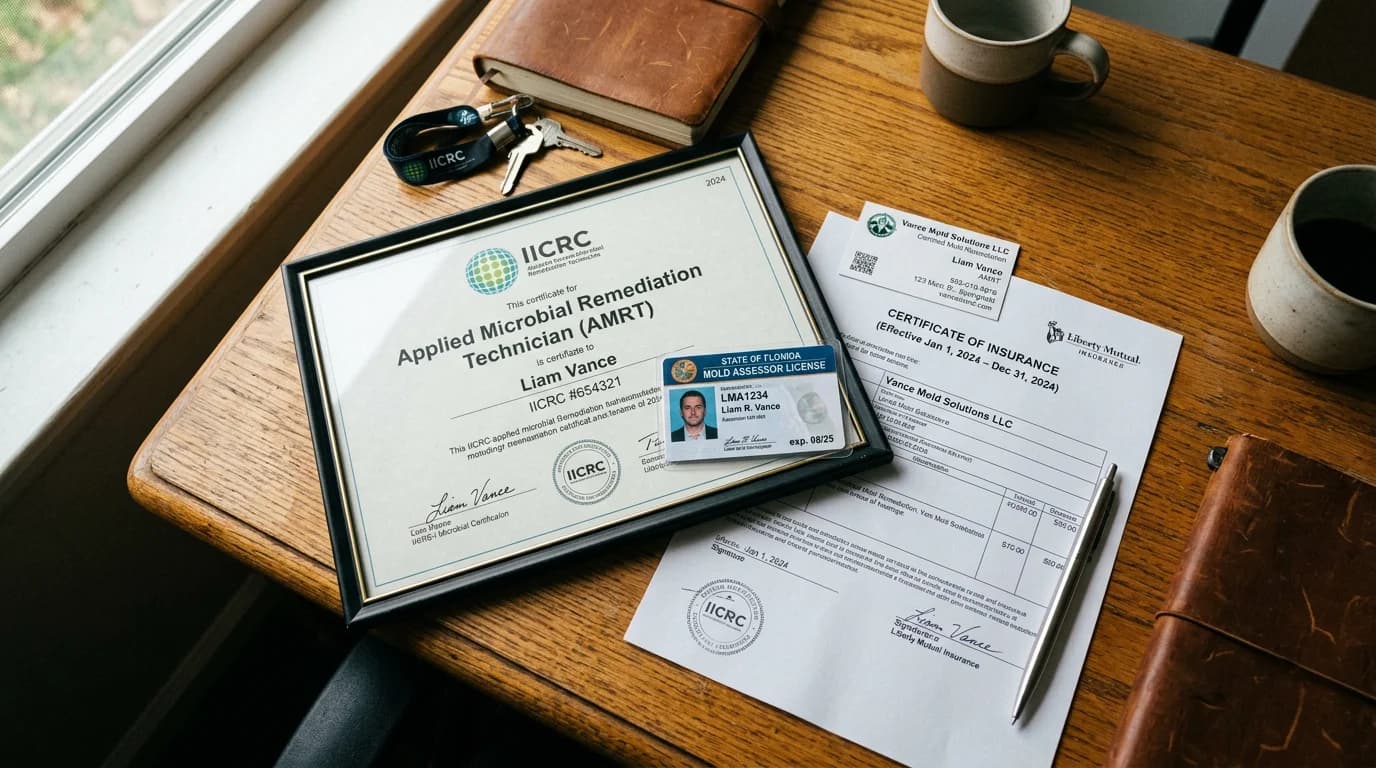
The Major Certification Bodies
IICRC: Institute of Inspection, Cleaning and Restoration Certification
The IICRC is the most widely recognized certification body in the restoration industry. Their standards are used across the U.S. and internationally.
- WRT (Water Restoration Technician): Covers water damage and moisture control, relevant to mold work
- AMRT (Applied Microbial Remediation Technician): Mold-specific remediation training; the standard certification for remediators
ACAC: American Council for Accredited Certification
ACAC focuses specifically on indoor environmental quality and mold work.
- CMI (Council-certified Microbial Investigator): For assessors performing mold inspections, at 2+ years of verified field experience
- CMC (Council-certified Microbial Consultant): The same discipline at 8+ years
- CMR (Council-certified Microbial Remediator): For remediators, with the Council-certified Microbial Remediation Supervisor (CMRS) a tier above
- CIE (Council-certified Indoor Environmentalist): Broader indoor air quality credential
NORMI: National Organization of Remediators and Microbial Inspectors
- CMA (Certified Mold Assessor): Assessment-focused
- CMR (Certified Mold Remediator): Remediation-focused. Note that ACAC issues a CMR of its own with different requirements, so ask which body issued it
- MRSR (Mold-Related Services Remediator): NORMI's course for Florida's state license of the same name, which is what Florida requires to perform mold remediation there
Which Certifications Matter Most
For remediators: IICRC AMRT is the most recognized. For assessors: ACAC CMI or CIE. Any current certification from IICRC, ACAC, or NORMI is a positive signal, more than none.
Always verify certifications directly through the issuing organization's website, not just from the contractor's claims.
For a complete breakdown of what each certification means and which ones matter most for your situation, see our mold certifications guide.
How Much Does Mold Remediation Cost?
Understanding costs helps you spot inflated quotes and budget realistically.
Most homeowners pay between $1,500 and $6,500 for a medium-sized mold project. Cost drivers include:
- Size of the affected area: Priced roughly $10–$25 per square foot
- Location: Mold inside walls, in HVAC systems, or in crawl spaces costs more than surface mold
- Materials affected: Drywall and insulation removal adds cost; mold on concrete is often less
- Extent of containment needed: Larger containment zones take more time and materials
- Post-remediation verification: An independent check runs $200-$500 and is worth having on any job of size. Sampling is one way of doing it rather than a requirement: ANSI/IICRC S520-2024 §12 lists visual inspection, field data and odor detection alongside it, and the minimum completion criteria are not analytical at all.
Getting a fair price depends on having an independent assessment first. Without a written remediation protocol, you can't compare quotes; one contractor may be bidding on twice the scope as another.
Cost guides:
- National averages and cost factors: mold remediation cost guide
- What a mold inspection costs: mold inspection cost guide
The Right Way to Hire: Step by Step
Follow these steps to hire a mold professional without getting overcharged or under-protected.
Step 1: Get an Independent Assessment
Before contacting any remediator, hire a qualified mold assessor, licensed where your state requires it, who does not offer remediation services. This is the most important step. The assessor will inspect your home, document the problem, and create a remediation protocol, a written scope of work that specifies exactly what needs to be done.
This protocol is what makes it possible to get comparable quotes from multiple remediators. Without it, each contractor is deciding for themselves what your problem is, and they have no incentive to understate it.
See our assessor vs. remediator guide for a full explanation of this step and what a good assessment includes.
Step 2: Review the Remediation Protocol
Read the assessor's report carefully. It should document:
- Where the mold is located and how much area is affected
- The identified moisture source (and whether it's been fixed)
- What materials need to be removed
- What containment and air filtration is required
- What clearance testing is required after remediation
If you don't understand something, ask the assessor to explain it before you start contacting remediators.
Step 3: Get Multiple Quotes from Separate Remediators
Share the protocol with at least two or three qualified mold remediators. Since they're all bidding on the same scope, you can compare prices directly. A quote that comes in significantly lower than the others may mean the contractor plans to cut corners. A quote that's significantly higher may mean they're adding work beyond what the protocol calls for. Ask why.
Step 4: Verify Credentials
Before selecting a contractor, confirm:
- License is active and covers the right work type
- COI (certificate of insurance) is current: general liability and workers' comp at minimum
- Any certifications claimed are verifiable through the issuing organization
Do not skip this step. Checking credentials takes 15 minutes and protects you from thousands of dollars in potential problems.
Step 5: Check Reviews and References
Read Google reviews for the past year. Look for patterns, not just averages. Then ask the contractor for two or three references from recent mold projects, and actually call them. Ask whether the scope stayed consistent, whether the crew was professional, and whether they'd hire the company again.
Step 6: Get Everything in Writing
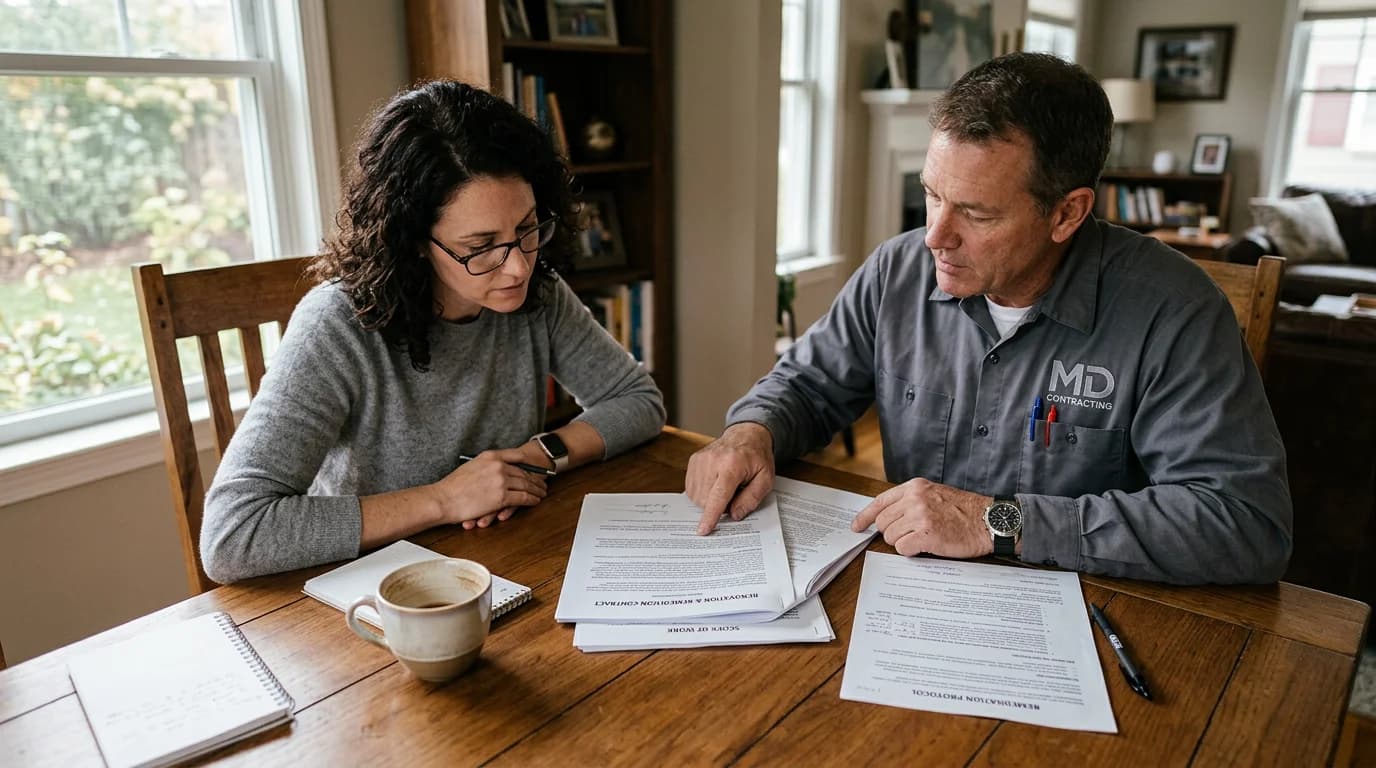
Your contract should include:
- Scope of work tied directly to the assessor's remediation protocol
- Specific materials to be removed
- Containment and air filtration procedures
- Payment schedule (avoid paying in full before work is complete)
- Timeline with milestones
- Who performs post-remediation clearance testing and when
- What happens if additional mold is found during work
Do not allow work to begin without a signed contract.
When you're ready to compare options, you can browse verified mold remediation companies and check each pro's licensing before you call.
Frequently Asked Questions
How do I verify a mold contractor's license?
Should I hire the same company to assess and remediate mold?
What certifications should a mold professional have?
How many quotes should I get for mold remediation?
What are the biggest red flags when hiring a mold company?
How much does mold remediation cost?
This guide is for educational purposes only. Licensing requirements vary by state and change over time. Always verify current requirements with your state licensing board before hiring.