Mold Testing in Atlanta (2026): Costs and What's Included
Nationally a mold inspection runs $303 to $1,075, average $689 (HomeAdvisor). What an Atlanta test includes, when you need one, and how to choose an inspector.
Cost Insights
$303 – $1,075
Average: $689 nationally, from 8,354 inspection costs reported to HomeAdvisor. We don't have an Atlanta-specific figure.
- One Atlanta assessor publishes $270 for the visit plus $90 per air sample, with an outdoor control sample every time it samples indoor air.
- At those prices, two indoor samples and the outdoor control come to $540.
- Post-remediation verification runs $200 to $600 on one Austin assessor's published price sheet. It establishes a probable return to normal conditions, not proof.
- DIY home test kits give limited data at best: none of them finds hidden mold, and settle plates can't measure how many spores are in the air.
Finding mold in your Atlanta home (or suspecting it) raises an immediate question: should you get it tested, and how much will that cost? Professional mold testing gives you data you can actually use, whether you're filing an insurance claim, negotiating a home purchase, or working out how far the problem extends and where the moisture is coming from before hiring a remediator.
This guide covers what mold testing costs in the Atlanta area, what's included, and when it's worth the investment.

In This Guide
- Atlanta Testing Costs: The national figure and one Atlanta assessor's prices
- What's Included: What you get for the money
- When You Need Testing: Situations that call for professional testing
- DIY vs Professional: Why home kits fall short
- Choosing an Inspector: What to look for
- Is Testing Worth It?: When to test and when to skip
- How Much Does It Cost?: Full pricing breakdown
- Connect with a Pro: Find qualified Atlanta inspectors
What Mold Testing Costs in Atlanta
We don't have an Atlanta-specific average, so the table puts HomeAdvisor's national figure next to one Atlanta assessor's published prices.
| Service | Price | Source |
|---|---|---|
| Typical inspection, nationally | $303 – $1,075 (average $689) | HomeAdvisor, 8,354 reported costs |
| Visit and inspection fee | $270 | Atlanta assessor's price sheet |
| Air sample | $90 each | Atlanta assessor's price sheet |
| Two indoor air samples plus the outdoor control | $540 | The Atlanta assessor's prices, added up |
| Post-remediation clearance test | $200 – $600 | Austin assessor's price sheet |
The Atlanta assessor always takes an outdoor control sample when it samples indoor air, which is why two rooms mean three samples on the invoice. A test starts with a visual inspection and moisture meter readings; air samples and lab analysis are added when they answer a defined question, and you get a written report.
What's Included in a Professional Mold Test
A qualified mold inspector in Atlanta will typically do the following:
Visual Inspection
The inspector walks through your home looking for visible mold, water damage, staining, and conditions that promote mold growth. They'll check common trouble spots: basements, crawl spaces, bathrooms, under sinks, around HVAC systems, and window frames.
Moisture Readings
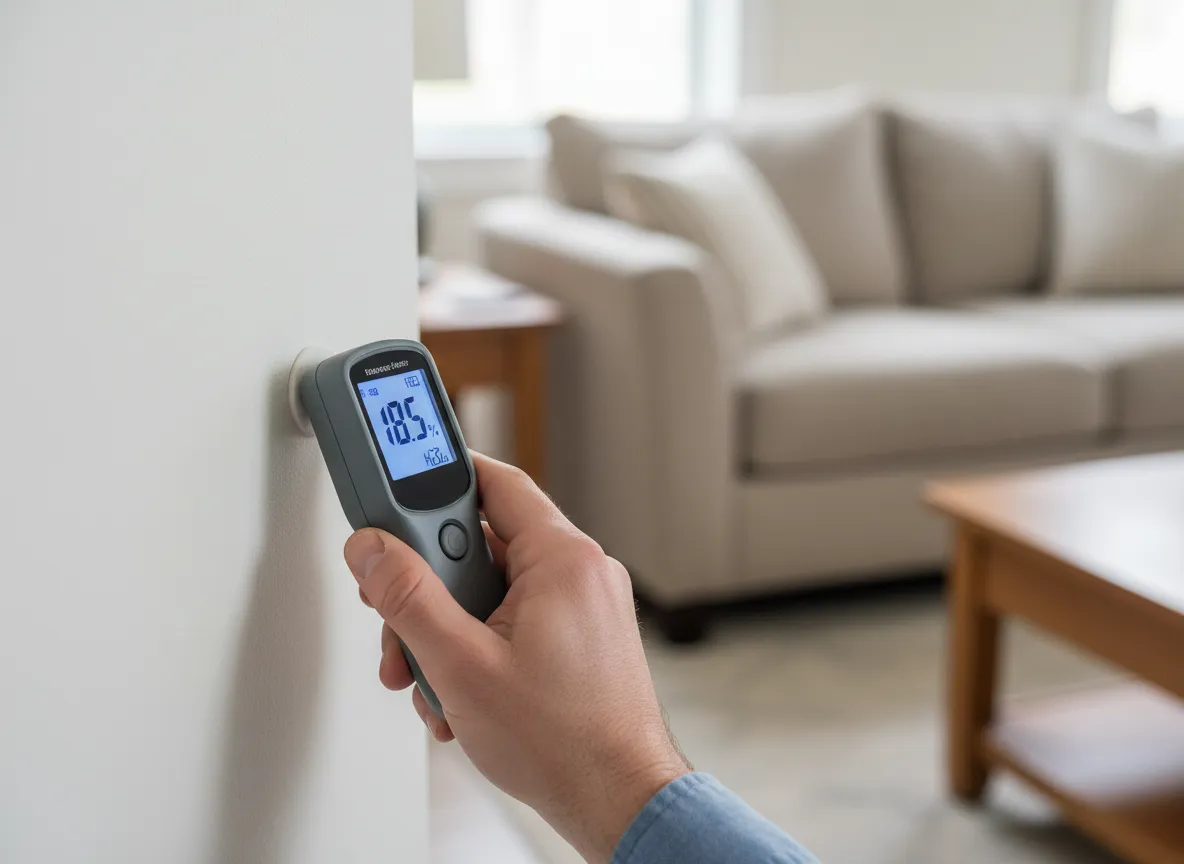
Using a moisture meter, the inspector checks walls, floors, and other surfaces for elevated moisture, comparing suspect spots with the same material where it's dry. This can flag moisture problems that haven't produced visible mold yet, common in Atlanta homes where clay soil pushes water against foundations.
Air Sampling
When the inspection raises a question sampling can help answer, the inspector collects air samples inside your home and at least one outdoor comparison sample the same day. A lab analyzes these samples and reports:
- Fungal groups present: usually to genus, not a confirmed species
- Spore concentration: how many spores per cubic meter of air
- Indoor vs outdoor comparison: one input the inspector reads with the moisture findings, not a pass or fail; a count well above outdoor is a reason to look harder
Written Report
You get a detailed report with all findings, lab results where samples were taken, photos, and recommendations. This document is what you'll share with a remediator, your insurance company, or a real estate agent.
When You Need Mold Testing
Not every situation requires professional testing. Here's when it makes sense:
Testing can be worth it when:
- You smell musty odors but can't find visible mold
- You're buying a home, especially one with a basement or crawl space
- You need documentation for an insurance claim
- You've had water damage and want to know whether it reached materials you can't see
- You want an independent check of a remediation job against agreed completion criteria
- Someone in your household has health concerns they associate with the house (an assessment is the step, not a spore test on its own, and medical questions go to a doctor)
You probably don't need testing when:
- You can clearly see mold growing; you already know you have a problem
- The mold covers less than about 10 square feet on a hard surface and there's no sign of a leak or hidden growth; clean it and deal with the moisture
- You just want to know if mold exists somewhere in your home; it does (mold spores are everywhere)
DIY Tests vs Professional Testing
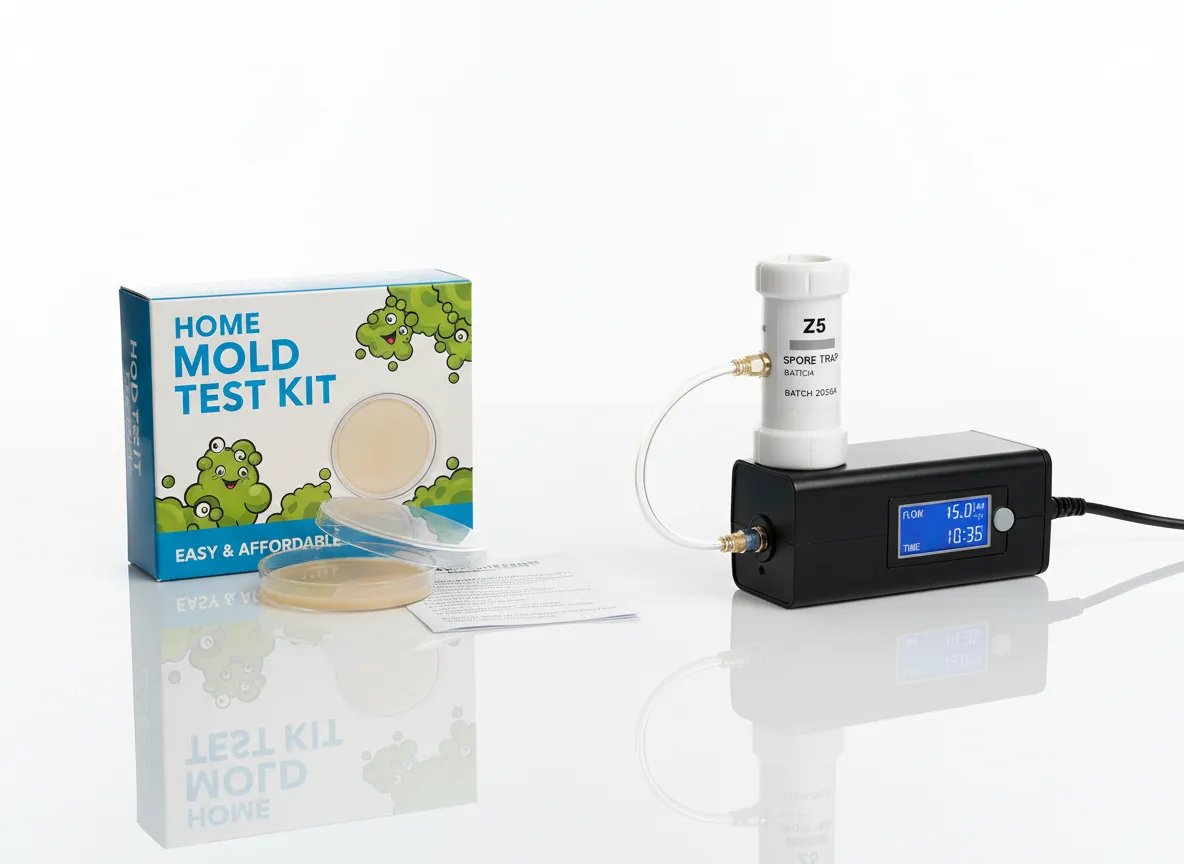
Home mold test kits from hardware stores are cheap and seem like a quick answer. Here's why professionals don't recommend them:
The problem with DIY kits: They're settle plates; they collect whatever falls on them over a set time period. They can't measure how many spores are in the air. Almost every home will produce a "positive" result because mold spores are everywhere naturally.
What you're missing:
- No useful comparison: a second plate set outdoors still doesn't measure how many spores are in the air
- No spore count, just presence or absence
- No ability to find hidden mold behind walls or in crawl spaces
- No written record of where the moisture is, which an insurance claim or a home sale needs
A professional test costs more but gives you data you can act on. If you're spending thousands on remediation, the inspection is a smart investment.
How to Choose a Mold Inspector in Atlanta
Finding a qualified inspector in Atlanta takes some homework since Georgia has no state license for mold inspectors:
Look for these credentials:
- An assessor credential such as ACAC's CMI or NORMI's CMA, held by the person who will inspect your home (the IICRC's mold credentials, the AMRT and MRS, are remediation credentials)
- Field experience with sampling and reading lab results, if your situation calls for sampling
- General liability insurance and E&O coverage
- Experience with Atlanta-specific moisture issues
Ask these questions:
- If you take samples, which lab analyzes them, and does it hold current AIHA LAP EMLAP accreditation for the method?
- How do you decide whether to take samples, and how many?
- Will you provide a detailed written report?
- Are you independent from any remediation company?
Watch out for:
- Companies that offer "free mold testing" and then quote the remediation; that doesn't make every free test inflated, but the incentive points one way
- Inspectors who skip the moisture investigation and go straight to air samples
- Anyone who recommends remediation without investigating where the moisture is coming from
Mold Testing vs Mold Inspection
People use these terms interchangeably, but they're slightly different:
- Mold inspection: Visual assessment of your home for moisture problems and visible mold. The inspector uses experience and instruments: moisture meters to identify and confirm elevated moisture, and thermal imaging to identify temperature anomalies worth further investigation. Usually cheaper.
- Mold testing: Includes inspection plus laboratory analysis of air or surface samples. Gives you lab data on fungal groups and spore concentrations at the time and place sampled. More expensive, and worth it when that data answers a question the inspection can't.
For most Atlanta homeowners, the inspection is the place to start, with sampling added where it answers a defined question.

What to Do After You Get Your Test Results
Your mold test report will include spore counts, the fungal groups found, and a comparison between indoor and outdoor samples. Here's how to read the results:
Elevated indoor spore counts: An indoor count well above the outdoor count is one input among several, not a pass or fail. There is no federal airborne standard to measure it against, and the reading depends on how and where the sample was taken, what the weather was doing, and what the inspector actually found on moisture and visible growth. Read it alongside the inspection rather than on its own. The report should tell you which rooms had the highest levels.
Fungal groups a lab report commonly names, and what they are useful for. CDC's position is that the type does not need identifying to decide on cleanup, and that all molds should be treated the same for health risk and removal. So read these as pointers toward a moisture condition rather than as a severity ranking:
- Cladosporium: very common indoors and out, often tracked in from outside.
- Aspergillus and Penicillium: also common indoors and out. Counts have to be read against the inspection rather than on their own.
- Stachybotrys: associated with materials that have stayed wet a long time, such as drywall and other cellulose. Finding it is a reason to look hard for a chronic moisture source.
A routine spore trap reports groups like these rather than a reliable species, so a name on the report is not a species identification.
Next steps based on results:
- No clear indoor elevation, no visible mold: That isn't an all-clear. A short-term air sample that isn't elevated doesn't rule out hidden or intermittent mold, so read it with the inspection and fix any moisture issues the inspector noted.
- Elevated indoor counts, small visible area: If the affected area is under 10 square feet on a hard surface, you may be able to clean it yourself. Fix the moisture source first.
- Elevated indoor counts, large area or hidden mold: Hire a professional remediator. Your report gives them a starting scope. Agree the completion criteria for the job, as far as possible, before the work starts, so the finished work can be checked against them; an independent post-remediation verification, with sampling where it's agreed, is that check.
For remediation costs based on your situation, see our Atlanta mold remediation cost guide. If your basement is the problem area, our Atlanta basement mold guide covers causes and prevention specific to Georgia's clay soil and humidity.
Is Testing for Mold Worth It?
When it answers a specific question, yes, professional mold testing is worth the cost.
A professional assessment gives you a written record of the moisture and growth the inspector found, with lab results where sampling answered a question. That serves three purposes:
- Insurance claims. A claim needs documentation, not guesswork: dated photos, moisture readings, the inspector's view of where the water came from, and lab results where sampling was done.
- Real estate transactions. If you're buying or selling, a professional assessment gives both sides an objective record. Home inspectors don't typically test for mold; it's a separate scope.
- Remediation planning. A remediator needs to know what they're dealing with. The report tells them which areas and materials are affected and where the moisture is coming from, which is what sets the scope; the type of mold doesn't change the response, in CDC's position.
When it's not worth it: If you can see visible mold covering a large area and you've already decided to hire a remediator, skip the pre-remediation sampling. You already know the problem exists. Where you want an independent check of the finished work, a post-remediation verification, what most people call a clearance test (one Austin assessor publishes $200 to $600 for it), checks it against the completion criteria agreed for the job. It shows a probable return to normal conditions rather than proof.
How Expensive Is It to Have Your Home Tested for Mold?
We don't have an Atlanta-specific average. Nationally, a mold inspection costs $303 to $1,075, with an average of $689, from 8,354 inspection costs reported to HomeAdvisor. At one Atlanta assessor's published prices, a test with two indoor air samples comes to $540.
That assessor prices the parts separately:
- The visit: $270, charged on every inspection before any sample goes to a lab.
- Air samples are $90 each, and it adds an outdoor control sample whenever it samples indoor air, so a single indoor sample means two on the invoice.
- For the clearance test after remediation, its page shows no package price. One Austin assessor publishes $200 to $600.
How many samples, if any, depends on the question the inspector is trying to answer, so ask before you book.
Connect with a Verified Inspector
Every mold professional we list in Atlanta is identity-checked, with insurance and certifications verified when a company supplies them. If you need an independent mold assessment before remediation, start there.
For remediation pricing after you have your test results, see our Atlanta mold remediation cost guide. For national context on what mold assessments cost, check our mold inspection cost guide.
We also cover other Georgia cities including Savannah, Marietta, Augusta, and more.