Does Homeowners Insurance Cover Mold? When It's Covered
Mold is usually covered when a sudden water event like a burst pipe causes it, and usually not after slow leaks or floods. Coverage caps, claims, and appeals.
You found mold behind the washing machine, and before anything else you want to know whether your policy pays. Homeowners insurance usually covers mold from a sudden, accidental water event, like a burst pipe or storm damage, and usually doesn't cover mold from a slow leak, poor ventilation, or a flood. Many policies also cap mold coverage with a separate limit, even when the cause qualifies.
Most people call their insurer the day they find it, and that's the right instinct: report promptly, even if you're not sure the damage is covered. What really decides a claim is the cause and the timing. That's why the order of the steps below matters. Your own policy's wording is what counts, so read this beside it, not instead of it.
In This Guide
- What's covered: Sudden events, exclusions, and mold caps
- Living elsewhere during the work: Additional Living Expenses
- Filing a claim: Six steps, in order
- If you're denied: Common reasons and how to appeal
- Find an assessor: Third-party documentation for your claim
When is mold covered by homeowners insurance?
When mold is typically covered
Mold is typically covered when it results from a "covered peril"; a sudden, accidental water event your policy lists. Common covered scenarios:
- Burst pipes. Sudden plumbing failures
- Storm damage. Water intrusion from covered weather events
- Firefighting water damage. Water used to extinguish a fire
- Appliance failures. Sudden washing machine or water heater failures
- Accidental overflow. Bathtub or sink overflow if left unattended briefly
In all of these, the mold develops as a direct result of a sudden water event. That's the trigger insurers look for.
When mold is typically NOT covered
Mold is typically not covered when it results from gradual water damage, maintenance neglect, flooding, or pre-existing conditions. Specifically excluded:
- Neglected maintenance. Slow leaks you failed to address
- Gradual water damage. Long-term moisture problems
- Flooding. Requires separate flood insurance through NFIP
- High humidity. Condensation and poor ventilation
- Pre-existing mold. Mold present before the policy or at time of purchase
- Groundwater seepage. Water entering through foundation
The line between "sudden" and "gradual" is where most claim disputes happen. A pipe that burst yesterday is sudden. A pipe that's been dripping for six months is gradual, even if you only noticed yesterday.
Coverage limits to expect
Even when mold qualifies for coverage, many policies cap mold remediation with a separate limit. Combined limits may apply if mold shares a cap with other water damage. The standard deductible applies before coverage kicks in. Some insurers offer separate mold endorsements for additional premium; these are worth considering if you live in a humid climate (FL, TX, LA, HI) and your default cap is low.
Common scenarios at a glance
| Scenario | Typically Covered? |
|---|---|
| Pipe bursts behind wall, mold develops within days | Usually yes |
| Slow leak under sink for months causes mold | Usually no |
| Roof damaged in storm, mold develops from water intrusion | Usually yes |
| Bathroom ventilation is poor, mold grows on ceiling | Usually no |
| Washing machine hose fails suddenly, mold in laundry room | Usually yes |
| Basement floods from heavy rain | No (requires flood insurance) |
Tip: Review your policy's mold coverage limits before you need them. If your cap is low and you live in a hurricane state, ask your agent about a mold endorsement.
Does insurance pay for a hotel during remediation?
Additional Living Expenses (ALE) coverage on most homeowner policies covers relocation costs when mold results from a covered peril. ALE typically pays for hotels, meals, and incidentals during the displacement period, capped at a percentage of your dwelling coverage. Ask your remediation company for a written timeline before the project starts so you can submit the displacement period to your adjuster as part of the claim.
Whether you need to leave at all depends on the job. Our cost guide covers when we'd plan on staying elsewhere.
How do you file a mold damage insurance claim?
If you believe your mold damage is covered, follow these six steps. The order matters; reversing them can give your insurer an excuse to deny the claim on procedural grounds. One thing never waits on the paperwork: stopping an active leak and starting to dry things out.
Step 1: Document everything
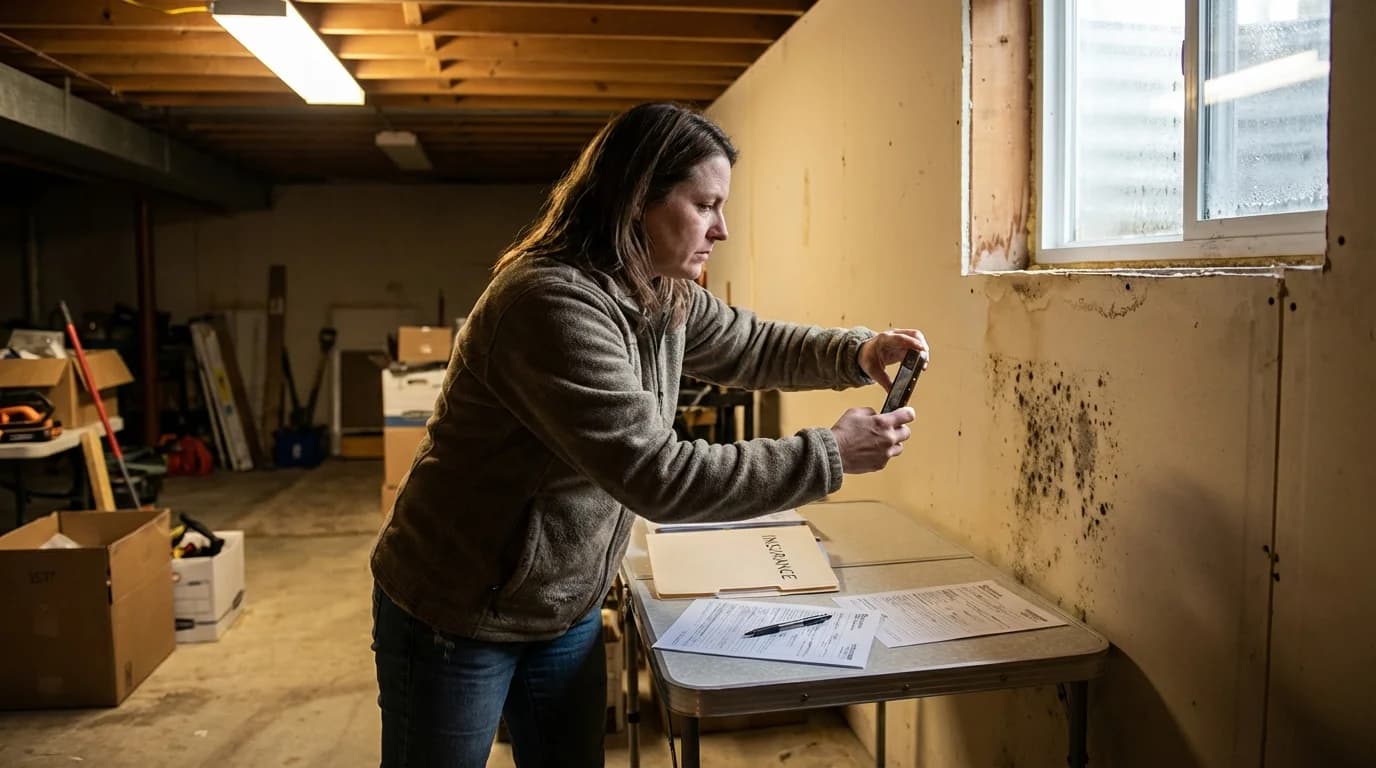
Document the damage thoroughly before any cleanup begins, without delaying stopping an active leak or starting safe drying. Take quick, dated photos and videos of all visible mold, document the water source or damage that caused the mold, note the date you discovered it and any symptoms, keep records of all related expenses, and save any damaged items as evidence (if safe to do so).
Step 2: Report promptly to your insurance company
Report the water damage event and the resulting mold to your insurance company immediately. Get a claim number, an adjuster assignment, and a written acknowledgment. Most policies have notification windows; missing the window gives the insurer a procedural denial. Report even if you're not sure the damage is covered.
Step 3: Get professional assessments
Hire a qualified mold assessor (separate from any remediator, and licensed where your state requires it) for an independent inspection. Get a written assessment with scope and cost estimates, have the moisture investigated and documented, and document the chain of events from the water damage to the mold growth. Insurance adjusters give significantly more weight to third-party assessments than to remediator estimates. See our assessor-vs-remediator guide for why.
Step 4: Obtain remediation quotes
Get multiple itemized quotes from qualified remediation professionals. Each quote should list containment, removal, cleaning, and disposal as separate line items, and say how completion will be documented. Keep all quotes for insurance submission, even the ones you don't choose. Adjusters review quote ranges to assess reasonableness; having three reference points strengthens your position. Our mold remediation cost guide shows what a typical job costs and what a fair quote includes.
Step 5: Work with your adjuster
Your insurance adjuster will schedule a damage inspection, review your documentation and quotes, and determine coverage based on policy terms. Be present for the inspection if possible. Don't admit fault, don't sign statements about cause without reading them carefully, and don't agree to settlements before you understand what's covered and what isn't.
Step 6: Complete remediation and document it
Once approved, choose a qualified remediation professional, licensed where your state requires it, make sure the work meets professional standards, get completion documented, and submit final receipts for reimbursement. Ask your adjuster before the work starts what they'll want as proof of completion. If that includes an independent post-remediation verification, agree its completion criteria, as far as possible, before the work starts or as early in the job as possible.
Warning: Never admit fault, sign statements, or agree to inadequate settlements without understanding your policy rights. If your claim is denied or underpaid, consider consulting a public adjuster or attorney specializing in insurance claims.
What if your insurance claim is denied?
Common denial reasons
Insurance companies deny mold claims for six common reasons, and most of them come down to either policy language or timing:
- Maintenance exclusion. Damage resulted from neglected upkeep
- Gradual damage. Mold developed over an extended time period, not a sudden event
- Policy exclusions. Specific mold exclusion in your policy language
- Late reporting. Damage wasn't reported promptly
- Exceeded limits. Claim exceeds your mold coverage cap
- Pre-existing condition. Mold existed before the covered event
How to appeal
If your claim is denied, request a written explanation citing specific policy language, review your policy carefully against the cited reason, gather supporting evidence (third-party assessor report, contractor opinions, photos of the sudden-event trigger), submit a formal appeal in writing, and seek professional help if the appeal is denied. A public adjuster works on contingency (typically 10 to 20% of the recovered amount) and an attorney specializing in insurance claims can pursue bad-faith denials when the insurer's reasoning doesn't hold up.
Connect with a verified mold assessor
Adjusters give more weight to a third-party assessment than to a remediator's estimate, so the assessor is usually your next call after the insurer. Find verified providers in your state. Every listing is identity-checked. We confirm state license status where we hold the state's license records, and verify a contractor's own insurance and IICRC certifications (WRT, AMRT, MRS) when a provider supplies them.
📚 This guide is part of our Complete Mold Remediation Guide. Your full resource for understanding, preventing, and treating mold.
Frequently Asked Questions
Does homeowners insurance cover mold?
Is mold from a slow leak covered by insurance?
Does insurance pay for a hotel during mold remediation?
What should I do if my mold claim is denied?
This guide is for educational purposes only. Coverage depends on your policy's wording and your insurer. If you have questions about your own coverage, consult your insurance provider or a licensed insurance professional.