Prevention
Does Bleach Kill Mold? What About Peroxide, Lysol or Heat?
Bleach can clean mold off tile, but it isn't the fix for drywall. What EPA, CDC and product labels say about bleach, peroxide, Lysol, Kilz and heat.
You found dark spots on the shower door, and the bleach is already in your hand. On a hard surface like that, it can clean them off, and CDC allows it at up to 1 cup per gallon of water. Drywall is a different story. So is the idea that killing mold finishes the job; EPA says dead mold may still cause allergic reactions in some people, so it has to come off.
Peroxide, Lysol, a "mold-killing" primer and a blast of heat come down to the same two questions: what surface is it going on, and what does its label really claim? KILZ says its own mold primer isn't meant to go on mold at all. If you've already used bleach, don't assume the mold problem is resolved. On a suitable hard, nonporous surface, follow the specific product label and safety precautions; physically clean the affected area and correct the moisture source. Mold-contaminated absorbent materials may need removal rather than another chemical treatment.
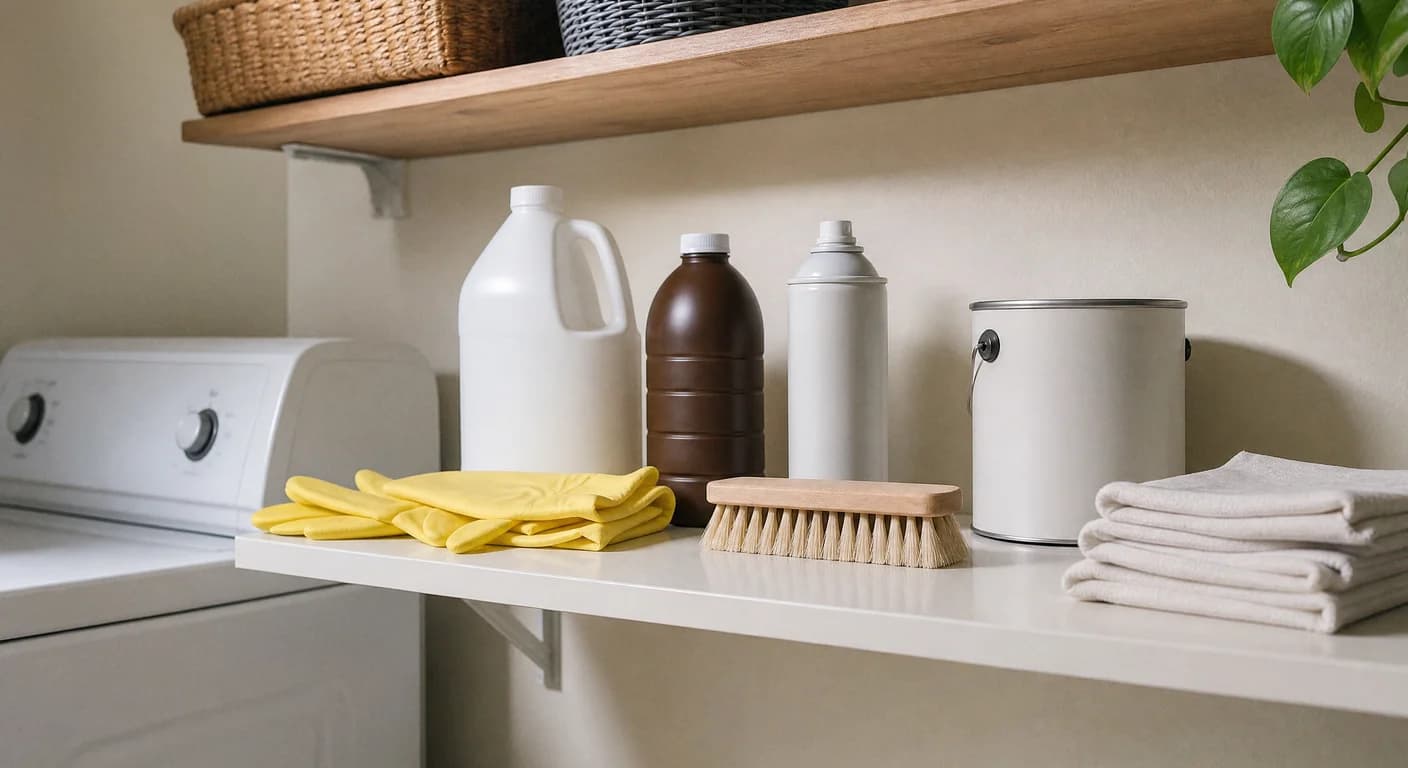
Does bleach kill mold?
Clorox's EPA-registered label covers mold and mildew on hard, nonporous surfaces, used at the label's dilution on a surface that's been cleaned first (EPA Reg. No. 5813-120). EPA, though, doesn't recommend a biocide such as chlorine bleach as a routine part of mold cleanup (EPA). It allows an exception: professional judgment may call for it, for example when someone immune-compromised is in the home. Even Clorox's mold page says bleach isn't recommended on porous materials.
Sterilizing isn't the aim either: EPA says that in most cases it isn't possible or desirable, and that the spores left behind won't grow once the moisture problem is fixed.
For professional mold remediation, the industry standard, ANSI/IICRC S520-2024, makes physically removing the contamination the primary means (§1.4, p. 24) and says no liquid product, cleaner or antimicrobial, should be used as an alternative to it (§2.1.1, p. 25). S520 does not mention bleach at all.
Physical removal sounds drastic. It doesn't have to be: S520 describes it as physical, mechanical or abrasive means such as wiping, brushing, sanding, HEPA vacuuming or taking out an affected piece, and says simply applying a chemical isn't physical removal (Section B, p. 20).
Which surfaces can bleach clean?
Whether a surface can be cleaned depends on what it's made of; whether bleach can go on it depends on the bottle's label.
| Surface | What happens |
|---|---|
| Tile, glass, metal, plastic, sealed countertops | These clean. Detergent and water is EPA's baseline; bleach is an option where its label lists the surface. |
| Bare wood, grout | Case by case, depending on condition and how far the growth goes. Check the label: some bleach products list wood among the surfaces to avoid. |
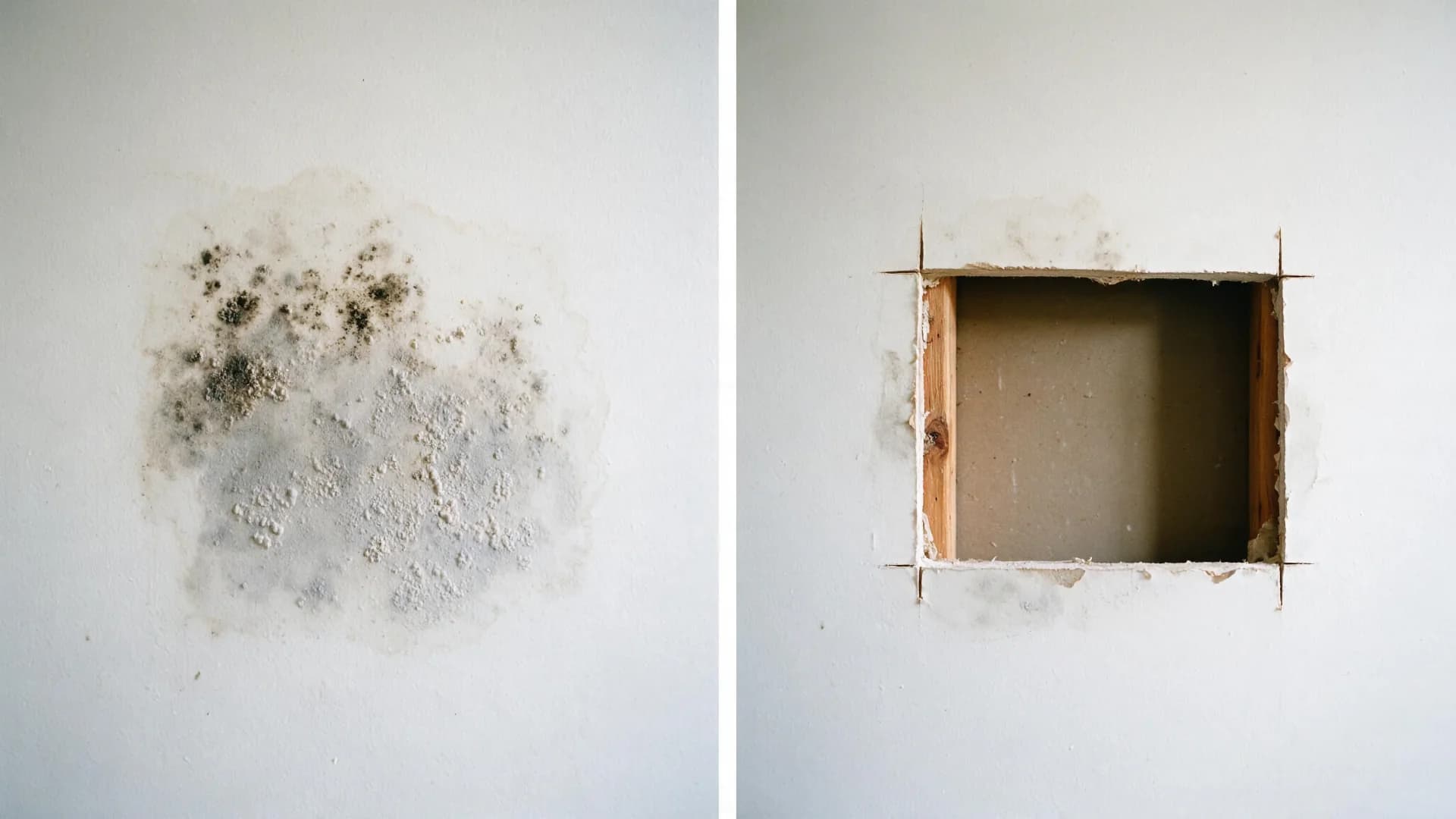
| Drywall, ceiling tile and similar materials | Mold-contaminated drywall, ceiling tile and similar non-salvageable absorbent building materials generally require removal and replacement. |
Other materials are judged on what they're made of, their condition, and whether they can be brought back to a normal, clean state. EPA says absorbent materials such as ceiling tiles and carpet may have to be thrown away if they become moldy.
Does bleach kill mold or just hide it?
Color isn't the test either way. Removal is: EPA is clear that even dead mold has to come off, whatever color it's turned. And since EPA notes that cleaning may not restore an item's original appearance, a stain left after a thorough clean doesn't by itself show that mold remains.
Does bleach make mold worse?
None of the agency or label sources we read says bleach makes mold worse, and the popular "feeds the roots" explanation doesn't describe anything real: mold grows as a network of filaments called hyphae, not roots. For moldy drywall, the documented answer is removal, not a better liquid (S520 §2.1.1, p. 25).
Does bleach kill black mold?
The color doesn't change the answer. Stachybotrys chartarum, the mold usually meant by "black mold," doesn't require a unique remediation chemistry just because of its species name; the product still follows the surface, the job and the label. CDC says all molds should be treated the same with respect to potential health risks and removal. For the full process, see how to get rid of black mold.
How do you use bleach on mold safely?
Use it only on a surface expressly permitted by that product's label, generally a pre-cleaned, hard, nonporous surface. If you're diluting household bleach, stay within CDC's limit. Never mix it with anything, and use fresh air and protective gear. You may not need it at all. EPA's baseline is detergent and water, CDC says bleach or dish detergent can be used, and CDC's flood-cleanup sheet says that with only a little mold and minor water damage, you may not need bleach.
CDC's ceiling is 1 cup of bleach per gallon of water. That's a maximum, not a recipe, and it's one reason the ratios you'll find online don't agree. Clorox's label, for mold on hard, nonporous surfaces, calls for 1/3 cup per gallon, with the surface kept visibly wet for 10 minutes and then rinsed. Take the rate and the time from the bottle you have.
Never mix bleach with ammonia or any other cleanser, CDC says. Clorox's label warns that mixing it with ammonia or acids may release hazardous gases, and vinegar is an acid.
Open windows or doors. CDC's gear list is at least a NIOSH Approved N95 respirator, gloves (non-latex, vinyl, nitrile or rubber) and goggles without open vent holes; add long sleeves and pants. An N95 helps reduce inhalation of airborne mold particles; it doesn't protect against bleach gases or chemical vapors. Prevent chemical exposure by following the label, providing adequate ventilation, and never mixing cleaners. Leave the area if irritating fumes develop.
Three groups shouldn't take part in cleanup at all, CDC says: people with allergies, people with immune suppression or underlying lung disease, and people with chronic respiratory disease such as asthma or COPD.
Does hydrogen peroxide kill mold?
The brown bottle of 3% hydrogen peroxide from the drugstore is labeled as a first-aid antiseptic for minor cuts, scrapes and burns. Some EPA-registered disinfectants made with hydrogen peroxide do list mold on hard, non-porous surfaces, and their labels set the rate and contact time.
Ordinary drugstore 3% hydrogen peroxide has no labeled mold-cleaning directions; EPA and CDC don't present it as their standard method. For a small cleanable hard surface, scrub with detergent and water and dry completely. A separately EPA-registered peroxide product with a mold claim should be used only as its own surface-specific label directs.
On moldy drywall, the liquid doesn't change the answer: it generally needs removal and replacement. For peroxide against vinegar, see how vinegar compares.
Does Lysol kill mold?
Lysol's product page says its disinfectant spray "helps to control and prevent" mold and mildew, sprayed on a hard surface that's already been cleaned and left wet for 3 minutes (Lysol). It goes on after cleaning, not in place of it. The registered label also allows a claim that it kills two molds on hard, non-porous surfaces; the product page doesn't make that claim.
Lysol Mold & Mildew Remover is a separate, ready-to-use bleach-based product whose registered label identifies 2.0% sodium hypochlorite. Use it only on the listed surfaces and follow that product's application and contact-time directions; don't combine it with other cleaners. CDC's 1-cup-per-gallon statement addresses household bleach diluted in water. The surfaces its label says to avoid include wood, painted surfaces, fabric and carpet.
As for wipes, Clorox says on its mold page that its disinfecting wipes don't kill mold; their registered label covers keeping mildew from growing on hard surfaces.
Our advice for any label is to check three things: the EPA registration number, the surfaces it lists, and the organisms it lists. S520 applies the same idea to professionals: a remediator shouldn't use a product on an organism, or in a situation or for a purpose, it isn't registered for (§2.1.2, p. 26).
Lysol's mold directions are for surfaces, not the air, and EPA notes that spores float through indoor and outdoor air anyway. Cans and machines sold for mold have their own guide: products that treat a whole room.
Does heat, steam, sunlight, UV light or cold kill mold?
S520 says heat and cold shouldn't stand in for cleaning: temperature extremes, hot or cold, shouldn't be used as an alternative to cleaning and physical removal, or relied on to eliminate the contamination or its allergenic or toxigenic properties (§2.3, p. 28). None of the agencies we checked gives a kill temperature. For a cleanable hard surface, physically remove the growth with an appropriate method such as detergent-and-water scrubbing, then dry completely. Don't rely on temperature alone as remediation.
UV light is its own case. EPA says the UV cleaners typically used in homes have limited effectiveness in killing bacteria and molds, and that destroying most mold spores usually takes much more UV than a typical home unit gives. S520 lists UV lights among the stand-alone techniques that shouldn't replace physical removal (§9.1.7, p. 46).
Heat and air movement may assist drying, but they don't remove existing mold. EPA's remediation guide lists dehumidifiers, gentle heat and fans for drying water-damaged wood, and its homeowner guide says wet materials dried within 24 to 48 hours in most cases won't grow mold.
What about rubbing alcohol, ammonia or OxiClean?
The drugstore bottle of rubbing alcohol is labeled as a first-aid antiseptic and carries "flammable, keep away from fire or flame," so there are no mold directions on it. On moldy drywall, the bleach answer applies.
Ammonia shows up on EPA's and CDC's mold pages for one reason: never mix it with bleach.
OxiClean is mostly a stain story. The classic powder is sold as a stain remover, with no mold claim on its page. One OxiClean sanitizer's registered label allows a claim to prevent mold growth on hard, non-porous surfaces for 7 days; it makes no kill claim.
Does Kilz or mold-killing primer kill mold?
KILZ says its Mold & Mildew primer prevents mold and mildew growth on the primer film, isn't supposed to be applied directly to mold, and that priming over mold "does not kill it" (KILZ). KILZ's advice is to remove the mold first and let the surface dry before priming.
One registered primer does claim to kill. Zinsser's Mold Killing Primer is EPA-registered, and its label allows painting it over existing mold on non-porous surfaces once heavy growth has been cleaned off and the moisture source fixed.
EPA's homeowner guide says something different: don't paint or caulk moldy surfaces; clean up the mold and dry the surfaces before painting. EPA adds that paint applied over moldy surfaces is likely to peel.
The professional standard puts cleaning first as well. S520 says fungicidal and mold-resistant coatings should be applied only after the area has been verified back to normal, after drying and cleaning (§2.2, p. 27). A fungicidal coating, which S520 describes as a registered, paint-like antimicrobial (Section B, p. 17), works as an antimicrobial only after visible growth is removed and the surface cleaned and dried; a mold-resistant coating shouldn't be used to cover growth (§2.2.1, p. 28).
An EPA-registered product label sets the conditions under which that product may be used; it doesn't establish that coating visible mold is a substitute for cleanup. For mold remediation, correct the moisture source and physically remove contamination, then clean and dry surfaces before applying any appropriate coating. If growth shows back through new paint, that's a strong sign the moisture or the contamination wasn't dealt with, and it's worth investigating. See painting over mold on a wall for that order and mold-resistant paint for the finish.
When does the product stop mattering?
Once the mold is in drywall, ceiling tile or similar materials, covers more than a small patch, keeps coming back, or is in the heating and cooling system, which bottle you'd have used stops deciding much. Under about 10 square feet, EPA says, you can in most cases handle the job yourself; past that, or with a lot of water damage, it points to its guide for larger jobs. Growth that keeps returning means the moisture and the extent need another look, and it's a reason to stop repeating the treatment.
EPA also says not to run the HVAC system if you know or suspect it's contaminated with mold; the full mold remediation walkthrough covers what comes next. And anyone in one of CDC's higher-risk groups shouldn't help clean.
A remediator's job is physical removal under S520, with containment scaled to the job, and an antimicrobial only where it's appropriate for the material and the project, allowed by the label and part of the plan. A fair question for any company: what will you remove, and what, if anything, will you put on what's left? If a remediator uses an antimicrobial, S520 says they should tell you it isn't a substitute for remediation, and recommends handing over the product label (§6.2.2, p. 35). For more, see what professionals actually use and whether this is a job for you or a professional.