Prevention
Mold on Wood: How to Clean It Off and When to Replace It
Finished wood can usually be cleaned, and sound bare wood often can. How to clean it, why not to sand it yourself, and when moldy wood has to be replaced.
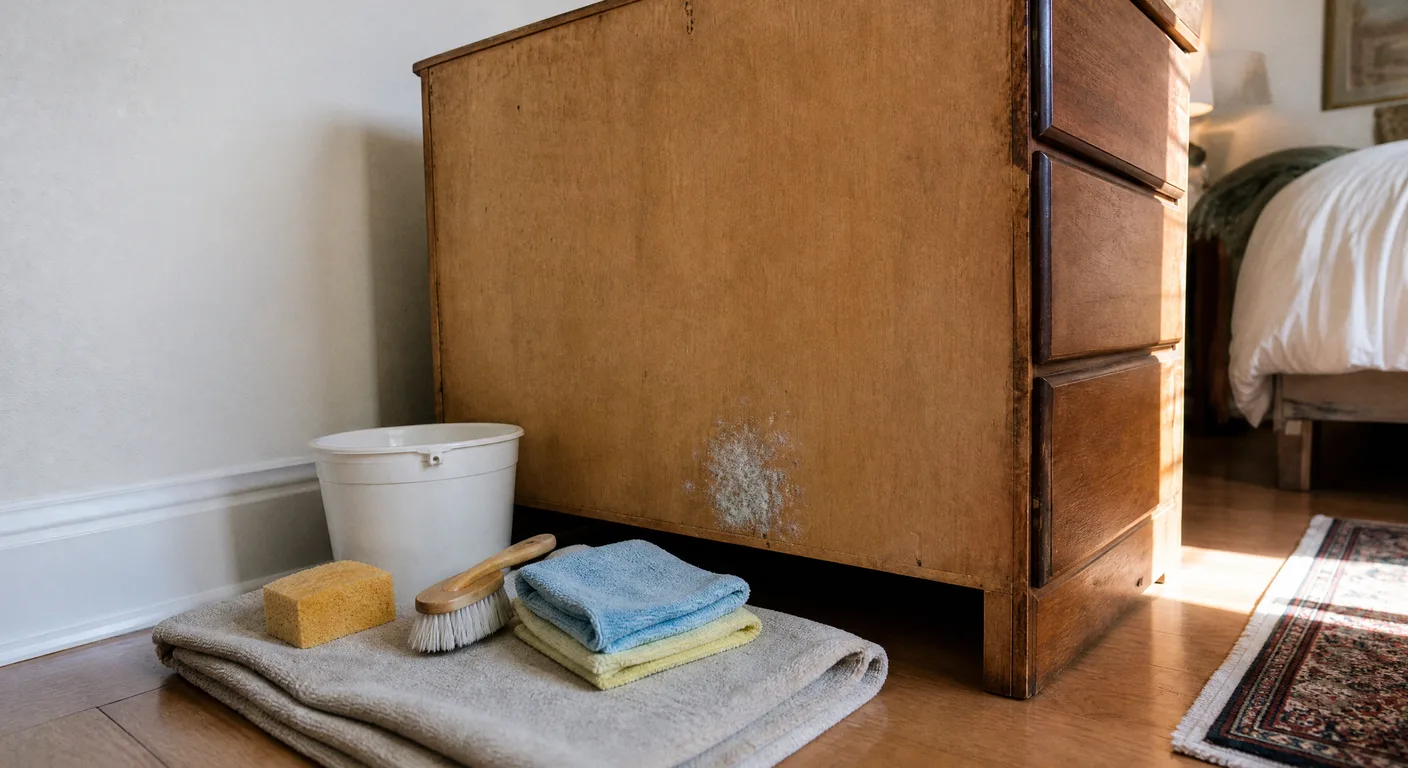
You pulled the dresser away from the bedroom wall and the back panel is fuzzy. Or there's a gray-green patch on a basement joist, right under the bathroom. Finished wood can generally be cleaned, and sound bare wood often can too. Fix the water first, then scrub the growth off with detergent and water and dry the wood fast. Wood that's soft, crumbling or has stayed wet needs more than a scrub.
Reaching for bleach or sandpaper is the usual first instinct. On wood, the kind of wood really does matter more than what's in the bottle.
Can moldy wood be saved?
Often, yes. How depends on which of three kinds of wood you have.
| The wood | What the sources say | What it means for you |
|---|---|---|
| Finished: painted, stained and sealed, or varnished (furniture fronts, cabinets, trim, finished floors) | S520, the professional mold remediation standard, lists finished wood with glass and metal as non-porous and cleanable (Section B, p. 20). EPA's mold cleanup table lists wiping or scrubbing with water and detergent for wood surfaces. | Clean it like any hard surface. |
| Bare: framing, joists, subfloor, plywood, OSB, the unfinished back or underside of furniture | S500, the water damage standard, gives unfinished wood and OSB as examples of semi-porous materials in its chapter on contents (§14.2, p. 75), and its materials table says OSB or plywood can be considered semi-porous (Appendix A, p. 131). S520 decides semi-porous material case by case (Section B, p. 20). | A small, sound patch can often be cleaned. Wood that's soft, has stayed wet, or is badly affected is a remediator's call. |
| Soft, crumbling, or cracked across the grain into cubes | The USDA's Wood Handbook says mold and stain fungi ordinarily affect wood's strength only slightly (p. 14-2), while decay can cut strength considerably, even early on (p. 14-6). | That's decay as well as mold. Cleaning won't fix it; it needs repair or replacement. |
That's how the standards sort wood, not whether a given piece can be cleaned. Framing, joists, plywood and OSB are judged piece by piece: on the wood's condition, how wet it got and for how long, how much of it is affected, and whether it can be returned to Condition 1, S520's term for normal fungal ecology (Section B, pp. 14, 20; §9.3.7, p. 49).
Not sure the fuzz is mold at all? Start with how mold looks on wood. White growth has its own page: white mold on wood.
Is this a job you can do yourself?
For a small patch you can easily reach, on finished wood that's intact or bare wood that's sound and dry, usually yes, once the leak or damp behind it is fixed and there's no sign of hidden mold or serious water damage. EPA says that if the moldy area is less than about 10 square feet, in most cases you can handle the job yourself. S520 sets no size line at all (Foreword, p. 6).
Our own advice is more cautious than EPA's benchmark. We'd hand it to a remediator when the mold is in a crawl space or an attic, the wood is soft or has stayed wet, the patch won't come clean without sanding, it covers more than about 10 square feet, or the heating and cooling system is involved. S500 treats crawl spaces as generally confined spaces (§16.3.21, p. 97); our crawl space mold and attic mold guides cover both. A small patch may be a small problem, too. Its size alone doesn't tell you how far the damage goes.
If your home was built before 1978, EPA says it's more likely to have lead-based paint, and even a small amount of dust from disturbing it can pose a health risk. Don't sand or scrape painted wood in an older home until you know what's in the paint.
CDC says three groups shouldn't help clean up mold: people with allergies, people with immune suppression or underlying lung disease, and people with chronic respiratory disease such as asthma or COPD.
How do you clean mold off wood?
EPA's cleanup table lists the same methods for wood surfaces whether the patch is the size of a sticky note or 100 square feet: vacuum up water while the wood is still wet, wipe or scrub with water and detergent, and use a HEPA vacuum once it's dry. Only above 100 square feet does it add throwing the material out. That table is for mold from clean-water leaks; if the water was sewage or otherwise contaminated, EPA says an experienced professional should be consulted. For a patch you can handle yourself:
- Fix the water first. A leak, a sweating pipe, a dresser pressed against a cold outside wall: until the moisture stops, cleaning only buys time.
- Put on at least an N95 respirator, gloves and goggles without ventilation holes, with long sleeves and pants.
- Scrub the growth with detergent and water on a sponge, cloth or soft brush, then wipe it with a damp cloth. Brushing it dry or scraping it first just puts more of it into the air. On bare wood, dampen rather than soak; the aim is to get the growth off without wetting the wood through.
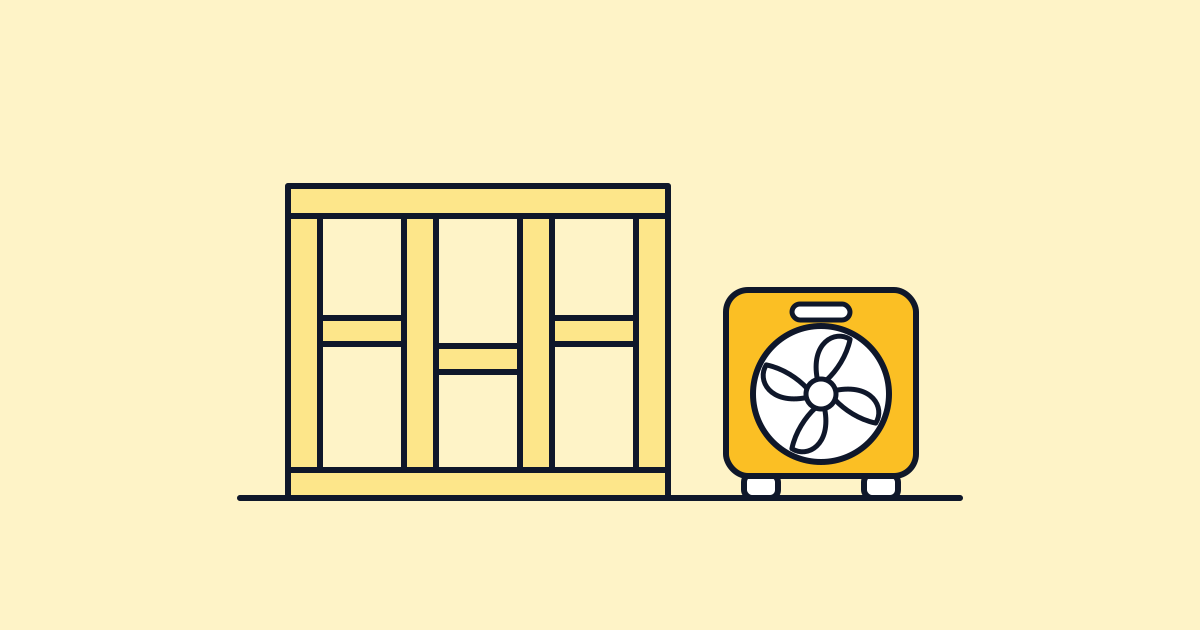
- Dry the wood fast with fans, a dehumidifier and gentle heat, the aids EPA lists for drying wet wood. A dehumidifier can run from the start; run fans once the growth is off, never aimed across mold that's still there.
- Once it's thoroughly dry, go over the area with a HEPA vacuum if you have one. EPA recommends them for final cleanup, and S520 has professionals avoid shop-type or standard household vacuums for mold (§9.1.5, p. 45). Bag the rags and sponges.
- Look again. You're aiming for no visible growth, dirt or dust, wood that's dry and no musty smell, the same checks S520 gives professionals after a job (§9.3.12, p. 51). If it comes back, the moisture or the extent needs another look, and scrubbing harder or switching products won't fix that.
Furniture and cabinets
On furniture, the finish decides the job. A sealed or painted surface cleans like any hard surface, and bare wood on backs, drawer bottoms and furniture frames is judged piece by piece (S520 §11.3.5, p. 58). Pull the drawers and clean it where the dust won't settle on the rest of the house, like a garage with the garage door open and the door into the house closed (our advice). Keep children and pets away while you work, and move or cover anything else nearby. If the piece has to cross the house to get there, wrap it in plastic sheeting first rather than carrying it through uncovered; S520 has professionals package or clean contents before moving them through clean areas (§11.2, p. 55). Don't sand a moldy piece yourself. When professionals clean moldy belongings, S520 has them capture the dust at its source to limit its spread (§11.3.5, p. 58), including from sanding and other abrasive methods (§11.3.3.3, p. 57). For an antique or a piece worth real money, call a specialist; S520 says high-value and irreplaceable items may call for specialty services (§11.4, p. 59).
Wood floors
On a finished hardwood floor, clean lightly: a damp cloth or mop with a mild detergent that's safe for the floor's finish, never so wet that water runs into the seams, joints or edges, then dry it promptly. EPA cautions about heat when drying hardwood floors, so lean on fans and a dehumidifier. Boards that buckle or cup, a floor that stays damp, or mold between the boards or coming up from under them is a reason to look at the subfloor and what's hidden under it, and that's a remediator's job. What you can see may not be all of it, and getting to the rest means lifting flooring.
What kills mold on wood?
Killing it isn't the goal on wood. Getting it off is. S520 counts dead and dormant growth as contamination just like the living kind (Section B, p. 14), and EPA says that whether dead or alive, mold is allergenic. Spraying a chemical on it doesn't count as removing it at all (S520 Section B, p. 20).
For professional mold remediation, S520 makes physically removing the mold the primary means; trying to kill or cover it instead generally isn't adequate (§1.4, p. 24). No product makes the job complete just by killing it; removing the growth and keeping the wood dry do.
If bleach is the bottle in your hand, EPA doesn't recommend it as a routine practice, CDC says no more than 1 cup per gallon of water and never mixed with ammonia or any other cleanser, and some bleach products list wood among the surfaces to avoid, so read the label first. Our guide to whether bleach kills mold covers the rest.
Vinegar is an optional household cleaner, not an EPA or CDC method; our vinegar guide explains what it can and can't do on wood. A product sold as a mold killer for wood follows its own label for where and how to use it. Black mold on wood gets the same answer as any other color: CDC says all molds should be treated the same with respect to potential health risks and removal.
Can you sand mold off wood?
Seven of the ten ranking pages we read suggest sanding, at least as a last resort. For a professional, that's not wrong. S520 lists sanding among the ways of physically removing mold (Section B, p. 20), and it expects remediators to put source capture on any tool that makes dust, with controls to limit its spread (§9.3.7, p. 49; §9.2, p. 46). EPA's cleanup methods for wood surfaces don't include sanding at any size.
Our advice: don't sand moldy wood yourself. A patch that won't come clean with detergent and water is the point to call a remediator, and painted wood in a home built before 1978 adds the lead question above.
S520 treats stains that remain after the growth and debris are removed as cosmetic (Section B, p. 21; §9.3.8, p. 50), and EPA says it may not be possible to clean an item so that its original appearance is restored. On oak, the Wood Handbook notes, the wood under mold is commonly stained too deep to be surfaced off (p. 14-2). Sanding for color is a choice once the wood is clean and dry, not a safety step.
Paint or a sealer goes on after that, never over growth: EPA says not to paint or caulk moldy surfaces. For the fungicidal and mold-resistant coatings professionals use, S520 waits until the area has been checked and found back to normal (§2.2, p. 27), and says mold-resistant coatings shouldn't be used to cover mold growth (§2.2.1, p. 28).
When does moldy wood need to be replaced?
When it's soft. Press a screwdriver into it: wood that gives or crumbles has likely decayed, and cleaning won't fix that. Hard wood is a good sign, not proof. The Wood Handbook says mold and stain fungi ordinarily affect strength only slightly, mostly toughness (p. 14-2), while early decay can cut strength considerably before it shows (p. 14-6). EPA adds that over a long-running leak, molds can weaken floors and walls as they feed on wet wood. If framing has stayed wet a long time, have it looked at even if it feels hard. Our identification guide covers mold, stain and rot on wood.
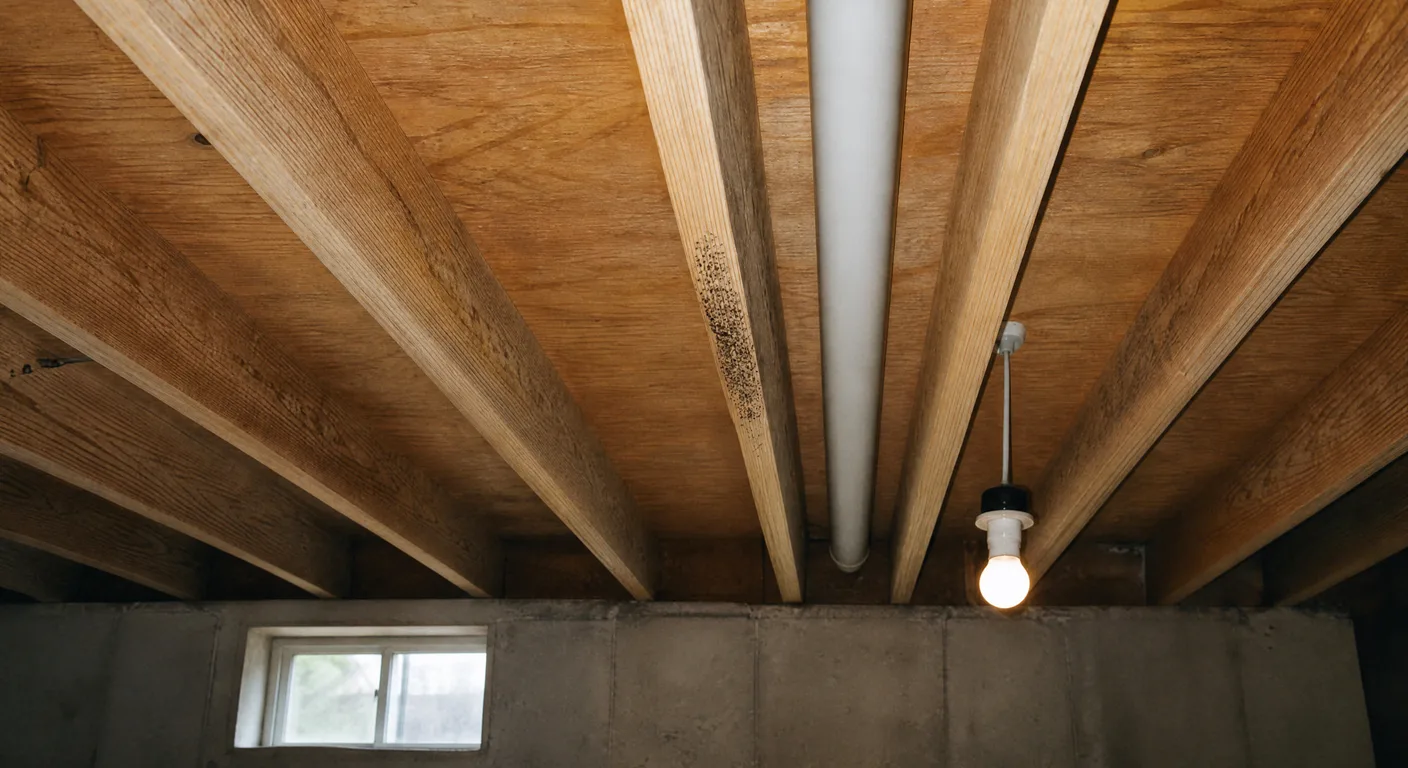
For wood that's still sound, S520 weighs cleaning against replacing, cost against cost, by whether the material can be returned to Condition 1 (§9.3.7, p. 49). Two rules apply to structural wood. If load-bearing wood has been compromised and has to come out, S520 requires a qualified structural engineer to be involved in that decision (§9, p. 44). For any structural component that's removed or replaced, it says the remediator should involve a structural engineer or another specialized expert (§9.3.7, p. 49).
How do you keep mold off wood?
Dry wet wood as quickly as possible, ideally within 24 to 48 hours, because prompt drying can prevent or limit mold growth. Keep indoor humidity below 60 percent, ideally between 30 and 50, as EPA advises (mold prevention covers how). "Dry" means about as dry as similar wood nearby, in the same conditions, that never got wet. S520 has professionals compare moisture readings with material at an acceptable or known moisture content (§9.1.1, p. 44); there's no single meter number to aim for. And leave a gap between furniture and cold outside walls so the backs can dry; that's our advice.
When should you call a mold remediator?
If your wood is on the remediator side of the line above, a few questions tell you a lot about a company. What will you clean, and what will you replace? How will you capture the dust at the tool? Will a structural engineer be involved if load-bearing wood comes out? What, if anything, goes on the wood afterward, and can I see the label? If the heating and cooling system is involved, EPA says not to run it if you know or suspect it's contaminated with mold; see mold in the air ducts. For the methods professionals use on framing, see what professionals actually use.