Prevention
Do Dehumidifiers Help With Mold? What About Air Purifiers?
A dehumidifier can stop mold from growing, but it won't remove mold that's already there. What EPA, CDC and S520 say, and where air purifiers fit.

The basement smells musty, there are a few gray spots low on one wall, and a dehumidifier is already in your cart. That's a reasonable instinct: EPA and CDC both name a dehumidifier as a way to keep indoor humidity down, and mold doesn't grow without moisture.
It just can't do the whole job. A dehumidifier helps keep new mold from starting, and once you've fixed the water problem and cleaned up the mold, it helps stop it from coming back. It won't remove mold that's already growing, and an air purifier can't remove it either. In fact, EPA's answer to whether air cleaners can solve a mold problem starts with one word: "No."
Quick answer: Yes for helping keep new mold from growing, no for mold that's already there. A dehumidifier pulls moisture out of the air so damp surfaces can dry. The water source still has to be fixed, though, and mold that's already growing has to be cleaned up or removed.
Does a dehumidifier help with mold?
A dehumidifier helps with mold by pulling moisture out of the air so damp surfaces can dry and new growth is less likely to start. It doesn't remove mold that's already growing. Mold spores float in every home's air, and EPA says they won't grow where there's no moisture.
That leaves a dehumidifier three jobs it really does well.
Holding a damp room in range. EPA advises keeping indoor humidity below 60 percent, ideally 30 to 50 percent, while CDC sets its ceiling at 50 percent. Both name air conditioners and dehumidifiers among the ways to get there.
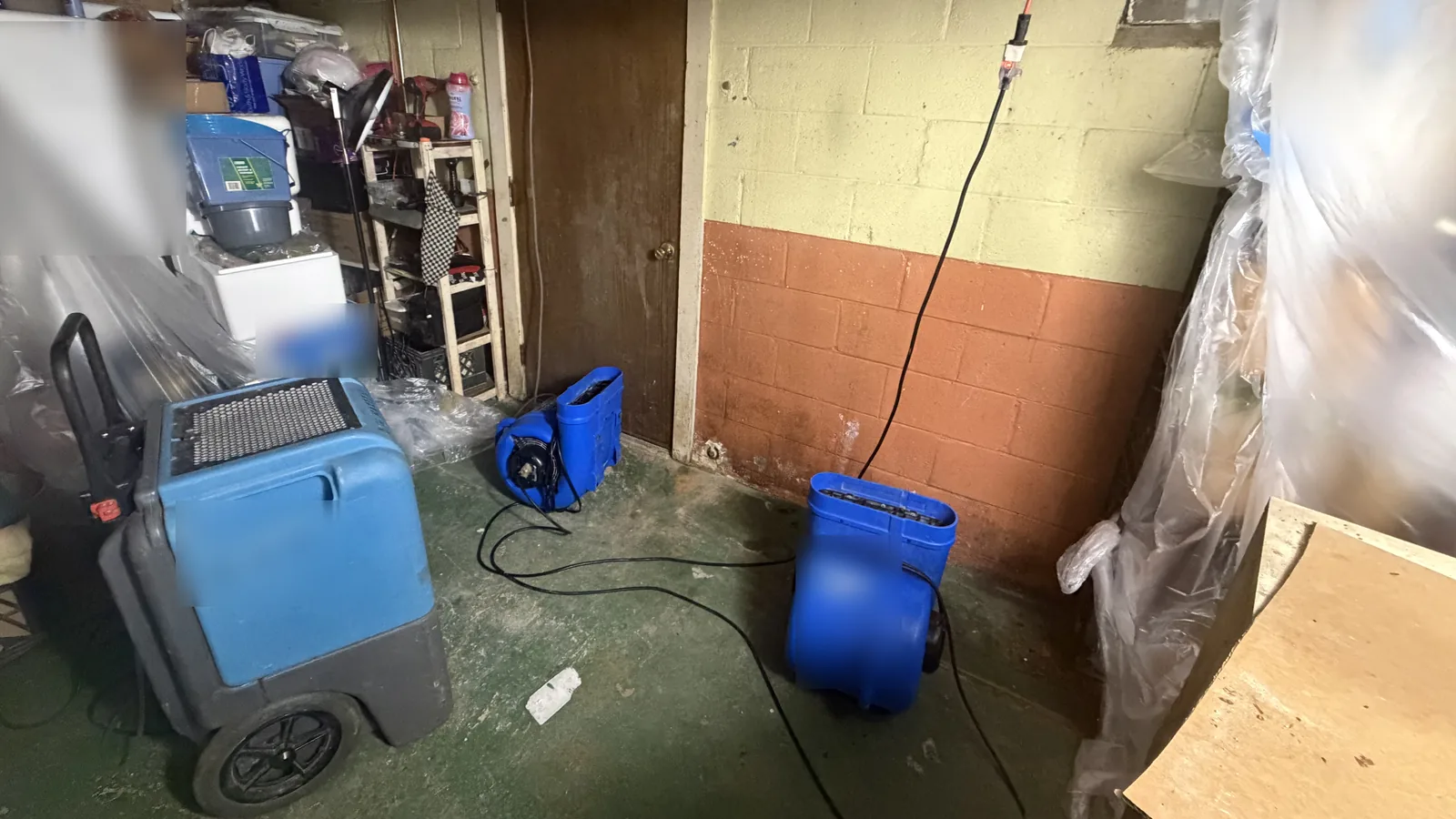
Helping a room dry once a leak is fixed. EPA's advice is to dry water-damaged areas within 24 to 48 hours to prevent mold growth, and its mold course notes that companies doing mold remediation and water damage work often use large fans and dehumidifiers for exactly this.
Keeping mold from coming back after cleanup. For professional mold remediation, the industry standard, ANSI/IICRC S520-2024, puts moisture control here: to prevent recontamination, the moisture problem behind the growth should be found and corrected or controlled as soon as practical (§1.5, p. 24).
It works on the air, not the wall. Pulling water vapor out of the air gives the water in damp materials somewhere to evaporate to, which is how ANSI/IICRC S500-2021, the standard for professional water damage restoration, describes drying once standing water is gone (§1.2.4.2, p. 23). That's also why it's slow on anything soaked.
Does a dehumidifier kill mold?
Reducing available moisture can stop active mold growth, but it doesn't remove the existing growth or spores. Mold spores are generally dormant until they germinate (S520, Section B, p. 21), and viable spores may germinate when favorable moisture conditions return.
S520 doesn't treat dried-out mold as solved. Its definition of actual mold growth, which it calls Condition 3, covers growth that's active, dormant or dead, visible or hidden (Section B, p. 14). The standard also makes physically removing the contamination the primary means of remediation (§1.4, p. 24). EPA gets to the same place from the health side: dead mold may still cause allergic reactions in some people, so it isn't enough to kill it. It has to be removed.
Bringing a dehumidifier into the room doesn't change the order of operations. Fix the water problem as soon as you can, clean up the mold, and then let the dehumidifier hold the humidity down. EPA puts the alternative plainly: if you clean up the mold without fixing the water, the problem will most likely come back. Our guide to cleaning up mold walks through the job itself.
What humidity should you set a dehumidifier to for mold?
No agency gives a dehumidifier setting. What EPA and CDC give is a target for the room: EPA says keep indoor humidity below 60 percent, ideally between 30 and 50 percent, if possible, and CDC says no higher than 50 percent.
Our position: set the humidistat so a hygrometer in the room reads between 30 and 50 percent, and adjust by what the hygrometer shows.
ENERGY STAR says 30 to 50 percent is generally considered the optimum, with one useful exception: in colder climates during the heating season, aim for 30 to 40 percent to prevent condensation on windows.
Measure rather than guess. If your unit's humidistat doesn't show a reading, ENERGY STAR suggests a separate hygrometer nearby. EPA says a humidity meter costs about $10 to $50.
What the hygrometer can't tell you is how wet the coldest wall is. A cold exterior wall, or the corner behind a dresser, can collect condensation while the meter across the room reads fine, which is why mold can still grow when the room reads 40 percent. The full humidity checklist is in our prevention guide.
What size dehumidifier do you need?
Size it on two things: the size of the space and how damp it is. Use ENERGY STAR's chart or the maker's guidance rather than a rule of thumb. Replacing an old unit? Judge by how much water you empty each day, ENERGY STAR says. For a whole-house unit, have a contractor handle the sizing and installation.
How do you run one so it actually helps?
ENERGY STAR's advice is to keep the space's doors and windows closed while it runs. A unit without a top-mounted vent needs room from walls and furniture, and a drain hose to a floor drain or sump pump saves emptying the bucket.
Cold rooms are the catch. Below about 65 °F, ENERGY STAR says frost can form on the coils and the compressor can cycle on and off without removing moisture, so a cold basement may need a model made for lower temperatures.
Run it until the materials are dry and the humidity stays down, not for a set number of days. When the water is known to be clean and no mold growth is suspected, fans aimed at the wet materials, run with a dehumidifier, help them dry quickly. If the water may have been contaminated or mold may be growing, keep fans off until the affected materials are removed or contained. And never point a fan across known or suspected mold.
Where does a dehumidifier fall short?
A dehumidifier lowers indoor humidity and can help damp building materials dry. It can't remove standing water, repair a leak or seepage, or remove mold already present. The underlying moisture source must still be addressed.
| What's happening | Will a dehumidifier fix it? | What does |
|---|---|---|
| A leak or seepage | No | Fixing the leak. The water damage standard says moisture problems should be found and corrected or controlled as soon as possible (S500 §1.2.3.1, p. 23). |
| Drywall, carpet or insulation got soaked | Only partly | Getting the standing water out first. Anything still wet after 24 to 48 hours needs inspecting, and EPA says absorbent materials such as carpet may have to be thrown away if they become moldy. |
| A wall, window or pipe that sweats | Not by itself | Drying the surface and cutting the moisture source. EPA calls condensation a possible sign of high humidity; it may form where humid air meets a cold surface. |
| A musty smell with no mold in sight | Not by itself | Finding the source. EPA lists the back of drywall, the top of ceiling tiles and the underside of carpet among the places mold hides. |
| A basement or crawl space below about 65 °F | Maybe not | Using a model made for the cold, or a different plan. A standard unit can frost up and stop removing water. |
Crawl spaces need a full crawl space moisture plan rather than a single machine. A damp basement and a musty smell you can't trace each have their own guide too.
If mold keeps coming back with the dehumidifier running, that's a reason to reassess the moisture and how far the growth goes, not to buy a bigger machine.
Do air purifiers help with mold?
A HEPA air purifier works only on what's floating in the air, so EPA says air cleaners don't solve mold problems: they don't touch the growth or the moisture behind it. EPA's guide to air cleaners asks the question directly and answers "No." It says they may remove some of the particles generated by mold and, in some cases, help reduce odors.
Buying one for someone in the house with allergies or asthma is still a fair reason. EPA's answer there is "Possibly": studies with portable HEPA air cleaners have found improvements in one or more allergy or asthma symptoms, though not always major ones and not in every symptom.
Choosing one doesn't take a brand name. EPA's advice is a portable air cleaner with a clean air delivery rate (CADR) big enough for the room. A HEPA filter often gets it there, and most packaging lists the largest room the unit suits.
What about ozone and UV features?
Skip anything that makes ozone on purpose. EPA calls ozone a lung irritant and says to avoid air cleaners that intentionally produce it. It also notes that some ionizers, electrostatic precipitators, plasma units and UV lights without adequate lamp coatings may produce it too. The California Air Resources Board and the Association of Home Appliance Manufacturers both keep lists of air cleaners tested to emit little or no ozone.
A UV feature offers limited help at most. EPA says properly designed UV systems may destroy some molds growing on the damp surfaces inside heating and cooling equipment, though typical UV units in homes have limited effectiveness against molds, and dead spores can still cause allergic reactions.
Ozone generators sold for mold are a different machine altogether, and one to avoid. EPA says inhaled ozone can damage the lungs and that, at levels within public health standards, ozone doesn't effectively remove mold from indoor air. S520 says ozone shouldn't be used to try to kill mold as part of remediation, or as a substitute for removing it (§9.1.7, p. 45).
Dehumidifier or air purifier: which one for mold?
Our position: if dampness is the problem, start with a dehumidifier. It works on the moisture mold needs to grow, while a HEPA purifier only catches some of the particles already in the air.
What each one does about mold
| What it does | Dehumidifier | HEPA air purifier |
|---|---|---|
| Removes water vapor from the air | Yes | No |
| Catches mold particles in the air | Not its job | Some |
| Helps keep new mold from starting | Yes, by drying | No |
| Removes mold already growing | No | No |
| Fixes a leak | No | No |
Neither one replaces fixing the water problem and cleaning up the mold.
Can mold grow inside a dehumidifier?
It can: the bucket holds standing water, so empty it and clean the bucket and filter the way the maker's manual says. A drain hose to a floor drain or sump pump means you don't have to empty the bucket. Don't add anything to the bucket unless the manual tells you to. If mold keeps showing up inside the unit after cleaning, ask the maker whether it needs service.
When is a dehumidifier not enough?
A dehumidifier stops being the answer once the mold is established or the water isn't coming from humid air. Our advice is to bring in a professional when:
- the growth covers more than about 10 square feet, or there's been a lot of water damage (EPA says that under about 10 square feet you can, in most cases, handle cleanup yourself);
- mold keeps coming back with the dehumidifier running;
- there's a musty smell and you can't find where it's coming from;
- drywall, carpet or insulation is still wet after 24 to 48 hours;
- the person who'd do the cleanup has allergies, asthma, COPD, a weakened immune system or other lung disease. CDC says they shouldn't take part in cleanup, so the job needs someone else, which can mean a professional.
A remediation company starts where a dehumidifier can't. Once growth is found, S520 calls for a prompt check of the building's moisture (§7.2, p. 39) and for tracing the water's path to find hidden growth (§7.3.3, p. 40). Drying can start early, as long as it doesn't spread contamination (§1.3, p. 23). Containment scaled to the job (§9.2.1, p. 46) and HEPA air filtration devices, often called air scrubbers (§9.1.3, p. 45), control the dust while the growth is physically removed (§1.4, p. 24). Whatever can be saved is dried to the water damage standard (§1.5, p. 24).
Two fair questions for any company: where is the water coming from, and what will you remove? If the mold is hidden, a mold inspector can find it before anyone quotes the work, and whether it's a job for you or a professional covers the rest.