Mold in an Apartment: What to Do and Who Pays (2026)
Found mold in your apartment? The first 48 hours, who is responsible for what, how long a landlord has to fix it, and when to get your own inspection.
The corner behind the dresser has gone speckled, or the cabinet under the sink has started to smell. Mold in an apartment is the landlord's repair when the moisture comes from the building, and the renter's to change when it comes from how the unit is used. Either way the first moves are the same: photograph it, put the notice in writing, and stop the water.
Most renters wipe the patch down and wait to see if it comes back. That's a fair read of a small spot. It just spends the one photo nobody can argue with later. This page is the sequence, written for renters first and landlords second, for a rental house or any other rental property as much as a fourth-floor one-bedroom. It isn't legal advice. Where the law names a number, the source is linked so you can check your own state.
In This Guide
- The first 48 hours: photograph, notify, find the water, clean only what's small
- Who is responsible: the building, the occupant, and the gray zone between them
- How long a landlord has: the honest national answer, and the states that named a number
- How to check, and when to get your own inspection: where it hides, and why the test kit stays on the shelf
- When the landlord won't act: the ladder and the three traps
- Lease, relocation, and lawsuits: what's possible, and who to ask
- If you're the landlord: answer the notice, fix the water, close the job with a report
- Mold in an apartment FAQ: quick answers
The first 48 hours: what to do when you find mold in your apartment
A photo, a written notice, the water, and then, only then, a sponge. The one thing that never waits its turn is water still coming in: where it's safe to, turn off the valve at the fixture, catch the drip, and start drying right away, taking the photos as you go. Everything the landlord does later runs off the photo and the notice, and most of what goes wrong traces back to cleaning the mold before anyone found the water.
The first 48 hours, in order
Water still coming in? Stop it first, where it's safe. Everything the landlord does later runs off steps 1 and 2.
Wide shot, close-up, and the stain or window nearby.
Email plus a dated letter; ask for a repair date.
A leak, a fan that does not run, a sweating pipe.
Under about 10 square feet, on a hard surface; never open a wall.
Photograph everything, with a date
A dated photo of the mold before anyone touches it is the one piece of evidence nobody can argue with later. Take a wide shot of the whole wall or cabinet, a close-up of the growth, and a third of whatever sits next to it: the water stain, the window track, the vent, the pipe. Email the pictures to yourself the same day so the timestamp travels with them, and put a second copy somewhere the phone isn't: a work inbox, a cloud folder. Re-photograph the same spot each time you write to the landlord again.
Send written notice the same day
In most states the landlord's repair duty runs from written notice, and Wisconsin's health department spells out what the notice should hold: contact the landlord in writing, describe the condition, and document it with photos, the date, the time, and whom you notified. Email is fine. A dated letter on top of the email is better. Four lines cover it:
On [date] I found mold in [room and location]. It appeared around [date]. I believe the moisture is coming from [the leak, the fan, the window]. Please repair the moisture source and remediate the mold by [date], and let me know in writing when the work is scheduled.
Attach the photos. Keep the sent email.
Find the water before anyone cleans
The EPA's line is that wet materials dried out within 24 to 48 hours usually don't go on to grow mold at all. That's the whole reason to hunt for the water on day one. In an apartment the usual sources are a leak from the unit above or next door, a bathroom fan that spins without moving air (hold a tissue to it), a window air conditioner dripping inward, or a supply line sweating inside a cabinet. Name the one you suspect in the notice, even if you're guessing. A landlord who's told "leak from 4B" sends a plumber. One who's told "mold" sends a painter.
What you may clean, and what you must not touch
The EPA's benchmark is about size: if the moldy area is less than about 10 square feet, in most cases you can handle the cleanup yourself, and for anything bigger it points to its guide for larger remediation jobs. Material is a separate question. Hard surfaces can be scrubbed with detergent and water and dried completely; porous materials like drywall, carpet, and ceiling tile may have to be thrown away if they get moldy, because mold can grow into them. In a rental, our advice is narrower than the EPA's: clean only a small patch on a hard surface, and leave the rest to the landlord. Never open a wall, cut out drywall, pull down a ceiling, or take up flooring; that's the landlord's building and the landlord's repair. For the full protocol, see the full mold remediation walkthrough.
Who is responsible for mold in an apartment?
The landlord is responsible for mold when the moisture that feeds it comes from the building, and the renter is responsible when it comes from how the unit is used. Condensation in a unit that can't hold its own humidity sits in between. That's the case that ends up in front of a code officer.
Building problems are the landlord's
Leaks from above or next door, a roof or window that lets rain in, a failed exhaust fan, a heating or ventilation defect, an exterior wall that sweats because the building loses heat through it. That's the building's water, and Washington's Department of Health puts every item of it on the landlord. In its words, landlords are responsible for fixing building problems like water leaks and ventilation or heating defects that may cause moisture problems, and must notify tenants about the health hazards of indoor mold. If the water is the building's, the mold is the building's, and so is the bill.
Moisture you control is yours to change, and often yours to clean
Wisconsin's guidance tells tenants to immediately repair moisture problems for which they're responsible, and the list of those is short and domestic: laundry dried on a rack indoors, showers with the fan off, a bed pushed flat against a cold outside wall, a spill under the sink nobody wiped. California's code treats visible mold growth, as determined by a health or code enforcement officer, as a substandard condition, and then carves out mold that is minor and found on surfaces that can accumulate moisture as part of their properly functioning and intended use. That clause is the shower-grout and window-track case in legal language. The fixes are habits, not repairs, and the small surface growth they leave is usually yours to clean within the limits above: run the fan after the shower, dry laundry where air moves, keep a hand's width between furniture and an outside wall.
The gray zone: condensation in a unit that can't hold its humidity
Condensation mold is growth fed by water that comes out of the room's own air onto a cold surface, and whose problem it is depends on whether a reasonable occupant could have prevented it. A cold exterior wall behind the bed, single-pane windows that bead up every winter morning, a bathroom with no exhaust fan at all: a tenant can't ventilate what has no fan and can't warm a wall the building lets go cold. The same speckling in a unit with a working fan nobody switches on is a different story. Ceilings have their own version, and steam or a leak from upstairs decides who fixes a bathroom ceiling.
The dispute is usually one question: is the wall wet from inside or from the room? Water from a leak tends to map back through the wall toward its source (a pipe, the roof, a window) and reads worst near it. Condensation tends to follow the coldest surfaces, in corners, behind furniture, and around window frames, when the air in the unit is humid. The first points to a building defect and the landlord's repair. The second is a humidity problem, and whose it is depends on whether the unit can hold its humidity at all. The two can overlap, so one reading on its own doesn't decide it. A written assessment that names the most likely source, and says what that conclusion rests on, is the document most of these arguments turn on.
Moisture patterns can help distinguish condensation from bulk-water intrusion, but no single meter reading proves the source. Condensation is suggested when moisture tracks cold surfaces or thermal bridges under elevated indoor humidity; bulk-water intrusion is suggested when moisture maps from a plumbing, roof, window, or exterior source through the assembly. A sound assessment compares suspect materials with known-dry areas, considers temperature, relative humidity, water history and building conditions, and uses non-invasive or selective invasive measurements where needed. The report should identify the most likely moisture mechanism and the basis and limitations for that conclusion.
Mold in an apartment: who fixes what
Where the moisture comes from decides who pays for the fix.
- Leak from above or next door
- Roof or window leak
- Failed exhaust fan
- HVAC or heating defect
- Exterior wall that sweats
- Condensation in a unit that cannot hold its humidity
- Single-pane windows
- No fan at all
- Laundry dried indoors
- Fan never run
- Furniture sealed against an outside wall
- Spills left wet
- Blocked vents
Reviewed by Drew Fuller, IICRC-certified mold remediator, Principal at Restoration 365 (IICRC Certified Firm), Willow Grove, PA.
How long does a landlord have to fix mold?
This is not legal advice. Rules differ by state and city, and the sources linked in this section are where to check yours.
A landlord has to fix mold within a reasonable time after written notice, and in most of the country that's the whole rule. There's no federal clock. The EPA states that there are no EPA regulations or standards for airborne mold contaminants. Most states reach mold through the general duty to keep a rental habitable and in repair, which is where a tenant's rights on mold usually come from; Wisconsin's health department notes that dampness and mold are typically not written into local housing ordinances at all.
Where a number exists it runs from one day to 45 days. Colorado's 2025 text starts at 24 hours to make contact, and the table below has the rest of its clock next to Virginia's, the District of Columbia's, and Maryland's. Texas has no mold-specific clock; Texas Law Help's reading of the general repair statute is that seven days is usually seen as a reasonable amount of time. In each of those the count runs from a written or electronic notice, except Virginia's, which runs from the tenant's decision at move-in. That's why the notice comes before the sponge.
States and cities that wrote mold into the law
A mold-specific rental rule is a statute or code provision that names mold or dampness rather than leaving it to the general habitability duty; the jurisdictions below have one. Texas is included for its general repair rule, the one most renters ask about. Each row is one sourced line, checked at the primary source on September 11, 2026. Laws change; read yours at the link before you rely on it.
| Jurisdiction | What the rule does | Source |
|---|---|---|
| Virginia | The landlord discloses visible mold at move-in and the tenant has the option to terminate the tenancy; if the tenant stays, remediation within five business days. The landlord maintains the unit to prevent moisture and mold and remediates visible growth. Where mold materially affects a tenant's health or safety, the landlord may require a temporary move of up to 30 days for remediation, provides a comparable unit or a hotel of the landlord's choosing at no cost, and pays the relocation and remediation unless the tenant's own failure caused the mold. | §55.1-1215, §55.1-1220, §55.1-1231 |
| Maryland | Tenant Mold Protection Act (Chapter 539 of 2025, effective July 1, 2025): a mold pamphlet at lease signing; an assessment within 15 days of written notice; remediation within 45 days of the assessment, or a reasonable time where that isn't feasible; state assessment and remediation standards due June 1, 2027. | Chapter 539, SB 856, fiscal note |
| District of Columbia | Inspect within seven days of a tenant's written or electronic notice; remediate within 30 days of the inspection unless a court or the Mayor orders a shorter time; where the owner knows or has reason to know that contamination exists, remediation is by an indoor mold remediation professional. | D.C. Code §8-241.04 |
| New York City | Local Law 55 of 2018: owners of multiple dwellings inspect units annually for mold and pests, respond to complaints, clear vacant units before re-renting, give a notice with each lease, and in buildings of 10 or more units use licensed mold assessors and remediators. | HPD bulletin, December 2025, HPD, Indoor Allergen Hazards |
| Colorado | Mold associated with dampness that would materially interfere with health or safety is an uninhabitable condition (minor mold on surfaces that collect moisture in normal use is excluded). The landlord contacts the tenant within 24 hours of notice; begins remedial action within 24 hours when the condition materially interferes with life, health, or safety, or within 72 hours when the premises are uninhabitable; and, when the condition materially interferes with life, health, or safety, provides a comparable unit or a hotel at no cost within 24 hours of the tenant's request. | §38-12-505, §38-12-503 (2025) |
| California | Visible mold growth, as determined by a health or code enforcement officer, is a substandard housing condition, excluding mold that is minor and found on surfaces that can accumulate moisture as part of their properly functioning and intended use. | Health and Safety Code §17920.3 |
| Texas | The general repair duty, as read by Texas Law Help: it applies once the landlord has written notice, the tenant didn't cause the condition, and rent is current; seven days is usually seen as a reasonable time; repair-and-deduct is restricted and not recommended without a lawyer. | Texas Law Help |
| Washington | Landlords must notify tenants about the health hazards of exposure to indoor mold and are responsible for fixing building problems like water leaks and ventilation or heating defects; local code enforcement acts on the water problem, not on a "mold complaint". | Washington Department of Health |
| Massachusetts | The state sanitary code requires owners to keep structural elements watertight and free from excess moisture or the appearance of mold, and to dry all surfaces within 48 hours of being notified of a leak or flood or of the end of the event, whichever comes sooner; it defines chronic dampness as the regular or periodic appearance of moisture, water, mold, or fungi. | 105 CMR 410.500, 410.020 |
| Vermont | The Residential Rental Housing Health and Safety Code requires every dwelling unit to be kept free from the regular or periodic appearance of standing water or excessive moisture that may result in visible mold growth (§10.3), with the owner responsible for weathertight, watertight structural elements. | Vermont code, effective 2023 (PDF) |
| Montana | A landlord who knows a building has mold present must disclose it to the renter, and where testing has been done must say so and provide the results. | Mont. Code §70-16-703 |
| North Carolina | Landlords must repair imminently dangerous conditions within a reasonable time based on the severity of the condition, once they have actual knowledge or notice of it, and the statute's list includes excessive standing water, sewage, or flooding from plumbing leaks or inadequate drainage that contribute to mold. | G.S. §42-42 |
| Wisconsin | State law lists "excessive mold" among the habitability violations a local rental inspection program can act on where it breaks an ordinance; the state health department's guidance is that landlords must keep premises in a reasonable state of repair and tenants must promptly fix moisture problems they're responsible for. | §66.0104, Wisconsin DHS |
Everywhere else: the habitability duty, and where to look it up
The habitability duty is the general obligation, in nearly every state, for a landlord to keep a rental fit to live in and in repair, and it's what a mold complaint rests on where no mold-specific rule exists. Two places tell you what your state does with it: the state health department's mold page, and the statewide legal aid site. Ten states, to start:
For any other state, search the attorney general's site for its landlord-tenant page and the health department's site for its mold page. Links checked September 11, 2026.
How to check an apartment for mold, and when to get your own inspection
Walk the places moisture collects and let your nose do half the work. Testing is a different question, and for a renter the answer is usually not a kit but a written assessment from someone who doesn't work for the landlord.
Where apartment mold hides
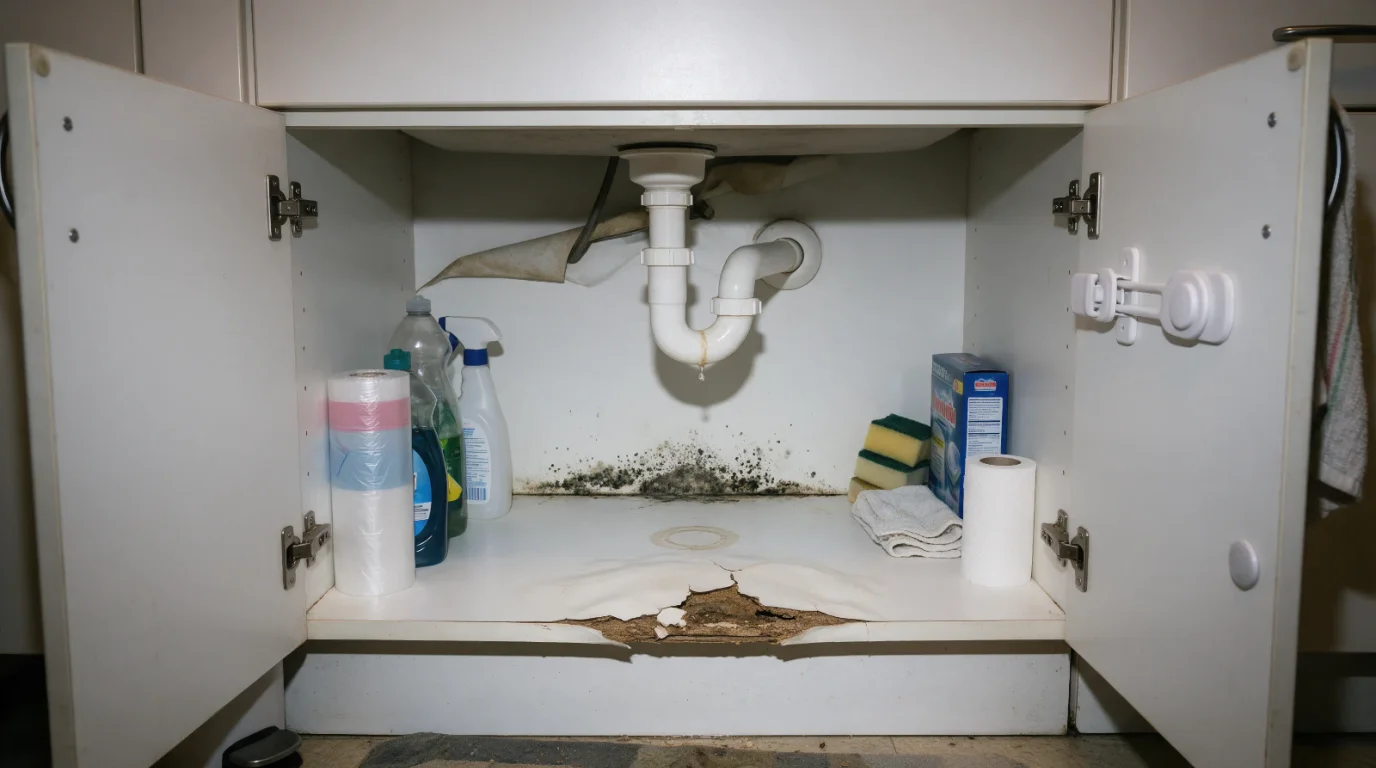
Apartment mold hides where water sits and air doesn't move. Check under the kitchen sink, behind the refrigerator, the lower cabinet on an exterior wall, the window frames and tracks, the back wall of a closet on the outside of the building, the bathroom ceiling above the shower, and the HVAC vents and return grille. Pull the bed out. A musty smell that doesn't go away, with no visible source, is worth investigating for hidden moisture or growth; what a musty smell is telling you covers how to read it. For what mold looks like, use the full mold identification chart and photos, and read the color as a description rather than a verdict; the CDC's guidance is that if you can see or smell mold you should remove it, and you don't need to know the type. Exposure to damp and moldy spaces may cause a stuffy nose, sore throat, coughing or wheezing, burning eyes, or a skin rash in some people, per the CDC, and the full breakdown of mold exposure symptoms has the full list and who's most at risk.
Skip the test kit; get a written assessment
A mold test kit answers a question a renter doesn't have: the CDC doesn't recommend mold testing, and the EPA's guidance is that in most cases, if visible mold growth is present, sampling is unnecessary. A kit from the hardware store will grow something, because in the CDC's words there is always some mold around. The EPA's position is that sampling belongs to professionals with experience designing sampling protocols and interpreting results. What a renter needs is a written assessment. A professional maps moisture in the materials they can reach, using meters that don't damage the surface and, where it's warranted and the owner allows it, ones that probe into the material. They review the water history and the building's conditions, record visible or suspected growth and which materials it's in, and write it up with photos. It's the one thing on this page that really costs money. The price of a mold inspection for an apartment is in what a mold inspection costs, and what a professional mold assessment involves covers the method. Keep the receipt with the notices.
Why a tenant should hire an assessor, not a remediator
A landlord's remediator works for the landlord. That isn't a character claim; the remediator's client is whoever signs the contract, and the report a tenant needs is one written for the tenant. Code officers and legal aid offices work from findings, because a report names a moisture source where a complaint names a feeling. ANSI/IICRC S520-2024, the industry standard for professional mold remediation, says an independent indoor environmental professional (its term for the assessor) or another appropriate professional should be engaged to assess when health issues are reported (§1.2.1). It has the remediator engage or recommend one when the Condition, the standard's term for the state of contamination, can't be determined (§7.4). And it treats an assessor who isn't independent of the remediator as a deviation that should be disclosed to the client in writing, by the assessor under §1.4 and by the remediator under §12. The independence the standard cares about is between the assessor and the remediator. An assessor the landlord hires can still be independent of the remediation company, and S520 doesn't require the tenant to hire their own; that's a choice for your file, and a sensible one when the report may end up in a dispute. The full argument and the credentials to check are in why a tenant should hire an assessor, not a remediator.
When the landlord won't act: the escalation ladder
The escalation ladder is a second written notice with a deadline, then the city, then legal aid, in that order, and every rung is a document. When the date you named has passed, send a second notice: the photos again, a new date, and what you'll do next. Then call the city's code enforcement office or the county health department and report the water: a leak from above, a fan that doesn't work, a window that lets rain in. Washington's health department is candid that local code enforcement doesn't respond to mold complaints specifically, so naming the water is what gets an inspector out. An inspection creates a record outside the tenant's own file. That's the point of the call. When the repair is done, ask for the written verification described in the landlord section below.
Legal aid comes next, and before anything you might regret. Don't withhold rent, and don't repair it yourself and deduct the cost, without advice. Texas Law Help's warning is that repair-and-deduct isn't automatic and isn't recommended without a lawyer, and the same caution holds in most states. Some states also bar a landlord from retaliating against a tenant who reports a habitability problem; whether yours does is a legal aid question.
The three traps
The three ways a mold complaint goes wrong are a coat of paint, an argument about blame, and silence.
Painting over it is the fix the EPA specifically says not to make: clean up the mold and dry the surface before painting, because paint applied over mold is likely to peel. Growth or staining that comes back through fresh paint is a strong sign the moisture, the mold, or both were never dealt with, and a reason to look further; it doesn't show where the water comes from or whose it is. Two photos of one spot, before the paint and after it fails, is a pair a code officer can read without you in the room. Send both with the next notice. Why painting over mold fails has the mechanism.
"It's mildew" and "it's your fault" are the same argument in two coats, and the who-is-responsible section above answers both. Whether it's mold or mildew, and how to tell the difference, matters less than where the water came from: a landlord who calls it mildew still has a moisture question to answer, and a tenant who has been running the fan and keeping furniture off the wall has already answered the blame question.
Nobody answers. That's what the ladder is for. A landlord who ignores a written notice, a second notice, and a code inspector has handed the tenant the record a legal aid lawyer wants to see, and an independent assessment turns "the tenant says there's mold" into "a qualified professional found a leak".
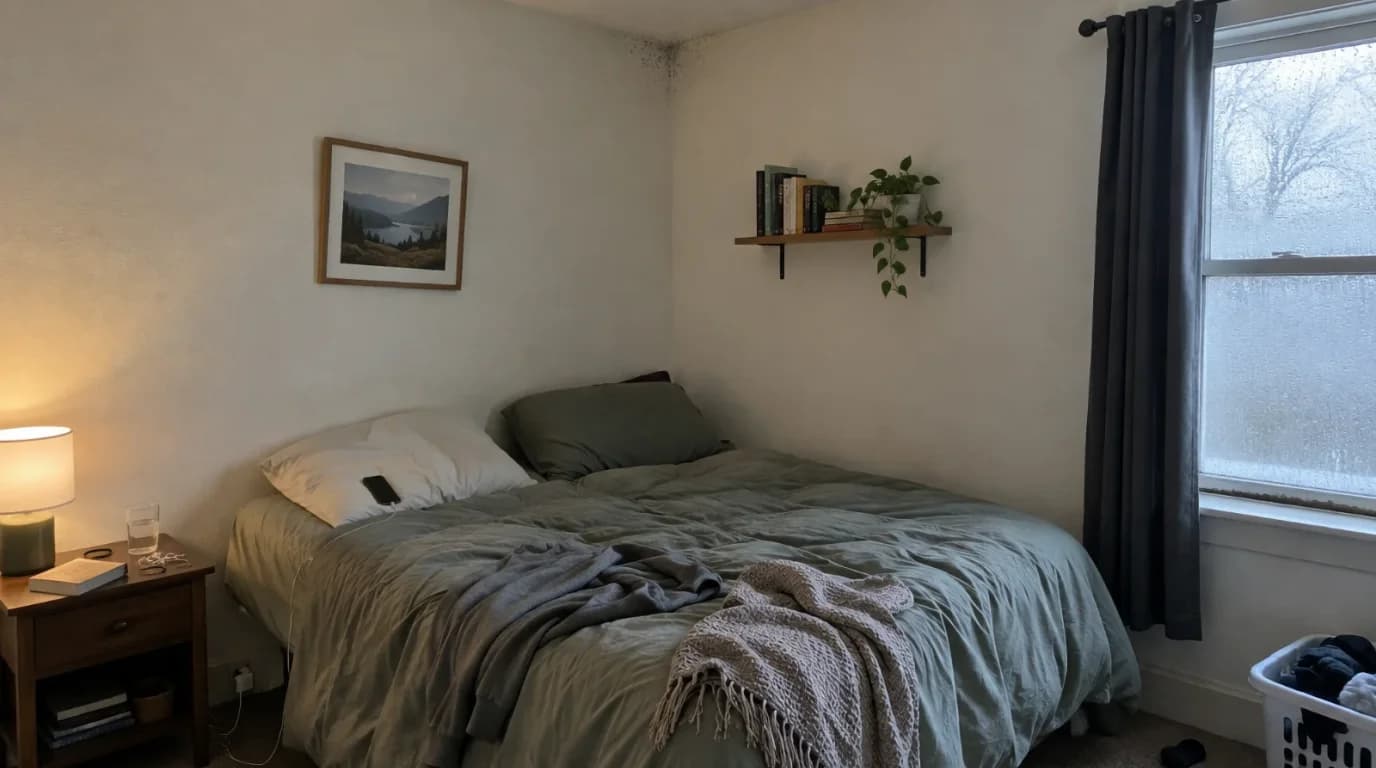
Can you break the lease, get relocated, or sue?
Yes to all three in some states and circumstances, no to all three in others, and the deciding facts are always the same: what the lease says, what your state's law says, and how complete the record is. The state tables above and a legal aid office hold the specifics.
Relocation and hotel costs
Tenant relocation due to mold depends on the lease and the jurisdiction in most of the country, and two states have written the rule down in two different shapes. Colorado's is a health trigger. When mold associated with dampness materially interferes with the tenant's life, health, or safety, the landlord must provide a comparable dwelling unit or a hotel room at no cost within 24 hours of the tenant's request. Virginia's is a landlord's tool with a cap. Where mold materially affects a tenant's health or safety, a landlord may require the tenant to vacate for remediation for up to 30 days, and must provide a comparable unit or a hotel of the landlord's choosing at no cost. The landlord pays the relocation and the remediation unless the mold came from the tenant's own failure to maintain the unit. The tenant keeps paying rent. Everywhere else, a unit that a health or code officer has called uninhabitable changes the picture: get that finding if it's available, ask for relocation in writing, and keep every receipt for a hotel or a storage unit.
Breaking the lease, and suing
Some states let a tenant end a lease over mold once the landlord has had written notice and a reasonable time and hasn't repaired the condition. Virginia writes a version of it into the move-in disclosure: a tenant shown visible mold at move-in has the option to terminate the tenancy. However, doing it wrong leaves you owing rent on a unit you've left. The order is notice, deadline, legal aid, then the decision. Lawsuits exist, and in some states a tenant who was ignored can recover damages or a rent reduction. This page doesn't size them. A legal aid office in your state can tell you in one conversation whether the file you've built is a case.
If you're the landlord: the response that keeps it small
Answer the notice in writing and go after the water first. The notice is what starts the days counting in most states, and the water is what decides whether the problem comes back. Give a date for an inspection when you answer. Find and fix the moisture source: the leak, the failed fan, the window, the line under the sink. Then hire a remediator rather than a painter. A repainted wall that blooms again is the photograph that ends up in a lawyer's office.
Close the job with a report. Under ANSI/IICRC S520-2024 the remediator's own post-remediation evaluation is the completion step. Section 12 adds a post-remediation verification, an inspection and assessment by an independent third-party professional, as further assurance, and has the remediator recommend one where occupant health concerns or project complexity are in play; a tenant who has reported health concerns is one of the cases the standard names. When one is requested it should be done by an independent professional, against completion criteria that at minimum include a return to what the standard calls Condition 1, remaining materials dry, and a work area free of visible dirt, dust, debris, malodors, and visible mold growth. Give the tenant that report and keep your own, with dated photos and moisture readings. Having it ready is cheaper than being asked.
The habits that prevent a repeat (the fan, the laundry, the furniture off the outside wall, the leak reported the day it's noticed) belong in the lease and the move-in walkthrough. For the building-side list and the ventilation fixes that pay for themselves, see the full mold prevention checklist.
Mold in an apartment FAQ
The questions renters and landlords ask most, with the short answer first.
Frequently Asked Questions
Who is responsible for mold in an apartment?
How long does a landlord have to fix mold?
Is my landlord responsible for mold caused by condensation?
How do I report mold in my apartment?
Can I sue my landlord for mold?
Can I break my lease because of mold?
Does my landlord have to pay for a hotel while mold is fixed?
My landlord painted over the mold. What now?
Can I stay in my apartment if there is mold?
What to do today
Photograph it, write to the landlord, and go looking for the water; those three come before anything else, and they decide everything after. If the water is coming from the building, it's the landlord's repair. If it looks like condensation, the who-is-responsible section covers whose it may be, and a written assessment is the document the argument turns on.
This guide is for educational purposes only. It is not legal advice and not a substitute for professional advice: landlord-tenant rules differ by state and city, and the sources linked above are where to check yours. Health information is summarized from CDC and EPA guidance; verify any specific health or safety concern with a qualified professional, and consult certified professionals for mold situations in your home.